Kenya safari tours guide with destinations, timing, costs, road conditions, and tips on choosing parks, conservancies, and activities for the best wildlife experience
Choosing the best destination for Kenya safari tours starts with understanding what each park or reserve offers and matching that to your personal interests, travel dates, and budget. Kenya’s diversity means you can focus on big cats in the Masai Mara, elephants in Amboseli, rhinos and flamingos at Lake Nakuru, or rare species in Samburu. Timing matters, especially if you want to see the Great Migration, which only reaches the Mara between July and October. Road conditions, park fees, and accommodation choices also shape your experience, so balancing convenience with cost is essential. Conservancies provide quieter safaris with night drives and bush walks, while public reserves are more affordable but crowded in peak months. By clearly defining whether you want predator action, river crossings, or remote wilderness, you avoid disappointment and maximize value. A well-planned safari ensures your time in Kenya delivers exactly the wildlife and atmosphere you’re hoping for
Best Kenya safari tours now
3-days-luxury-fly-in-safari-to-masai-mara
3-days-amboseli-national-park-safaris
4-days-masai-mara-and-lake-nakuru-safari
4-days-wildlife-safari-in-kenya
5-days-amboseli-and-tsavo-west-wildlife-safari
6-days-wildlife-safari-in-kenya
7-day-luxury-kenya-safari-holiday
7-days-kenya-wildlife-safari-tour
7-days-kenya-wildlife-safari-and-beach-holiday
8-days-luxury-kenya-safaris-and-mombasa-beach-tour
8-days-samburu-lake-nakuru-and-masai-mara-safari
8-days-magical-kenya-wildlife-safari
What are Kenya safari tours destinations?

Kenya safari tours destinations include several distinct parks and reserves, each offering different animals and landscapes. The Masai Mara in the southwest hosts the Great Migration from July to October, with large lion and cheetah populations. Amboseli National Park sits near Mount Kilimanjaro and features over 1,000 elephants walking through open plains. Tsavo East and West together form one of the largest parks in Kenya, known for red-dusted elephants and the man-eating lions historical site. Lake Nakuru National Park protects both black and white rhinos along with seasonal flamingo flocks along the water edge. Samburu and Buffalo Springs reserves in the north display rare species like the reticulated giraffe, Grevy's zebra, and Somali ostrich. Meru National Park offers remote drives without crowds, while Hell's Gate allows walking and cycling among wildlife. Each destination works best for different travel months and budgets
How to choose the best destination for Kenya safari tours
1. Match the destination to your main interest
Different Kenya safari tours focus on different animals, so you must pick a park based on what you actually want to see. The Masai Mara delivers big cats and the Great Migration, while Amboseli shows huge elephant herds with Kilimanjaro in the background. Tsavo East offers remote wilderness and red-dusted elephants without the crowds. Lake Nakuru protects rhinos and flamingos near the water. Samburu features rare species like the reticulated giraffe and Grevy's zebra that you will not see elsewhere. Many Kenya safari tours fail because travelers choose a famous park without checking if it shows their preferred animals. Ask yourself: do I want river crossings, elephants, or rhinos? That single answer narrows your destination choices immediately and saves you from disappointment.

2. Decide how many days you have
Your total trip length directly limits how many parks you can visit on Kenya safari tours. A three-day trip fits exactly one park, preferably the Masai Mara or Amboseli because they sit close to Nairobi. A seven-day trip allows two or three parks if they sit on a logical loop without long detours. Do not try to visit five parks in one week or you will spend all daylight hours driving between gates instead of watching animals. Write down your arrival and departure dates first, then subtract two full days for airport transfers and flights. The remaining days tell you your real capacity. Most successful Kenya safari tours visit two parks in six days, giving you enough time to enjoy each location properly.
3. Check the migration timing if you want the Masai Mara
The Great Migration only reaches the Masai Mara between July and October each year. If you book Kenya safari tours for March, the wildebeest herds still live in Tanzania's Serengeti, leaving you with resident animals but no river crossings. Many travelers make this mistake and feel cheated when they see empty riverbanks. For calving season and green grass, come in February. For dry weather and easy animal spotting, pick June or September. For actual crocodile attacks at Mara River crossings, choose August or September specifically. If your travel dates fall outside July to October, do not force the Mara. Instead, redirect your Kenya safari tours to Amboseli for elephants or Tsavo for quiet drives where timing matters less.

4. Compare park entry fees before booking
Kenya safari tours charge different park entry fees based on which reserve you enter, and these costs add up fast. The Masai Mara costs $80 to $100 per person each day inside the reserve. Amboseli and Lake Nakuru charge around $60 daily. Tsavo East and West ask for about $52 per day. Samburu sits at $70 daily. A family of four pays $400 per day just for park entry in the Mara before paying for a vehicle, driver, or lodging. Always ask your tour operator for a line-by-line price breakdown before paying. If your budget feels tight, choose parks with lower fees and stay longer in one place. Smart Kenya safari tours balance park quality with daily costs to stretch your travel dollars further.
5. Look at road conditions between parks
Roads between Kenyan parks vary from smooth tarmac to rough tracks that turn into mud pits after rain. The route from Samburu to the Masai Mara takes eight to ten hours on bumpy dirt roads. The drive from Tsavo to Amboseli has deep potholes near the border that can damage vehicle tires. A direct line on a map often takes twice as long on the ground. Ask your operator for real driving times, not distances in kilometers. For first-time visitors, stick to parks connected by good roads: Nairobi to Amboseli, Nairobi to Nakuru, and Nakuru to the Mara. Reliable Kenya safari tours use these efficient routes, saving your energy for animal watching instead of bouncing in a vehicle for hours.
6. Choose dry season for easier animal spotting
The dry months from June to October offer the clearest animal viewing for Kenya safari tours because water becomes scarce and animals gather at remaining rivers. Vegetation thins out during drought, so you see further into the bush without leaves blocking your view. The wet months from November to May bring green landscapes and newborn calves, but tall grass hides lions, leopards, and rhinos from your camera. Roads also turn muddy in parks like Tsavo and the Mara during rains, causing long delays. If you travel in April or May, pick a park with better drainage like Amboseli. If you travel in August, every park works well but expect higher prices. Well-planned Kenya safari tours always match your travel month to the right park for visibility.
7. Decide between private and public conservancies
The main Masai Mara reserve gets very crowded during peak season, with thirty vehicles sometimes sharing one river crossing. Private conservancies like Mara North, Ol Pejeta, and Naboisho limit vehicle numbers strictly. You pay a higher daily fee but get exclusive driving rights, night drives, and bush walks that public areas forbid. For a quiet safari without traffic jams, choose a conservancy. For lower cost, choose the main reserve and travel during low season months. Always ask your tour operator which specific area they use. Some Kenya safari tours say "Mara safari" but stay outside the reserve where animal density drops significantly. Read your contract carefully before signing.
8. Check if you want night drives or walking safaris
Most national parks in Kenya stop all vehicle movement at 6 PM, so you cannot drive after dark. The Masai Mara reserve follows this rule strictly. Private conservancies permit night drives until 9 PM and guided bush walks with armed rangers. If you want to see leopards hunting, hyenas feeding, or nocturnal animals like aardvarks, you need a conservancy. If you feel happy with normal day drives from dawn to dusk, a national park works fine. Amboseli and Tsavo do not offer night drives at any price. Read your itinerary details before booking. The best Kenya safari tours for night activities clearly say "conservancy" and "night drive included" in writing, not just in conversation.

9. Look at accommodation options inside versus outside
Staying inside a park saves you one to two hours of driving each morning and evening. You leave your lodge and start watching animals within five minutes. Staying outside the gate costs less but adds a long commute each day. For the Masai Mara, inside camps cost $300 to $600 per night. Outside lodges near Sekenani gate cost $150 to $250. For a relaxed trip where you maximize animal time, pay more to stay inside. For a budget trip where you accept driving, stay outside. Some parks like Amboseli have very few inside lodges, so you must book months ahead. Efficient Kenya safari tours prioritize inside accommodation so you spend your energy on wildlife instead of commuting.
10. Read recent reviews about animal sightingsParks change every year based on rainfall, ranger patrols, and animal movements. Tsavo had good elephant sightings in 2024 but poor cat sightings. The Mara saw early river crossings in 2025 compared to normal years. Do not trust guidebooks printed five years ago. Instead, check safari forums and TripAdvisor reviews from the last three months specifically. Ask your tour operator for a report from their most recent trip last week. A good operator tells you honestly: "Lions are low in Amboseli this month, try Tsavo instead." If they push one park without giving recent reasons, find a different operator. Current Kenya safari tours depend on fresh information, not old marketing brochures or outdated travel guides
Best safari experiences not to miss on Kenya safari tours
1. Watch a Mara River crocodile attack during the migration
On Kenya safari tours focused on the Masai Mara between August and September, you stand on the riverbank as wildebeest gather in thousands. The animals panic and jump into the water, where crocodiles wait below and strike fast. You see splashing, blood, and bodies floating downstream for only ten to fifteen minutes. Most Kenya safari tours schedule morning arrivals at the river by 7 AM to claim a good viewing spot. Bring binoculars because the crossing point may be fifty meters away from your vehicle. This experience defines the migration spectacle and draws visitors from all over the world.
2. See a lion hunt on the open plains

Early morning drives before sunrise on Kenya safari tours in the Masai Mara or Amboseli show lions resting in open grass while the air stays cool. You watch them walk slowly toward a zebra or wildebeest herd, then chase across two hundred meters in seconds. Either you see a successful kill or watch the prey escape. Many Kenya safari tours schedule these drives in February and June when calves are young and vulnerable. Stay completely quiet and do not shout when the chase starts, or you may scare the lions away.
3. Watch elephants walk in front of Mount Kilimanjaro

Kenya safari tours that include Amboseli National Park during June to October offer clear mountain views in early morning and late afternoon. Elephant herds of fifty to one hundred individuals walk directly between your vehicle and the full peak of Kilimanjaro. The best Kenya safari tours wake you at 5 AM to reach Observation Hill before clouds cover the mountain after 10 AM. Take photos when the sun stays low for better light on the elephants' skin. This combination of big herds and a famous mountain appears only in Amboseli.
4. See a black rhino in its natural habitat

Kenya safari tours visiting Lake Nakuru National Park or Ol Pejeta Conservancy give you the best chance to see black rhinos. Drive slowly along the northern lake shore in early morning when rhinos leave dense bush to drink water. White rhinos graze in open grasslands and stay visible longer. Some Kenya safari tours include Ol Pejeta specifically because it houses the last two northern white rhinos on earth, protected by armed guards. Do not approach closer than twenty meters because rhinos charge when frightened. Patience pays off here.
5. Watch flamingos turn a lake pink

Kenya safari tours that stop at Lake Nakuru or Lake Bogoria between January and April show thousands of lesser flamingos feeding in shallow water. The birds filter algae and create a moving pink carpet across the lake surface. Flamingos take off together when a fish eagle flies over, making a loud sound of flapping wings. Good Kenya safari tours check recent flamingo reports before driving because the birds move between lakes based on water levels. Lake Bogoria usually holds more birds than Nakuru during dry years. Bring a camera with a zoom lens for close-up shots.
6. See a cheetah chase at full speed
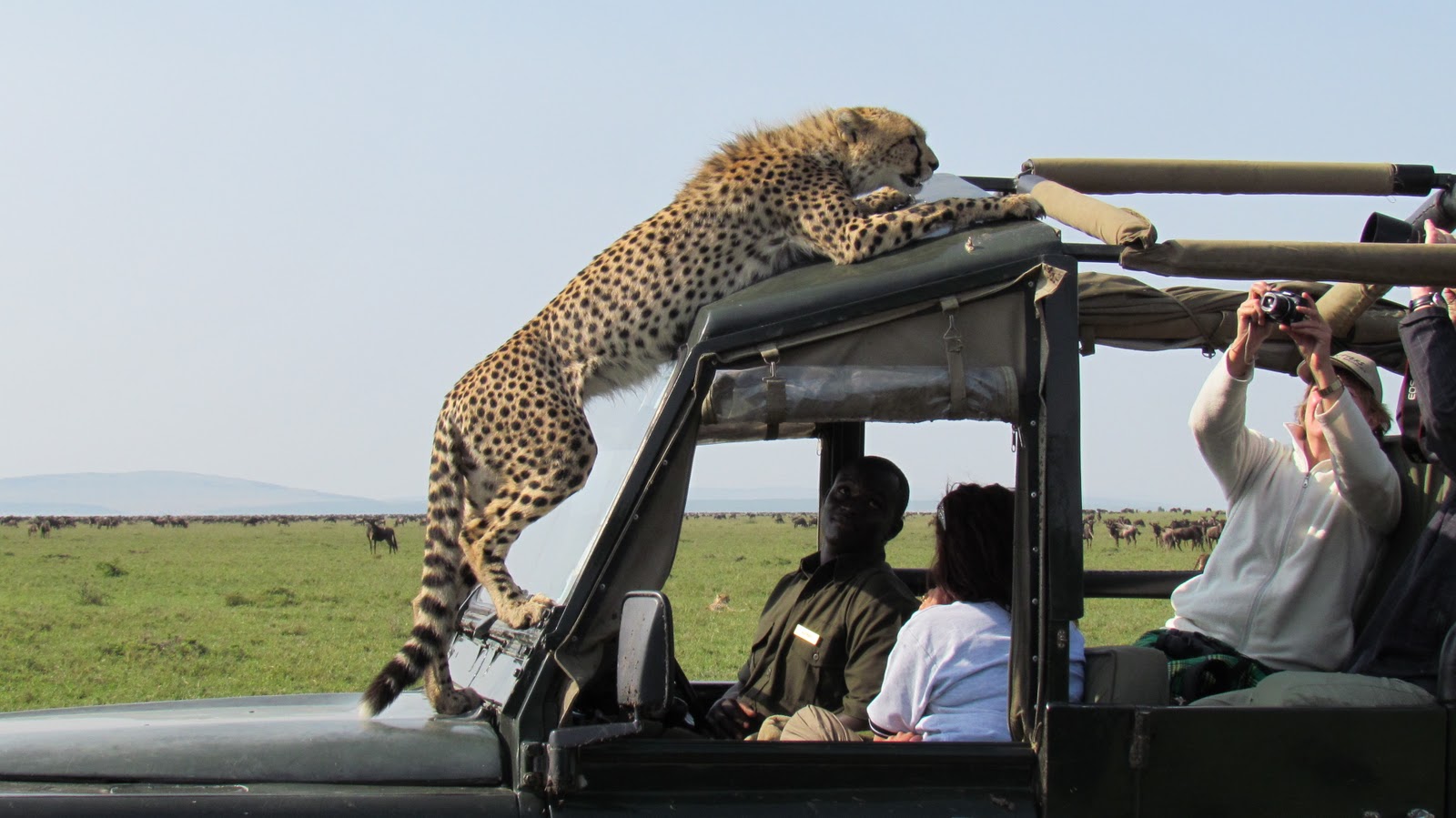
On Kenya safari tours across the Masai Mara or Samburu reserves, cheetahs scan for gazelles from termite mounds in open grasslands. The cheetah sprints at one hundred kilometers per hour, but the chase lasts less than thirty seconds. If the cheetah trips or misses, the gazelle escapes. If it connects, the cheetah suffocates the prey by clamping the throat. February Kenya safari tours see this more often because young gazelles are born and move slower. Park your vehicle at least fifty meters away so the cheetah does not get scared and abandon the hunt.
7. Walk with a ranger to see small animals
Some Kenya safari tours offer guided walking safaris in private conservancies like Mara North or Ol Pejeta. You leave the vehicle and follow an armed ranger on foot for two to three hours, looking at dung beetles, giraffe skulls, and different grass types eaten by zebras. These Kenya safari tours also teach you to track lion footprints and spot chameleons hiding in bushes. The walking experience costs extra but shows details you never see from a vehicle. Wear neutral colors and long trousers, and listen carefully to the ranger's safety instructions before stepping off.
8. Watch hyenas steal a kill at night
Night drives on Kenya safari tours booked in private conservancies run between 7 PM and 9 PM after the sun goes down. Hyenas take over kills from leopards or cheetahs after dark, so you might see a leopard eating an impala in a tree while three hyenas wait below. The leopard drops the meat and runs away, and hyenas finish everything including bones. The best Kenya safari tours for night drives provide a red-filter flashlight because white light scares nocturnal animals like bush babies and aardvarks. Book conservancy stays specifically for this experience.
9. See a herd of elephants cross a red dust road
Kenya safari tours that drive through Tsavo East National Park on the Voi to Galana road show elephants with red skin from dusting themselves with volcanic soil. Herds of two hundred individuals cross the road slowly, letting calves pass first. You wait in your vehicle for fifteen to twenty minutes while elephants walk around you. Most Kenya safari tours schedule Tsavo during dry months from June to October because water sources sit far apart. Do not honk or rev your engine. Tsavo has fewer tourists than the Mara, so you share the road with only two or three other vehicles.
10. Watch a leopard drag a kill up a tree
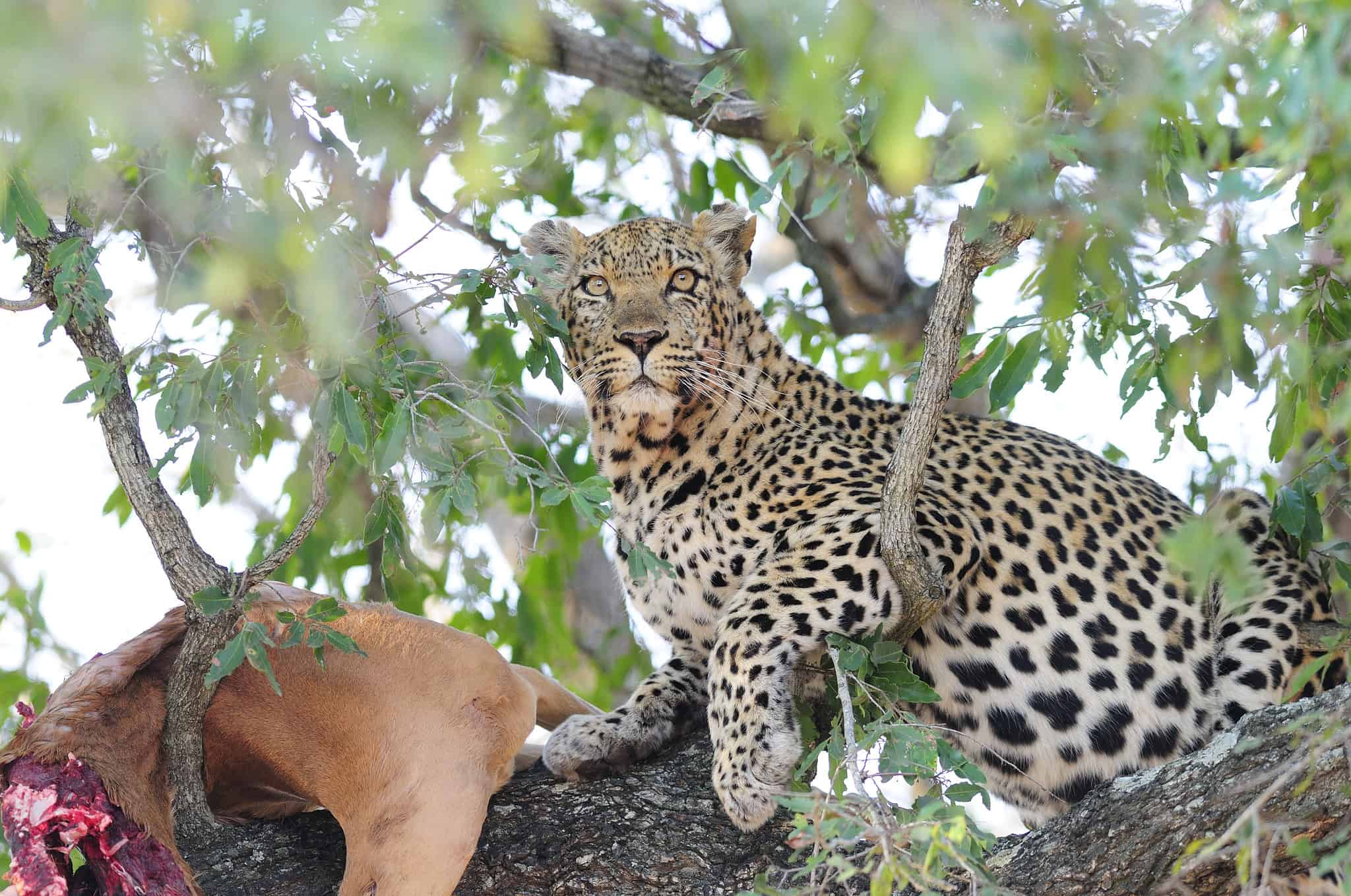
Late afternoon drives on Kenya safari tours in the Masai Mara or Samburu offer the best chance to see leopards active. Leopards hide in riverine forests during the day and come out before sunset. If a leopard catches an impala or gazelle, it drags the dead animal up a large acacia tree to eat safely away from lions and hyenas. You see blood dripping from branches and the leopard resting between bites. Successful Kenya safari tours employ local guides who know specific leopard territories and sleeping trees. Stay until sunset because leopards move later than other cats.
Best time to go for Kenya safari tours
The best time for Kenya safari tours is the dry season from June to October. During these months, rain stops almost completely, and animals gather around rivers and remaining waterholes. Grass stays short, so you see lions, leopards, and cheetahs without tall vegetation blocking your view. The Great Migration reaches the Masai Mara from July to October, offering river crossings with crocodile attacks. Most Kenya safari tours book fully during August and September, so you need to reserve lodges six months ahead. Daytime temperatures stay around 23°C to 27°C, comfortable for morning and afternoon drives. The only downside is higher prices and more vehicles at popular spots like the Mara River. For first-time visitors, this window gives you the easiest animal spotting and the most reliable weather.
The wet season from November to May works for travelers on a budget. Kenya safari tours cost nearly half the dry season rates, and camps have open beds without advance booking. Short rains fall in November and December, usually one to two hours per day. Long rains come from March to May, making some roads muddy in Tsavo and Amboseli. However, bird watching peaks during these months because European migratory birds arrive. Calving happens in February, with young zebras and wildebeest attracting predators. The grass grows tall from March onward, so animals hide more. Choose wet season Kenya safari tours if you want lower costs, green landscapes, and fewer tourists. Avoid April and May if you hate mud or have a standard rental car.
How to get there for Kenya safari tours
Getting to Kenya safari tours starts with flying into Jomo Kenyatta International Airport (NBO) in Nairobi, which receives direct flights from London, Amsterdam, Dubai, New York, and major Asian cities. From Nairobi, you have two options to reach the parks. The faster option is taking a domestic flight from Wilson Airport (just a short taxi from the international airport) to airstrips inside the Masai Mara, Amboseli, or Tsavo. These flights cost $150 to $300 one way and take one to two hours. The cheaper option is driving from Nairobi in a 4x4 vehicle. The Masai Mara requires five to six hours on tarmac and dirt roads. Amboseli takes four hours on mostly paved roads. Tsavo East sits three hours from Nairobi. Most travelers combine both methods: fly to a remote park to save time, then drive back to Nairobi through other parks. Book your internal flights at least two weeks before arrival because seats fill fast during peak season
Booking Kenya safari tours with Dav safaris
Booking Kenya safari tours with Dav Safaris is straightforward and can be done directly through our website or WhatsApp. You can reach them via email at info@davsafaris.com or by phone at +256-757-795-781 . We offer several pre-designed itineraries, including a 5-day Best of Kenya Safari covering Amboseli, Lake Nakuru, and the Masai Mara, as well as longer 8 to 12-day trips that add Samburu, Tsavo West, and beach extensions to Diani . Recent traveler reviews from early 2025 indicate the company responds quickly on WhatsApp and provides safe drivers and comfortable lodges, though some noted minor communication mistakes that were quickly resolved . For the Great Migration, booking between July and October is recommended, and you can request a custom quote directly from Dav Safaris to match your specific travel dates and group size