National Parks & Conservation Areas
Explore iconic national parks featured in our safari experiences across Uganda, Rwanda, Kenya and Tanzania.

Toubkal National Park
📍 High Atlas Mountains
🗓 Best time: April to June and September to October
Toubkal is different. Not like the cedar forests of Ifrane or the dunes of Iriqui. This one sits in the High Atlas Mountains, about an hour and a half from Marrakech. The government protected it back in 1942. It covers about 38,000 hectares. What makes it special? Mount Toubkal, the highest peak in North Africa at 4,167 meters. You have dramatic valleys, rocky peaks, mountain streams, and Berber villages clinging to hillsides. The park is a paradise for hikers. Every year, thousands come to climb Toubkal. But you do not need to go to the summit. There are easier trails through valleys like Imlil and Aroumd. The views are insane. On a clear day, you can see the Sahara. But the altitude is no joke. Some people get sick. Summer is hot in valleys. Winter is freezing with snow on peaks. Trails are rocky and steep. Still, if you want to stand on the roof of North Africa, this is the place.
Tazekka National Park
📍 Middle Atlas Mountains
🗓 Best time: April to June and September to October
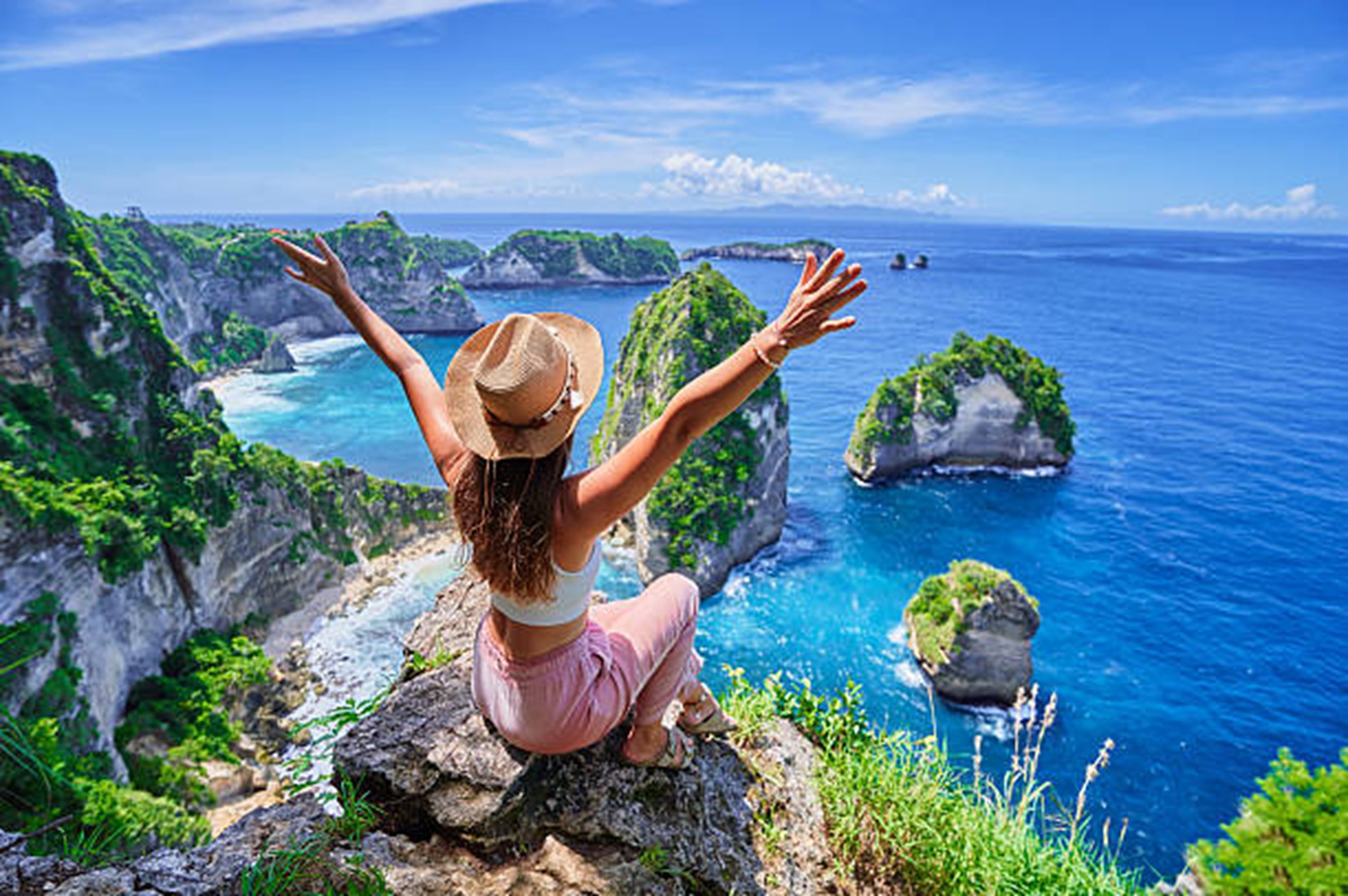
Tazekka is different. Not like the Sahara dunes or the Atlantic coast. This one sits in the Middle Atlas Mountains, not far from the town of Taza. The government protected it back in 1950, making it one of Morocco's oldest national parks. It covers about 14,000 hectares. What makes it special? A huge cedar forest, a deep limestone cave you can walk into, waterfalls, rocky gorges, and lush green valleys. The park has Barbary macaques, wild boars, and plenty of birds. The scenery changes with the seasons, green in spring, golden in autumn. Best part? Almost no crowds. Most tourists skip this place. So, you can hike through cedar forests, explore a cave, and watch monkeys without fighting for parking. Roads are winding. Facilities are basic. Winter is cold and rainy. But if you want Middle Atlas beauty without the crowds of Ifrane, this is a solid choice.

Talassemtane National Park
📍 Rif Mountains
🗓 Best time: April to June and September to October
Exploring Talassemtane National Park on Morocco Trips
Talassemtane is different. Not like the Sahara dunes or the Atlantic wetlands. This one sits up in the Rif Mountains, not far from Chefchaouen, the blue city. The government protected it back in 2004 to save the last remaining fir forests in North Africa. The park covers about 58,900 hectares. What makes it special? Limestone cliffs, deep gorges, waterfalls, and dense forests all in one place. The park is home to the endangered Barbary macaque and over 100 bird species. The scenery is dramatic with steep valleys, rocky peaks, rivers cutting through ancient rock. Best part? It is right next to Chefchaouen, one of Morocco's most beautiful towns. So, you can hike in the morning and wander through blue streets in the afternoon. But here is the catch. Roads are winding and steep. Some trails are poorly marked. Winter is cold and rainy. Still, if you want Rif mountains, forests, and waterfalls without the crowds of Ifrane, this is your spot.
Garden Route National Park
📍 Southern Coast of South Africa
🗓 Best time: November to March and June to August
Explore Garden Route National Park on an African Safari South Africa.
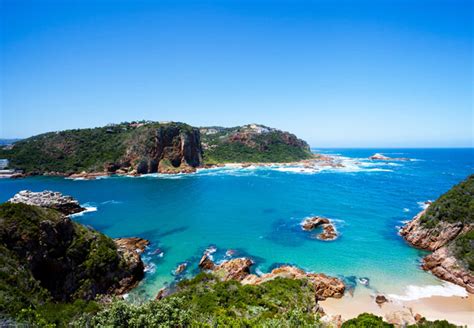
Garden Route National Park is a long stretch of protected coastline in South Africa, running between Mossel Bay and Storms River, and forming a key part of the country’s tourism offering. The park combines forests, lakes, rivers, beaches, and marine areas into one continuous conservation space, making it different from inland wildlife reserves. It includes well known sections such as Tsitsikamma, Wilderness, and Knysna, each offering a mix of landscapes and outdoor activities. This diversity makes it a strong addition to any African Safari South Africa itinerary, especially for travellers who want more than traditional game viewing. The park protects indigenous forests, fynbos vegetation, and important coastal ecosystems, all supporting a wide range of plant and animal life. Visitors can explore forest trails, river systems, and ocean viewpoints within a single trip. Its location along a major travel route also makes it easy to include in broader African Safari South Africa plans, linking Cape Town with the Eastern Cape while offering a mix of nature, relaxation, and outdoor experiences in one destination.
-(1).webp)
Souss-Massa National Park
📍 Atlantic coast
🗓 Best time: November to March and September to November
Exploring Souss-Massa National Park on Best Morocco Tours
Souss-Massa is different. Not like the cedar forests of Ifrane or the dunes of Iriqui. It sits on the Atlantic coast, between Agadir and Tarfaya. The government established it in 1991 to protect the endangered northern bald ibis, one of the rarest birds in the world. The park covers about 33,800 hectares, plus a marine zone. What makes it special? Wetlands, dunes, cliffs, and beaches all in one place. The Souss and Massa rivers flow into the Atlantic, creating estuaries packed with birds. Over 250 bird species have been recorded here. The northern bald ibis has about 100 breeding pairs here, over half of the world's wild population. You also get flamingos, ospreys, and Audouin's gulls. The park also has the last wild population of the North African ostrich. Best part? Only an hour from Agadir. So world-class birding without a crazy journey. Just do not expect big game. This is about birds, wetlands, and coastal views.
Agulhas National Park
📍 Western Cape Province
🗓 Best time: November to March and June to August
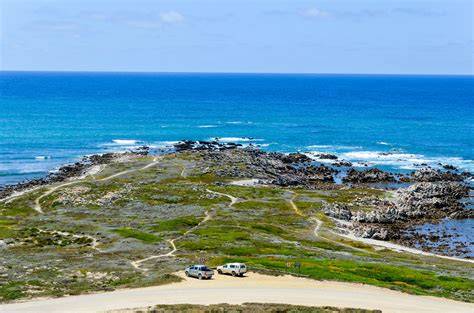
Cape Town Tours introduce Agulhas National Park as one of South Africa’s most unique coastal protected areas, located at the southern tip of the African continent where the Atlantic and Indian Oceans meet. The park stretches across rocky shorelines, wetlands, fynbos vegetation, and open plains, creating a peaceful environment shaped by both land and sea. As part of Cape Town Tours, Agulhas National Park offers a different experience from traditional wildlife reserves by focusing on coastal scenery, plant diversity, and historical landmarks. The area is well known for the Cape Agulhas Lighthouse and the official meeting point of the two oceans, which attracts travellers from around the world. Shipwreck remains scattered along the coastline also reflect the region’s long maritime history. Walking trails and quiet roads allow visitors to move through the park at a relaxed pace while taking in changing ocean views and open landscapes. Its remote atmosphere gives Cape Town Tours a calm and refreshing coastal character within South Africa.
Merja Zerga National Park
📍 Atlantic coast, north of Kenitra
🗓 Best time: November to March and January or February
Exploring Merja Zerga National Park on Morocco Trips
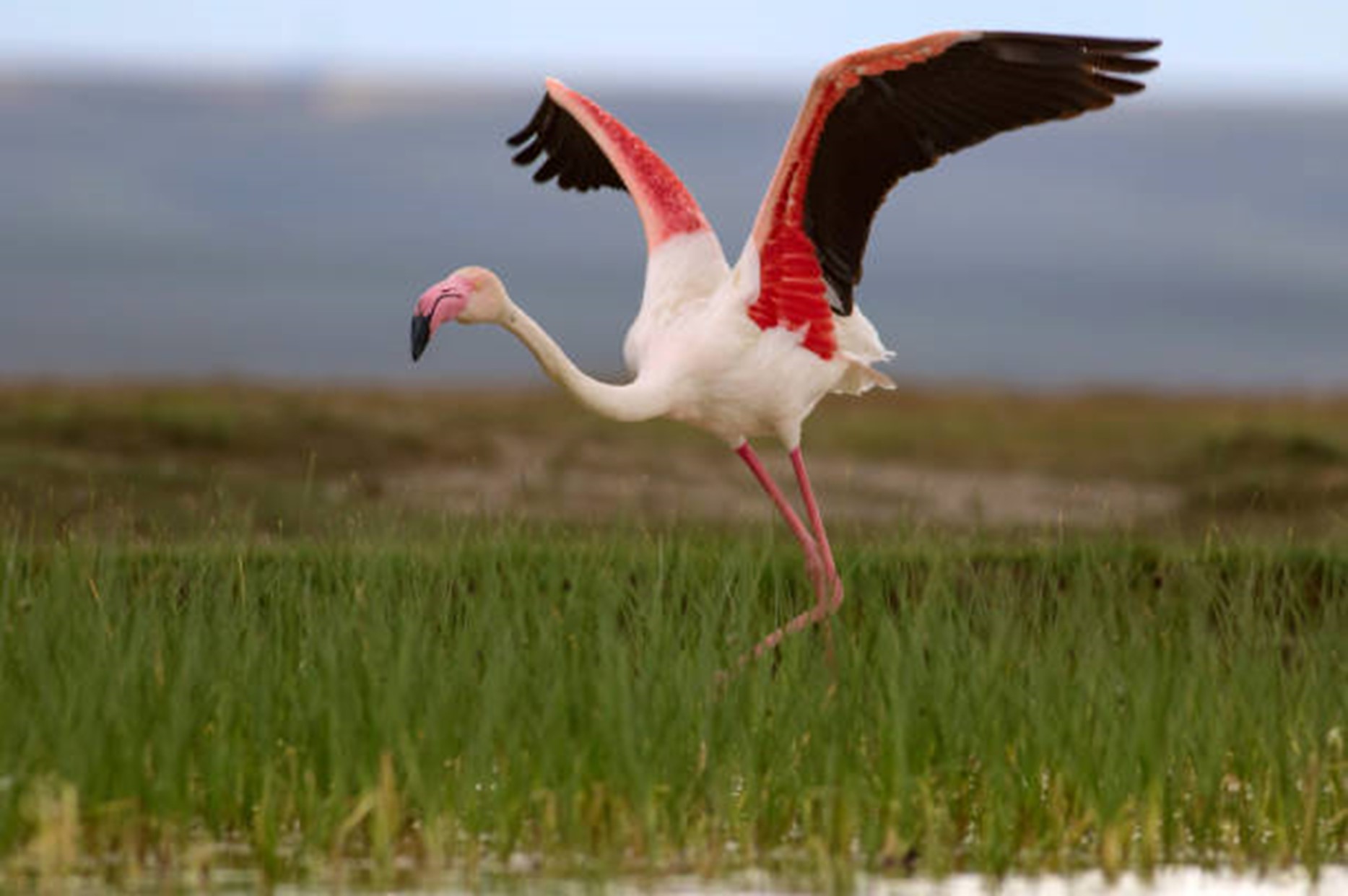
Merja Zerga is different. Not like the High Atlas peaks or the cedar forests. This one sits on the Atlantic coast, about 70 kilometers north of Kenitra, near the sleepy fishing town of Moulay Bousselham. The government protected it back in 1978. It covers about 73 square kilometers. What makes it special? It is one of the most important wetlands in North Africa. Every year, between 50,000 and 100,000 waders stop here on migration. Flamingos, spoonbills, herons, egrets. You also have the endangered Moroccan marsh owl, which is very rare. Best part? You take a small boat to explore the lagoon. Local fishermen have been here their whole lives, and they know exactly where the birds hide. But you cannot really hike here. Most of the park is marsh and farmland. Summer is hot and buggy. Winter brings the most birds. Still, if you want a quiet, slow, meditative birding experience, this is a beautiful spot.
.avif)
Khenifra National Park
📍 Middle Atlas Mountains, East of Khenifra
🗓 Best time: April to June and September to October
Exploring Khenifra National Park on Trips to Morocco
Khenifra is different from the others. Not coastal like Al Hoceima, not desert like Iriqui. It sits in the Middle Atlas Mountains, east of the city of Khenifra. The government established it in 2008. It covers 842 square kilometers. What makes it special? Cedar forests. Lots of them. This park has the most important cedar forest in Morocco. You also have two beautiful high-altitude lakes: Lake Aguelmame Aziza and Lake Aguelmame Sidi Ali. And the Oum Rbii River, the longest river in Morocco, flows right through here. The terrain is a mix of rugged mountains, rolling hills, dense cedar forests, oak woodlands, and alpine meadows. Wildlife includes Barbary macaques, Barbary stags, golden eagles, and maybe the very rare Barbary leopard if you are incredibly lucky. But here is the thing. It is not crowded. Most tourists go elsewhere. So, if you want cedar forests, mountain lakes, and solitude, this is a solid choice. Just do not expect luxury. Facilities are basic. Roads can be winding. Winter snow closes things down.
.jpg)
Khenifiss National Park
📍 Atlantic coast, South of Tan-Tan and Tarfaya
🗓 Best time: November to March and January or February
Khenifiss is different. It is not like Al Hoceima with its Mediterranean cliffs, and nothing like Iriqui with its Sahara dunes. This one sits on the Atlantic coast, way down south between Tan-Tan and Tarfaya. The government protected it in 2006, but the lagoon has been a Ramsar wetland since 1980. The park covers 1,850 square kilometers. What makes it special? The Sahara Desert literally bumps into the Atlantic Ocean here. You have this huge lagoon, the biggest on the Moroccan coast, surrounded by sand dunes, salt flats, and desert plateaus. And the birds? Thousands of them. Flamingos, shelducks, gulls. In winter, up to 20,000 birds hang out here. But here is the catch. There are almost no facilities. No shops, no visitor centers. The nearest town is Akhfenir, about 20 kilometers away. The road through the park is paved, but once you leave it, you need a 4x4. Summer is brutally hot. Winter brings strong winds. But if you want a place where flamingos outnumber people and the silence is real, this is it. Just do not expect any hand-holding.

Augrabies Falls National Park
📍 Northern Cape province
🗓 Best time: November to March and May to August
Experience Augrabies Falls National Park on an African Safari South Africa
An African Safari South Africa experience takes on a dramatic change when it reaches Augrabies Falls National Park in the Northern Cape, where the Orange River cuts through dry rocky land before dropping into a deep granite gorge. The sound of the waterfall carries across the park, especially after seasonal rains increase the water flow. As part of an African Safari South Africa, the park offers a mix of harsh desert surroundings and strong river landscapes that feel completely different from traditional game reserves. Rocky outcrops, dry plains, and scattered vegetation create a rugged setting shaped by heat, wind, and water over many years. Visitors often spend time at viewpoints overlooking the falls, while quieter roads lead into areas filled with unusual plants and desert wildlife. The contrast between the dry terrain and the powerful river gives the park its unique character, making it a memorable stop within an African Safari South Africa itinerary.

Iriqui National Park
📍 Southeastern Morocco
🗓 Best time: Mid-October or Late March
Exploring Iriqui National Park on Morocco Trips
Iriqui National Park is nothing like Ifrane or Al Hoceima. Honestly, it is just sand, heat, and silence. The government set it up back in 1994, and it covers a massive chunk of land (123,000 hectares), if numbers matter to you. Most days, you are looking at endless dunes, dry riverbeds, and those scraggy acacia trees that somehow refuse to die. But every once in a while, maybe once in a decade if you are lucky, heavy rains hammer the region. Then Lake Iriqui wakes up. Suddenly, out of nowhere, flamingos. In the middle of the Sahara. It feels like a fever dream. The landscape here hits different. Erg Chigaga's dunes are huge, some of the biggest in Morocco. Then you have these rocky plateaus and that weird white salt crust at the lakebed. And the quiet? It gets under your skin. No cars, no people, no noise. Just wind. That is the best part, honestly. You can wander for hours and not run into another soul. Merzouga feels like a theme park compared to this place. At night, the stars are insane. No light pollution at all. But do not get it twisted. Summer is brutal. We are talking 45°C plus. There are no paved roads, no shops, no help if something goes wrong. And the lake? Bone dries most years. You need a proper 4x4, not a city SUV. A lot of people underestimate the desert. Do not be one of them.

Ifrane National Park
📍 Western Middle Atlas
🗓 Best time: May or September
Exploring Ifrane National Park on Morocco Tours
Ifrane National Park sits up in the Middle Atlas Mountains, and honestly, it feels nothing like the rest of Morocco. Most people picture deserts and hot cities, but up here it is all cedar forests, cold winters, and snow. Established in 2004, the park covers about 125,000 hectares. What makes this place special is the altitude. You walk through what looks like a European pine forest, but you know you are in Africa because of the monkeys. It is a major spot for the endangered Barbary macaque. The park spreads across the western Middle Atlas, with altitudes between 1,300 and 2,400 meters. You will find permanent lakes like Dayet Aoua and Aguelmam Afennourir, a Ramsar wetland. The terrain includes forested hills, volcanic craters, and cold streams. The biggest pro is the climate. When the rest of Morocco bakes in 40°C+ heat, the Middle Atlas stays cool. You need a jacket at night, even in summer. However, it gets cold here. Ifrane once recorded Africa's lowest temperature: -23.9°C. The main cedar forests can get crowded on weekends. You absolutely need warm clothes in winter. Do not underestimate the mountain cold.

Haut Atlas Oriental National Park
📍 Eastern High Atlas Mountains
🗓 Best time: Mid-May or late September
Exploring Haut Atlas Oriental National Park on Morocco Trips
This park is up in the eastern High Atlas Mountains. It feels completely different from Ifrane or Iriqui. No cedar forests, no Sahara sand. Just rugged mountains, rocky plateaus, deep valleys, and silence. The government protected it in 2004, covering about 49,000 hectares. Part of it has been a Ramsar site since 2005, meaning the wetlands here matter internationally. You have twin lakes, Isli and Tislit, near Imilchil. The northern side is greener, the southern side drier. In winter, snow hits the high peaks hard. Almost no tourists come here. Berber communities are welcoming. Birdwatching is good. But do not expect luxury. Facilities are basic. Roads can be rough. You need a good vehicle and a sense of adventure.

Kgalagadi Transfrontier Park
📍 southern Kalahari Desert
🗓 Best time: May to September and November to March
Experience Kgalagadi Transfrontier Park on a South Africa Safari Trip
A South Africa Safari that leads into Kgalagadi Transfrontier Park begins to feel remote as the road stretches into the dry Kalahari region along the border of South Africa and Botswana. This vast conservation area is known for its red sand dunes, open horizons, and long stretches of silence that shape the travel experience from the moment you arrive. As part of a South Africa Safari, the park offers a setting where space becomes the main feature, with golden grasses and deep orange dunes changing colour under shifting light. The Auob and Nossob riverbeds run through the park, often dry but supporting life through underground water sources. These natural corridors guide movement for wildlife and create natural viewing routes for visitors. The park’s size and low human presence allow travellers to spend long hours on game drives without interruption. This makes it a strong and memorable stop within a South Africa Safari itinerary focused on open wilderness.

Dakhla National Park
📍 Atlantic coast of the Sahara
🗓 Best time: November to March
Exploring Dakhla National Park on Morocco Trips
Dakhla is different. Not like the cedar forests of Ifrane or the High Atlas peaks. This one sits on the Atlantic coast of the Sahara, way down south near Mauritania. It covers a massive area of land and sea. What makes it special? The Sahara Desert meets the Atlantic Ocean here. You have a huge turquoise lagoon surrounded by white sand dunes, , and endless stony desert. The upwelling of cold, nutrient-rich water creates incredible marine life. Birds are everywhere like gulls, flamingos, ospreys. The park is a critical stop on migration routes. Best part? It is also world-famous for kitesurfing. But this place is remote. Summer is hot. Wind blows constantly. You need a 4x4 to explore inland. Still, if you want to stand on a cliff watching monk seals play in the waves below, or drive across a desert that inspired The Little Prince, this is it.

Al Hoceima National Park
📍 Mediterranean coast, Rif Mountains
🗓 Best time: April to June or September to October
Exploring Al Hoceima National Park on Morocco Trips
Al Hoceima National Park is different. Honestly, it is nothing like the Sahara or the High Atlas. This one sits along the Mediterranean coast in the Rif Mountains. The government protected it back in 2004. It covers about 480 square kilometers, and part of that is actually underwater, 196 square kilometers of sea. So, you get cliffs, beaches, forested hills, and rich marine life all in one spot. The best part? It is not crowded. Most tourists go to other places, so here you actually get peace. The park is known for dolphins, rare birds, and crystal-clear water. You can hike, snorkel, or just sit on a quiet beach. The city of Al Hoceima is nearby with good food and Berber culture. But do not expect big game safaris. There are no lions here. Wildlife is more about marine life and birds. Some areas are still underdeveloped, so luxury travelers might struggle. In summer, beaches can get busy with locals. And the roads in the mountains? Winding and slow. But if you want a mix of sea and mountains without the crowds, this place is worth the drive. Just do not underestimate the mountain roads.
Camdeboo National Park
📍 Eastern Cape province
🗓 Best time: November to March and May to September
Experience Camdeboo National Park on African safari South Africa trip.
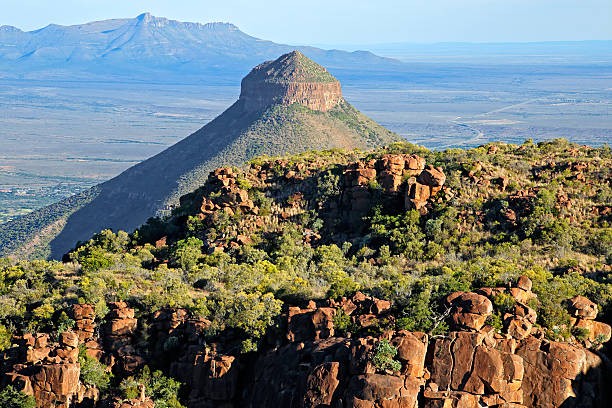
An African safari South Africa experience takes on a different character when it reaches Camdeboo National Park, located near the historic town of Graaff Reinet in the Eastern Cape. The park is shaped by wide plains, rocky hills, and the well-known Valley of Desolation, where tall dolerite columns rise sharply above the land. As part of an African safari South Africa, this setting offers a calm and open environment where visitors can take in both geological formations and quiet landscapes. The park surrounds the Nqweba Dam, adding water views that contrast with the dry Karoo terrain. Vegetation is mainly semi-arid, supporting hardy plant life suited to limited rainfall. The peaceful setting allows visitors to slow down and appreciate the space, light, and changing colours across the land. This balance of landforms and quiet atmosphere makes the park a unique addition to an African safari South Africa itinerary.

Tarangire National Park
📍 Northern Tanzania
🗓 Best time: June to October
Exploring Tarangire National Park on Tanzania Safari Tour
Tanzania Safari Tour at Tarangire National Park is completely different. It is not like the endless plains of the Serengeti or the chimpanzee forests of Mahale. This beautiful park sits in northern Tanzania, just a two hour drive from Arusha. On Tanzania Safari Tour here, Tarangire is famous for its massive elephant herds and ancient baobab trees. What makes Tanzania Safari Tour here special is the concentration of wildlife during the dry season. The Tarangire River is one of the only water sources in the region, so animals come from everywhere to drink. You will see herds of elephants numbering in the hundreds. The park is also home to lions, leopards, cheetahs, and the rare African wild dog. The baobab trees are ancient, some over a thousand years old. If you want a quieter safari experience with huge elephant herds and stunning landscapes, Tarangire on Tanzania Safari Tour is a must. It is less crowded than the Serengeti, but the wildlife is spectacular. Here is everything you need to know.

Serengeti National Park
📍 Northern Tanzania
🗓 Best time: June to October
Exploring Serengeti National Park on Tanzania Safari Tour
Tanzania Safari Tour at Serengeti National Park is completely different. It is not like the remote chimpanzee forests of Mahale or the bush meeting beach of Saadani. This world famous park sits in northern Tanzania, stretching all the way to the Kenyan border. On Tanzania Safari Tour here, the Serengeti is the most iconic wildlife destination on earth. What makes Tanzania Safari Tour here special is the Great Migration. Over two million wildebeest, zebras, and gazelles move in an endless circle across the plains. You can watch river crossings where crocodiles wait and lions hunt. The park also has the highest concentration of lions in Africa, along with leopards, cheetahs, elephants, and hundreds of bird species. The open plains stretch to the horizon. The sunsets are unforgettable. If you want the ultimate classic safari experience, Serengeti on Tanzania Safari Tour is a must. It is busy and not cheap, but for good reason. Here is everything you need to know.

Saadani National Park
📍 Coast of Indian Ocean
🗓 Best time: June to October
Exploring Saadani National Park on African Safari Tours Tanzania
African Safari Tours Tanzania at Saadani National Park is completely different. It is not like the remote chimpanzee forests of Mahale or the open plains of the Serengeti. This unique park sits on the coast of the Indian Ocean, just a few hours from Dar es Salaam. On African Safari Tours Tanzania here, Saadani is the only national park in Tanzania that meets the sea. What makes African Safari Tours Tanzania here special is the combination of bush and beach. You can see elephants walking on the sand in the morning, then swim in the Indian Ocean in the afternoon. Lions, buffalo, giraffes, and hippos live here alongside mangroves, coral reefs, and sea turtles. The park is not crowded. It is easy to reach. And it offers a safari experience you will not find anywhere else in Tanzania. If you want to combine wildlife with a beach holiday without flying to Zanzibar, Saadani on African Safari Tours Tanzania is perfect. It is not as famous as the northern parks, but for good reason. Here is everything you need to know.

Kruger National Park
📍 North Eastern South Africa
🗓 Best time: May to September and October to April
Explore Kruger National Park on a Kruger Park Safari South Africa.
Kruger National Park is the largest and most famous wildlife reserve in South Africa, forming a major highlight of a Kruger Park Safari South Africa experience. Located across Limpopo and Mpumalanga provinces, the park stretches for nearly 20,000 square kilometres and supports one of the richest wildlife populations on the African continent. The landscape includes open savannahs, river systems, woodlands, rocky hills, and grasslands, creating varied habitats for animals and birds throughout the park. A Kruger Park Safari South Africa offers travellers the opportunity to experience classic African wildlife viewing, including the Big Five, within a well-managed conservation environment. The park is also known for its extensive road network, allowing both guided safaris and self-drive exploration. In addition to wildlife, Kruger National Park protects important archaeological and cultural sites connected to the region’s history. Its combination of biodiversity, accessibility, and safari infrastructure makes it one of the leading destinations for travellers planning a Kruger Park Safari South Africa.

Addo Elephant National Park
📍 Eastern Cape province of South Africa
Explore Addo Elephant National Park on an African Safari South Africa
Addo Elephant National Park is one of South Africa’s most important conservation areas and a major highlight of an African Safari South Africa experience. Located in the Eastern Cape near Gqeberha (Port Elizabeth), the park was originally established to protect the remaining elephant population in the region and has since grown into a large, diverse protected area. It now covers varied ecosystems including dense thicket, open grasslands, coastal dunes, offshore islands, and mountainous regions, making it one of the most ecologically diverse parks in the country. An African Safari South Africa in Addo Elephant National Park gives travellers the opportunity to experience close elephant sightings in a well-managed and malaria free environment. The park is also known for its strong conservation success story, particularly in restoring elephant populations. Its compact layout and good road network make it suitable for both guided safaris and self-drive experiences. The combination of wildlife, scenery, and accessibility makes Addo a key stop on an African Safari South Africa itinerary.

Pilanesberg National Park
📍 Bojanala Region, North West Province
🗓 Best time: May to September and October to April
Explore Pilanesberg National Park on an African Safari South Africa
Pilanesberg National Park is one of the most accessible wildlife destinations in the country and forms an important part of an African Safari South Africa experience. Located in the North West Province near Sun City, the park lies within an ancient volcanic crater that has shaped its distinctive landscape of rolling hills, open plains, rocky outcrops, and waterholes. The park covers over 500 square kilometres and supports a wide variety of wildlife species within a malaria free environment. An African Safari South Africa in Pilanesberg National Park offers travellers an opportunity to enjoy Big Five game viewing without travelling deep into remote wilderness areas. The reserve is known for its well maintained road network, making both guided safaris and self-drive exploration easy and comfortable. Pilanesberg also supports diverse vegetation zones that attract different animal and bird species throughout the year. Its proximity to Johannesburg and Pretoria makes it a convenient addition to an African Safari South Africa itinerary for travellers seeking wildlife, scenery, and easy access within one destination.

West Coast National Park
📍 Western Cape province
🗓 Best time: August to October and November to March
Explore West Coast National Park for Cape Town and safari Tours
Cape Town and Safari Tours introduce West Coast National Park as a coastal reserve located about 120 kilometres north of Cape Town, offering a different experience from inland wildlife parks. The park stretches along the Atlantic coastline and surrounds the well-known Langebaan Lagoon, creating a mix of marine, wetland, and fynbos environments in one protected area. Unlike traditional reserves focused on large predators, this park is known for seasonal wildflowers, birdlife, and peaceful coastal scenery, making it a valuable addition to Cape Town and Safari Tours. During spring, large sections of the park transform with colourful flower displays, attracting visitors from across the country. The lagoon provides calm waters ideal for birdwatching and water activities, while inland areas support antelope and small mammals. Its proximity to Cape Town allows easy access for day trips or short stays. This combination of coastal landscapes, plant diversity, and accessible location makes West Coast National Park an important stop within Cape Town and Safari Tours itineraries.

Rubondo Island National Park
📍 Southwestern corner of Lake Victoria
🗓 Best time: June to October
Exploring Rubondo Island National Park on Tanzania Safari
Tanzania Safari at Rubondo Island National Park is completely different. It is not like the busy northern circuit or the remote wilderness of Ruaha. This unique park sits on an island in the southwestern corner of Lake Victoria, the largest lake in Africa. On Tanzania Safari here, Rubondo is only accessible by boat or small plane. What makes Tanzania Safari here special is the combination of forest, lake, and wildlife. The island is covered in dense rainforest, with sandy beaches along the shoreline. You can see chimpanzees that were introduced to the island decades ago. You can fish for the legendary Nile perch, one of the largest freshwater fish in the world. You can go boat safaris to see hippos, crocodiles, and hundreds of bird species. There are no roads, no crowds, and very few tourists. If you want a remote, off the beaten path adventure on Tanzania Safari, Rubondo Island is a hidden gem. It takes effort to reach, but for good reason.

Ruaha National Park
📍 southern Tanzania
🗓 Best time: June to October
Exploring Ruaha National Park on African Safari Tours Tanzania
African Safari Tours Tanzania at Ruaha National Park is completely different. It is not like the busy northern circuit. This wild park sits in southern Tanzania, far from the crowds. On African Safari Tours Tanzania here, Ruaha is the largest national park in Tanzania, covering over 20,000 square kilometers. What makes African Safari Tours Tanzania here special is true wilderness. You can drive for hours and see no other vehicles. The park is famous for its large elephant herds, lions, leopards, and the endangered African wild dog. The landscape has baobab trees, rocky escarpments, and the great Ruaha River. If you want a wild, authentic safari away from the crowds, Ruaha on African Safari Tours Tanzania is a must.

Nyerere National Park
📍 Southeastern Tanzania
🗓 Best time: June to October
Exploring Nyerere National Park on Tour Safari Tanzania
Tour Safari Tanzania at Nyerere National Park is completely different. It is not like the crowded northern circuit or the small parks near Arusha. This vast wilderness sits in southeastern Tanzania, along the mighty Rufiji River. Formerly part of the Selous Game Reserve, Nyerere was named after Tanzania's first president and covers over 30,000 square kilometers. On Tour Safari Tanzania here, Nyerere is one of the largest protected areas in Africa. What makes Tour Safari Tanzania here special is the remoteness. You can drive for hours and see no other vehicles. The park is famous for its massive elephant herds, the endangered African wild dog, and the Rufiji River teeming with hippos and crocodiles. You can explore by vehicle, boat, or even on foot with an armed ranger. If you want a wild, off the beaten path safari experience, Nyerere on Tour Safari Tanzania is a must. It takes more effort to reach, but for good reason.

Ngorongoro Crater
📍 Northern Tanzania
🗓 Best time: June to October
Exploring Ngorongoro Crater on Tour Safari Tanzania
Tour Safari Tanzania at Ngorongoro Crater is completely different. It is not like the remote wilderness of Katavi or the open plains of Mikumi. This world famous crater sits in northern Tanzania, between the Serengeti and Lake Manyara. On Tour Safari Tanzania here, the Ngorongoro Crater is the largest inactive volcanic caldera on earth, about 19 kilometers wide and 600 meters deep. What makes Tour Safari Tanzania here special is the wildlife concentration. About 25,000 large animals live inside the crater, including lions, elephants, rhinos, buffalo, leopards, and hyenas. You can see all of the Big Five in a single morning drive. The views from the crater rim are breathtaking, especially at sunrise. If you want the ultimate classic safari experience, Ngorongoro on Tour Safari Tanzania is a must. It is busy and expensive, but for good reason.

Akagera National Park
📍 Eastern Province of Rwanda
🗓 Best time: June to September and December to February
Wildlife Moments in Akagera on a Rwanda Safari Tour
Wildlife viewing is one of the main highlights of visiting Akagera National Park during a Rwanda Tour Safari. The park is well known for hosting the famous Big Five animals, including lions, elephants, rhinos, leopards, and buffaloes, offering travellers exciting opportunities to enjoy memorable game drives across the savannah plains. Visitors on a Rwanda Tour Safari also have chances to spot giraffes, zebras, impalas, topis, elands, waterbucks, bushbucks, and hippos within different parts of the park. Crocodiles are commonly seen near the shores of Lake Ihema during boat cruises, while the park’s wetlands and forests attract over 500 bird species, making Akagera an excellent destination for birdwatching. The beautiful combination of rolling grasslands, lakes, papyrus swamps, and woodland areas creates ideal habitats for wildlife throughout the year. A Rwanda Tour Safari in Akagera National Park offers peaceful nature experiences, stunning landscapes, and rewarding wildlife encounters for all travellers.

Mkomazi National Park
📍 Northeastern Tanzania
🗓 Best time: June to October
Exploring Mkomazi National Park on Tanzania Safari Packages
Tanzania Safari Packages at Mkomazi National Park are different. It is not like the famous Serengeti or the crowded Ngorongoro. This remote park sits in northeastern Tanzania on the Kenyan border. On Tanzania Safari Packages here, Mkomazi covers over 3,000 square kilometers of dry savanna and rocky hills. What makes Tanzania Safari Packages here special is the conservation success story. This is one of the best places in Tanzania to see both black and white rhinos. They live in a protected sanctuary and are thriving after nearly being wiped out by poaching. The park also has a healthy population of endangered African wild dogs. On Tanzania Safari Packages, you will also see large elephant herds, giraffes, zebras, and the beautiful fringe eared oryx with its long straight horns. If you want to see rhinos and wild dogs without the crowds, Mkomazi is a hidden gem. You often have the whole park to yourself.

Golden Gate Highlands National Park
📍 Eastern Free State Province
🗓 Best time: October to March and May to September
Experience Golden Gate Highlands National Park for a relaxed South Africa safari trip
A South Africa safari does not always follow the same path of dense bush and large predators, and Golden Gate Highlands National Park shows this clearly as the road begins to rise into rolling hills and wide valleys. Located near the border of Lesotho, the park is known for its sandstone cliffs that glow with a golden colour when sunlight touches them, giving the area a warm and distinct character. As part of a South Africa safari, this park offers a slower pace, where the focus shifts from chasing sightings to appreciating space, silence, and natural form. Streams run quietly through the valleys, while open grasslands stretch across the hills, creating a peaceful rhythm for visitors. The park also lies within the wider Maloti-Drakensberg region, an area valued for both its cultural and environmental importance. Spending time here adds a different chapter to a South Africa safari, one that feels grounded and calm.

Mikumi National Park
📍 southeastern Tanzania
🗓 Best time: June to October
Exploring Mikumi National Park on Tanzania Safari Tour
Tanzania Safari Tour at Mikumi National Park is different. It is not like the remote wilderness of Katavi or the steep forests of Mahale. This park sits in southeastern Tanzania, about a four hour drive from Dar es Salaam, and it is the most accessible safari destination from the country's largest city. On Tanzania Safari Tour here, Mikumi covers about 3,230 square kilometers, making it the fourth largest national park in Tanzania. What makes Tanzania Safari Tour here special is the ease of access combined with classic African wildlife. You can see lions, elephants, buffalo, giraffes, zebras, and wildebeest all in a single morning drive. The park is often called "Little Serengeti" because of its open grasslands stretching to the horizon. On Tanzania Safari Tour, you also have a chance to see the rare African wild dogs in the more remote sections. If you want a classic safari without flying all the way to the Serengeti, Mikumi on Tanzania Safari Tour is a fantastic choice. It is easy to reach, affordable, and packed with wildlife.

Karoo National Park
📍 Western Cape Province
🗓 Best time: November to March and May to September
Explore Karoo National Park on a South Africa safari trip.
A South Africa safari that reaches Karoo National Park begins to feel different as the landscape opens into wide, dry plains with distant mountain backdrops. Located near the town of Beaufort West, the park protects part of the Great Karoo, a semi-arid region known for its vast space and unique vegetation. As part of a South Africa safari, this park offers a sense of stillness, where long drives reveal open land, scattered shrubs, and rocky hills. The Nuweveld Mountains rise along the edge of the park, adding structure to the otherwise flat terrain. This environment supports a range of plant and animal life adapted to dry conditions. Visitors often find the quiet atmosphere refreshing, especially after time spent in busier reserves. The park’s setting allows for slow exploration, where the focus is on space, light, and changing colours across the land. This creates a different but valuable chapter within a South Africa safari experience.

Mahale Mountains National Park
📍 Western Tanzania
🗓 Best time: May to October
Exploring Mahale Mountains National Park on African Safari Tours Tanzania
African Safari Tours Tanzania at Mahale Mountains National Park is completely different. It is not like the open plains of the Serengeti or the floodplains of Katavi. This remote park sits on the shores of Lake Tanganyika in western Tanzania, and it is one of the most difficult places to reach. On African Safari Tours Tanzania here, Mahale is famous for its chimpanzees and its stunning location. What makes African Safari Tours Tanzania here special is the combination of primates and paradise. You trek through dense rainforest to find chimp families, then you come down and swim in the crystal clear waters of Lake Tanganyika. The park has no roads, so everything is on foot or by boat. There are only a handful of camps, so you feel completely remote. If you want a true off the grid adventure that combines chimp trekking with beach relaxation, Mahale on African Safari Tours Tanzania is the place. It takes effort and money to reach, but the experience is unlike anywhere else.

Mapungubwe National Park
📍 Limpopo Province of South Africa
🗓 Best time: May to September and October to April
Explore Mapungubwe National Park for a safari in South Africa
A safari in South Africa takes on a distinct character when it reaches Mapungubwe National Park, located in Limpopo Province at the meeting point of South Africa, Botswana, and Zimbabwe. The park lies along the Limpopo and Shashe rivers, where fertile floodplains contrast with dry woodland and sandstone hills. As part of a safari in South Africa, this setting offers both natural and historical depth, as the area was once home to one of the earliest African kingdoms. The Mapungubwe Hill stands as a central feature, marking an important archaeological site that reflects early trade and settlement. Wildlife moves across open plains and riverine areas, while large baobab trees add a strong visual presence. The park feels quiet and less crowded, allowing visitors to take in both land and history at a steady pace. This combination of heritage and nature gives Mapungubwe a unique place within a safari in South Africa itinerary.
Nyungwe National Park
📍 Southwestern Rwanda
🗓 Best time: June to September and December to February
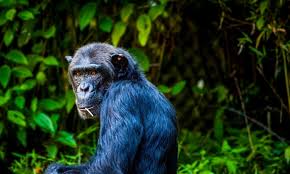
Wildlife viewing in Nyungwe National Park is a key highlight of a Rwanda Tour Safari, offering a rich rainforest experience with primates, birds, and unique forest wildlife. The park is famous for chimpanzees, colobus monkeys, L’Hoest’s monkeys, and mangabeys seen during guided forest treks. Visitors also encounter small mammals, butterflies, and reptiles hidden in dense vegetation. A Rwanda Tour Safari in Nyungwe is well known for chimpanzee tracking and canopy walks that reveal stunning views of the rainforest. Its ancient trees, misty hills, and deep valleys create a magical setting, making Nyungwe a top destination for nature lovers in Rwanda.

Marakele National Park
📍 Limpopo Province
🗓 Best time: May to September and October to April
Experience Marakele National Park with mountain landscapes and wildlife for Best Safari South Africa trip
A Best Safari South Africa experience takes a different shape when it reaches Marakele National Park, set within the Waterberg Mountains in Limpopo Province. The road into the park slowly climbs through valleys and rocky ridges, where landscapes change from bushveld plains to high mountain views. As part of a Best Safari South Africa, this park offers a mix of habitats that support both lowland and mountain species in one setting. The name Marakele means “place of sanctuary,” reflecting its role in conservation and its quiet atmosphere. One of the most striking features is the high viewpoint overlooking deep valleys, giving wide views across the region. Vegetation varies from grassland to dense bush, creating a natural balance that supports wildlife. The park feels less crowded than many reserves, allowing visitors to take in the surroundings at a steady pace, making it a strong addition to a Best Safari South Africa itinerary.

Lake Manyara National Park
📍 Great Rift Valley escarpment
🗓 Best time: June to October
Exploring Lake Manyara National Park on Tour Safari Tanzania
Tour Safari Tanzania at Lake Manyara National Park is different. It is not like the endless Serengeti or remote Katavi. This park sits at the base of the Great Rift Valley escarpment, only two hours from Arusha. On Tour Safari Tanzania here, Lake Manyara is famous for its tree climbing lions and massive flocks of flamingos. What makes Tour Safari Tanzania here special is the variety. You get groundwater forests, acacia woodlands, grassy floodplains, and the lake all in one small area. Birdlife is spectacular with over 400 species. And those tree climbing lions? They are common here, lounging on acacia branches. The park also has large elephant herds and cheeky baboons. If you want a short, easy safari from Arusha that packs a lot, Lake Manyara on Tour Safari Tanzania is perfect.

Katavi National Park
📍 Southwest Tanzania
🗓 Best time: May to October
Exploring Katavi National Park on Tanzania Safaris
Tanzania Safaris at Katavi National Park are completely different. This remote park sits in far southwest Tanzania, near the Zambia border, and it is one of the wildest, least visited places in the country. On Tanzania Safaris here, Katavi covers over 4,000 square kilometers, yet it gets fewer visitors in a whole year than the Serengeti sees in a single day. What makes Tanzania Safaris here special is the raw wilderness. There are no paved roads, no crowds, no luxury lodges everywhere. You can drive for hours without seeing another vehicle. The wildlife is spectacular and undisturbed. Enormous buffalo herds, sometimes thousands strong, gather on the floodplains. Hippos pack the Katuma River by the hundreds. If you want to experience Tanzania as it was fifty years ago, Katavi on Tanzania Safaris is the place. It takes effort to reach, but that is exactly why it is so special.

Grumeti Game Reserve
📍 western edge of Serengeti National Park
🗓 Best time: June to October
Exploring Grumeti Game Reserve on Tanzania Safari Tour
Tanzania Safari Tour at Grumeti Game Reserve is completely different. It is not like the crowded Serengeti where you share roads with dozens of other vehicles. This private reserve sits on the western edge of Serengeti National Park, covering 350,000 acres of pristine wilderness. On a Tanzania Safari Tour here, Grumeti was established in 1994 to protect the wildebeest migration path. What makes a Tanzania Safari Tour here special is exclusivity. The reserve restricts visitors to around 60 people across a few ultra luxury lodges. You can drive off road, go on walking safaris, and do night game drives. The wildlife is spectacular. Healthy prides of lions, large herds of elephants, and the famous Grumeti River crossings where thousands of wildebeest risk giant crocodiles. If you want to avoid crowds but still experience incredible safari action, Grumeti on a Tanzania Safari Tour is the place. The lodges are top end, but worth every shilling.

Gombe National Park
📍 Western Tanzania
🗓 Best time: May to October
Exploring Gombe National Park on Tanzania Safari Tour
Tanzania Safari Tour at Gombe National Park is completely different. It is not like the endless plains of the Serengeti. This park sits on Lake Tanganyika in western Tanzania. On a Tanzania Safari Tour here, Gombe is tiny, only 52 square kilometers. But a Tanzania Safari Tour here is special because of the chimpanzees. This is where Dr. Jane Goodall began her research in 1960. On a Tanzania Safari Tour, you trek through steep forests to find wild chimpanzee families. You will also see olive baboons and red colobus monkeys on a Tanzania Safari Tour. You can swim in Lake Tanganyika too. But reaching Gombe on a Tanzania Safari Tour is not easy. There are no roads. You arrive by boat from Kigoma. The hiking is steep. But if you want to watch chimpanzees meters away, this is the place.

Arusha National Park
📍 Between Mount Meru and the Kenyan border
🗓 Best time: June to October
Exploring Arusha National Park on Tanzania Safari
Tanzania Safari at Arusha National Park is different. It is not like the endless plains of the Serengeti or the giant crater of Ngorongoro. On a Tanzania Safari here, the park sits right outside Arusha city between Mount Meru and the Kenyan border. It was protected in 1960 and covers only 137 square kilometers, tiny by African standards. But a Tanzania Safari here gives you three landscapes in one small package. Mount Meru, the second highest peak in Tanzania, Ngurdoto Crater called "Little Ngorongoro," and the Momella Lakes that turn pink with flamingos. The best part of a Tanzania Safari here is that you can do walking safaris and canoeing, which you cannot do in most other parks. You will not see the Big Five on a Tanzania Safari here, but you will get a quiet, gentle introduction to Tanzania's wildlife without the crowds of the Serengeti.
.jpg)
Mountain Zebra National Park
📍 Eastern Cape South Africa
🗓 Best time: November to March and May to August
Explore Mountain Zebra National Park on a Safari in South Africa.
Mountain Zebra National Park is located near Cradock in the Eastern Cape and forms an important conservation area within a Safari in South Africa experience. Originally established to protect the endangered Cape Mountain zebra, the park has expanded over the years into a diverse landscape of mountains, plains, valleys, and rocky outcrops. The setting combines open grasslands with rugged terrain, creating a peaceful environment that differs from the busier safari parks in other parts of the country. A Safari in South Africa through Mountain Zebra National Park offers travellers a chance to experience wildlife viewing alongside dramatic scenery and quiet surroundings. The park also supports a variety of plant species adapted to semi-arid conditions, contributing to the balance of the ecosystem. Visitors can enjoy scenic drives, walking trails, and viewpoints that overlook the surrounding mountains. Its location in the Eastern Cape also makes it easy to combine with other destinations while travelling on a Safari in South Africa.

Namaqua National Park
📍 Northern Cape province
🗓 Best time: August to September and November to March
Explore Namaqua National Park on a Safari South Africa experience
Namaqua National Park is located in the Northern Cape province of South Africa near the small town of Kamieskroon, protecting a large section of the Namaqualand region known for its seasonal wildflowers and dry mountain landscapes. A Safari South Africa journey into this park feels calm and different from traditional wildlife reserves because the environment focuses more on open scenery, coastal views, and changing colours across the land. During spring, large sections of the park become covered with blooming flowers that attract visitors from different parts of the world. Outside the flower season, the park still offers rocky hills, quiet valleys, and long stretches of natural vegetation shaped by dry conditions. A Safari South Africa through Namaqua National Park allows travellers to appreciate wide spaces, peaceful roads, and the unique beauty of the Northern Cape. The nearby coastline and mountain ranges also create a varied environment that adds depth to the overall travel experience.

Mokala National Park
📍 Northern Cape province
🗓 Best time: May to September and November to March
Explore Mokala National Park on an African Safari South Africa
An African Safari South Africa experience becomes quieter and more spacious when it reaches Mokala National Park, located near Kimberley in the Northern Cape. The park sits within dry savanna landscapes where rolling hills, red soil, and open plains shape the scenery. As part of an African Safari South Africa, Mokala feels less crowded, giving visitors time to move slowly through the environment without heavy tourist activity. The park was established to protect endangered species and restore natural habitats that were once overgrazed. Camelthorn trees, grasslands, and scattered shrubs dominate the land, creating a balanced ecosystem suited to arid conditions. Roads inside the park are easy to follow, leading through open areas where wildlife can be seen at a distance. The quiet setting and wide horizons make Mokala a strong addition to an African Safari South Africa itinerary, especially for travellers who prefer calm game viewing away from busy routes.
.avif)
Ai-|Ais/Richtersveld Transfrontier Park
📍 Northern Cape Province
🗓 Best time: April to September and November to February
Explore Ai-|Ais/Richtersveld Transfrontier Park on South Africa Safari
A South Africa Safari in Ai-|Ais/Richtersveld Transfrontier Park feels very different from the usual wildlife parks found across the country. Located along the border of South Africa and Namibia, the park protects a remote desert region shaped by Rocky Mountains, dry riverbeds, and the flowing Orange River. The area forms part of one of the world’s harshest desert environments, yet it supports unique plant life and traditional Nama culture. During a South Africa Safari here, visitors spend more time appreciating silence, wide landscapes, and changing mountain colours than searching for large wildlife herds. The Richtersveld section is especially known for dramatic scenery where rough tracks pass through isolated valleys and Steep Mountain passes. The Orange River adds contrast to the dry surroundings, creating green sections that support life along its banks. This combination of desert terrain, cultural history, and remote beauty gives Ai-|Ais/Richtersveld a distinct place within a South Africa Safari experience.

Ugalla River Game Reserve
📍 Western Tanzania
🗓 Best time: June to October
Exploring Ugalla River Game Reserve on Tanzania Safari Tours
Tanzania Safari Tours at Ugalla River Game Reserve is completely different. This remote wilderness sits in western Tanzania, in the Tabora Region near the eastern side of Lake Tanganyika, covering an area of about 3,865 square kilometers . On Tanzania Safari Tours here, Ugalla was originally gazetted as a game reserve in 1965, and in 2019, a portion was upgraded to National Park status, though the Game Reserve remains a vital protected area . What makes Tanzania Safari Tours here special is the exclusivity and the sense of true exploration. This is one of Tanzania's newest and least visited protected areas, meaning you will have the wilderness almost entirely to yourself. The landscape is dominated by miombo woodlands, rolling plateaus, expansive floodplains, and the winding Ugalla River with its oxbow lakes and papyrus swamps.

Selous Game Reserve
📍 Southern Tanzania
🗓 Best time: June to October
Exploring Selous Game Reserve on Best Safaris in Tanzania
Best Safaris in Tanzania at Selous Game Reserve is completely different. This massive reserve sits in southern Tanzania, covering over 50,000 square kilometers, making it one of the largest protected areas in Africa. On best safaris in Tanzania here, the Selous is named after the famous hunter and conservationist Frederick Selous. Unlike the northern parks, Selous sees very few visitors, so you often have the wildlife and landscapes to yourself. What makes best safaris in Tanzania here special is the combination of river safaris, walking safaris, and boat trips. You can get out of the vehicle and explore the Rufiji River by boat, watching hippos and crocodiles from the water. The reserve is a UNESCO World Heritage Site and is home to over 2,100 plant species, 60,000 elephants, 4,000 lions, and the largest population of wild dogs in Africa. If you want a true wilderness experience away from crowds, Selous on best safaris in Tanzania is the place to go.

Rungwa Game Reserve
📍 Central Tanzania
🗓 Best time: June to October
Exploring Rungwa Game Reserve on Tanzania Safaris
Tanzania Safaris at Rungwa Game Reserve is completely different. This vast, remote reserve sits in central Tanzania, covering over 9,000 square kilometers of untouched miombo woodland and rugged hills. On Tanzania Safaris here, Rungwa was established in 1951, making it one of the country's older protected areas. The reserve is named after the Rungwa River and forms a critical part of the greater Rungwa-Ruaha ecosystem, a vast wilderness area that remains one of Africa's best kept secrets. What makes Tanzania Safaris here special is the solitude and the sense of true wilderness. You can drive for hours without seeing another vehicle. The wildlife is wild and wary, not used to heavy tourist traffic. The reserve is home to large herds of buffalo, impressive lions, elusive leopards, and the rare sable and roan antelopes.

Rumanyika-Karagwe National Park
📍 Kagera Region
🗓 Best time: June to October
Exploring Rumanyika-Karagwe National Park on Luxury Tanzania Safari
Luxury Tanzania Safari at Rumanyika-Karagwe National Park is completely different. This remote park sits in the lush Kishanda Valley of the Kagera Region, in the far northwestern corner of Tanzania, near the borders of Uganda and Rwanda. On Luxury Tanzania Safari here, the park was gazetted in July 2019 from a game reserve, making it one of Tanzania's newest protected areas, covering approximately 247 square kilometers. What makes Luxury Tanzania Safari here special is the absolute exclusivity and privacy. Unlike famous parks where you share sightings with dozens of vehicles, Rumanyika-Karagwe sees very few visitors, offering genuine solitude and intimate wildlife encounters. The park is named after King Rumanyika I of the Karagwe Kingdom, blending rich cultural heritage with pristine wilderness.

Table Mountains National Park
📍 Cape Town, Western Cape
🗓 Best time: November to March and June to August
Explore Table Mountain National Park on the Best safari in South Africa
Table Mountain National Park is one of South Africa’s most visited protected areas, located within the city of Cape Town. It stretches along the Cape Peninsula, covering mountains, forests, beaches, and coastal landscapes in a single protected space. The park is centred around the well-known Table Mountain, a flat-topped mountain that defines the skyline of Cape Town and attracts visitors from across the world. Unlike traditional wildlife reserves, this park focuses more on scenery, plant life, and outdoor activities, yet it still forms part of the wider tourism experience often linked to the Best Safari in South Africa. The park is part of the Cape Floristic Region, a UNESCO World Heritage Site, known for its unique fynbos vegetation found nowhere else in the world. It also includes areas such as Cape Point and Boulders Beach, offering both land and marine experiences. Its location within a major city, combined with easy access and diverse landscapes, makes it a key stop for travellers combining nature with the Best Safari in South Africa.

Muhesi Game Reserve
📍 western Tanzania
🗓 Best time: June to October
Exploring Muhesi Game Reserve on Luxury Safari Tanzania
Luxury Safari Tanzania at Muhesi Game Reserve is completely different. This hidden gem sits in western Tanzania, forming part of the greater Katavi-Rukwa ecosystem, one of the most remote and wild areas in East Africa . On Luxury Safari Tanzania here, Muhesi remains largely undeveloped, offering raw, untouched landscapes and a sense of exclusivity that is hard to find anywhere else. What makes Luxury Safari Tanzania here special is the privacy. Unlike famous parks where you share sightings with dozens of vehicles, here you will often have wildlife encounters entirely to yourself . The reserve is rich in wildlife, including elephants, lions, leopards, buffalo, giraffes, hippos, crocodiles, and numerous antelope species . If you value solitude, authenticity, and a truly private safari experience away from the crowds, Muhesi on Luxury Safari Tanzania is the place to go.

Moyowosi Game Reserve
📍 Northwestern Tanzania
🗓 Best time: June to October
Exploring Moyowosi Game Reserve on Tanzania Safari
Tanzania Safari at Moyowosi Game Reserve is completely different. This vast, remote reserve sits in northwestern Tanzania, near the border with Burundi, covering over 6,000 square kilometers of pristine wetlands, miombo woodlands, and grassy plains. On Tanzania Safari here, Moyowosi was established in 1981 and is named after the Moyowosi River, which the Ha tribe called "Muyovozi" meaning "a huge river that flows all year and is difficult to cross". What makes Tanzania Safari here special is the wetlands. Moyowosi is part of the Malagarasi-Muyovozi Ramsar Site, the third largest wetland of international importance in the world and the first declared in Tanzania. This is one of the few places in Africa where you can regularly see the prehistoric shoebill stork. The reserve is wild, remote, and sees very few tourists. If you want a true off the beaten path adventure to see rare birds and big game, Moyowosi on Tanzania Safari is the place to go. You need a spirit of adventure and a good 4x4.
Bontebok National Park
📍 Western Cape province
🗓 Best time: November to March and June to August
Explore Bontebok National Park for a relaxed South Africa Safari
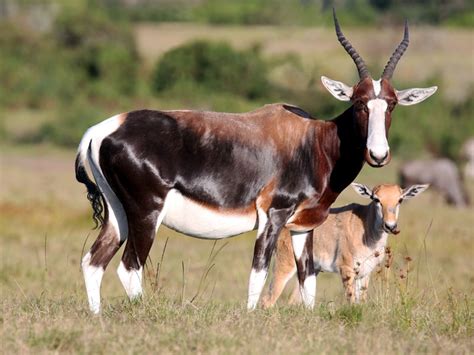
A South Africa Safari takes on a calmer and more intimate character when it reaches Bontebok National Park, located near the town of Swellendam in the Western Cape. The park was originally established to protect the endangered bontebok antelope, which had been reduced to very low numbers through hunting and habitat loss. As part of a South Africa Safari, the park offers open grasslands, river scenery, and mountain backdrops that create a quiet and balanced setting for visitors. The Breede River flows through the reserve, adding water activities and green vegetation that contrast with the dry plains nearby. Unlike larger reserves focused on predators, Bontebok National Park allows visitors to move at a slower pace while appreciating wildlife, plant life, and open landscapes together. The peaceful atmosphere and manageable size make it suitable for families and travellers looking for a more relaxed South Africa Safari experience away from crowded destinations

Maswa Game Reserve
📍 Southern border of Serengeti
🗓 Best time: June to October
Tanzania Safari Tours at Maswa Game Reserve is completely different. This hidden Paradise sits along the southern border of Serengeti National Park, covering over 2,700 square kilometers of pristine wilderness. On Tanzania Safari Tours here, Maswa was established in 1974 and is named after the Sukuma word meaning "grasses". What makes Tanzania Safari Tours here special is the exclusivity and flexibility. Unlike the national parks, Maswa allows walking safaris and night game drives, activities that are usually prohibited in the Serengeti. You can drive off road for close up sightings and explore areas that most tourists never see. The wildlife is spectacular. Maswa boasts a high density of lions and leopards, large herds of elephants, and is a crucial part of the Great Migration route.

Kizigo Game Reserve
📍 Western Tanzania
🗓 Best time: June to October
Exploring Kizigo Game Reserve on Safari Tours Tanzania
Safari Tours Tanzania at Kizigo Game Reserve is completely different. This remote, rugged reserve sits in western Tanzania, forming a critical part of the greater Rungwa-Kizigo-Muhesi ecosystem, one of the most extensive and wild protected areas in the country . On Safari Tours Tanzania here, Kizigo was established in 1951 and spans over 3,760 square kilometers of pristine miombo woodland, riverine forests, and seasonal floodplains . What makes Safari Tours Tanzania here special is the absolute solitude and sense of true wilderness. Unlike famous parks, you can drive for hours without seeing another vehicle. The reserve is known for its high concentration of elephants, large herds of buffalo, and the rare and magnificent sable antelope . If you want a genuine off-the-beaten-path adventure far from any crowds, Kizigo on Safari Tours Tanzania is the place to go.

Tankwa Karoo National Park
📍 Arid Interior of South Africa
🗓 Best time: November to March and May to August
Experience Tankwa Karoo National Park on a South Africa Safari Trip
Tankwa Karoo National Park lies between the Northern Cape and Western Cape provinces of South Africa, covering a large dry region known for its silence, open skies, and distant mountain views. A South Africa Safari Trip into this park feels different from traditional wildlife destinations because the focus shifts towards untouched landscapes, wide gravel roads, and the calm atmosphere of the Karoo. The park is surrounded by the Roggeveld Mountains, Cederberg, and Klein Roggeveld ranges, creating dramatic scenery across the horizon. Vegetation is sparse but highly adapted to dry conditions, with succulents and hardy shrubs covering much of the land. During a South Africa Safari Trip, visitors often notice how peaceful the environment feels, especially during sunrise and sunset when colours change across the plains. The remote setting gives travellers time to appreciate space, silence, and natural beauty away from busy tourist routes and crowded safari parks.

Kigosi Game Reserve
📍 Northwestern Tanzania
🗓 Best time: June to October
Exploring Kigosi Game Reserve on Tour Safari Tanzania
Tour Safari Tanzania at Kigosi Game Reserve is completely different. This vast, remote reserve sits in northwestern Tanzania, near the border with Burundi, covering over 7,460 square kilometers of pristine floodplains, marshes, rivers, and miombo woodlands. On Tour Safari Tanzania here, Kigosi was formally designated as a National Park in 2019, upgrading it from a game reserve to protect its unique wetland ecosystem. What makes Tour Safari Tanzania here special is the water. Kigosi is part of the great Western Wetlands, a vast network of rivers and swamps that feed into Lake Tanganyika. This is one of the few places in Africa where you can regularly see the prehistoric shoebill stork, along with the rare sitatunga antelope that lives in the papyrus swamps. The reserve is wild, remote, and sees very few tourists. If you want a true off the beaten path adventure to see rare birds and big game, Kigosi on Tour Safari Tanzania is the place to go. You need a spirit of adventure and a good 4x4.

Groenkloof Nature Reserve
📍 Southern Edge of Pretoria
🗓 Best time: October to March and May to August
Explore Groenkloof Nature Reserve on South Africa Safaris
Groenkloof Nature Reserve is one of the oldest protected conservation areas in South Africa and offers a different experience within South Africa Safaris. Located in Pretoria within Gauteng Province, the reserve combines open grasslands, rocky hills, and quiet valleys close to the city while still maintaining a natural atmosphere. Established in the late nineteenth century, Groenkloof played an important role in early wildlife conservation in the country and remains a valuable green space today. South Africa Safaris through Groenkloof Nature Reserve focus more on accessible wildlife viewing, outdoor activities, and scenic landscapes rather than large scale game drives. Visitors can explore the reserve through self-drive routes, hiking trails, mountain biking paths, and guided activities while enjoying wide views over Pretoria and the surrounding countryside. The reserve supports a variety of wildlife and indigenous vegetation adapted to the Highveld environment. Its location near major urban areas also makes it an easy addition to broader South Africa Safaris for travellers seeking both nature and convenience.
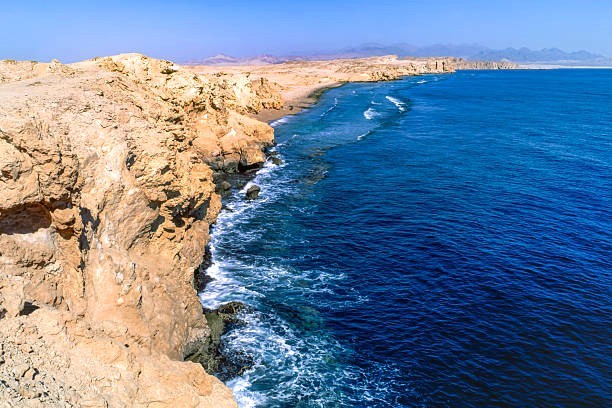
Ras Mohammed National Park
📍 Southern Tip of the Sinai Peninsula
🗓 Best time: October and April and May to September
Explore Ras Mohammed National Park on Egypt Tours
Ras Mohammed National Park is one of the most famous protected areas in Egypt and an important destination on Egypt Tours. Located at the southern tip of the Sinai Peninsula near Sharm El Sheikh, the park is widely known for its coral reefs, clear waters, desert landscapes, and rich marine life. Established in 1983 as Egypt’s first national park, Ras Mohammed protects both land and sea ecosystems that attract travellers from around the world. The park combines coastal scenery, mangrove channels, salt lakes, beaches, and underwater habitats into one conservation area, creating a different experience from traditional desert or cultural travel routes in Egypt. Egypt Tours to Ras Mohammed National Park give visitors the chance to enjoy snorkelling, diving, boat excursions, swimming, and scenic coastal exploration in one destination. The park’s location along the Red Sea also makes it easily accessible from major resort towns, especially Sharm El Sheikh. Its balance of marine biodiversity, natural scenery, and outdoor activities makes Ras Mohammed National Park one of the leading nature destinations on Egypt Tours.

White Desert National Park
📍 Western Desert of Egypt
🗓 Best time: October and April and December to February
Explore White Desert National Park on Egypt Tours
White Desert National Park is one of Egypt’s most unique natural attractions and an important destination on Egypt Tours. Located in the Western Desert near the Bahariya Oasis, the park is famous for its bright white chalk rock formations shaped by wind and sand over thousands of years. The landscape creates an unusual desert environment filled with natural sculptures, open plains, limestone hills, and crystal formations that appear almost unreal under sunlight and moonlight. Established as a protected area in 2002, White Desert National Park preserves one of the most striking desert ecosystems in North Africa. Egypt Tours to the White Desert give travellers the opportunity to experience desert camping, scenic drives, photography, stargazing, and exploration of remote desert landscapes far from Egypt’s busy cities. The park is also closely connected to nearby attractions such as the Black Desert, Crystal Mountain, and Bahariya Oasis, allowing visitors to combine several desert experiences within one trip. Its dramatic scenery and peaceful atmosphere make White Desert National Park one of the most memorable nature destinations on Egypt Tours.

Wadi El Gemal National Park
📍 Red Sea coast, south of Marsa Alam
🗓 Best time: October and April, May to September
Explore Wadi El Gemal National Park on an Egypt Tour
Wadi El Gemal National Park is one of Egypt’s most diverse protected areas and an important destination on an Egypt Tour. Located along the Red Sea coast south of Marsa Alam, the park combines desert valleys, coastal plains, islands, coral reefs, and mountain landscapes into one large conservation area. Established in 2003, Wadi El Gemal, which means Valley of the Camels, protects both marine and desert ecosystems that support a wide variety of wildlife and cultural heritage. An Egypt Tour to Wadi El Gemal National Park allows travellers to experience natural scenery beyond Egypt’s famous historical sites, offering opportunities for snorkelling, diving, desert exploration, birdwatching, and cultural encounters with local Bedouin communities. The park also contains ancient Roman mining ruins, mangrove forests, and untouched beaches along the Red Sea coastline. Its remote setting and ecological diversity make Wadi El Gemal National Park an excellent addition to an Egypt Tour focused on nature, relaxation, and outdoor exploration.
.jpg)
Sioma Ngwezi National Park
📍 South Western Zambia
🗓 Best time: June to October.
Exploring Sioma Ngwezi National Park on Best Safari Zambia introduces travellers to one of Zambia’s most remote and untouched wilderness destinations. Located in western Zambia, the park offers exceptional wildlife viewing, birdwatching, walking safaris, and peaceful landscapes far from crowded tourist routes. Best Safari Zambia in Sioma Ngwezi is ideal for adventurous travellers seeking authentic African safari experiences, diverse wildlife habitats, and opportunities to explore a truly wild and less visited national park. Best Safari Zambia at Sioma Ngwezi National Park offers one of the most remote wilderness experiences in Southern Africa. Unlike the busy safari circuits found in other regions, this park remains untouched, wild, and rarely visited. Located in the southwestern corner of Zambia near the borders of Angola, Namibia, and Botswana, Sioma Ngwezi National Park covers vast woodlands, grasslands, and seasonal floodplains. On Best Safari Zambia, travellers enjoy true isolation, where wildlife moves freely without crowds of vehicles or large tourist camps. The park connects with the famous Kavango-Zambezi Transfrontier Conservation Area, creating important wildlife migration routes. Visitors on Best Safari Zambia can experience raw African wilderness through game drives, nature walks, birdwatching, and cultural encounters with nearby communities. The park is ideal for adventurous travellers looking for a less commercial safari experience far from mass tourism.
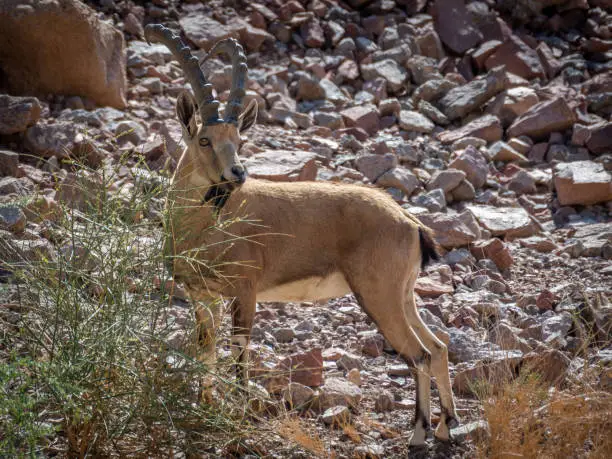
St. Catherine National Park
📍 South Sinai Peninsula
🗓 Best time: March to May and December to February
St. Catherine National Park is one of Egypt's most significant protected areas and a compelling destination on Egypt Tours. Located in the heart of the South Sinai Peninsula, the park covers approximately 4,350 square kilometres of dramatic high-altitude terrain, deep wadis, and ancient mountains. Established in 1988, it is home to Egypt's highest peaks, including Mount Catherine at 2,629 metres and the sacred Mount Sinai. Within its boundaries stands St. Catherine's Monastery, one of the world's oldest operating Christian monasteries and a UNESCO World Heritage Site. The park also supports around 1,000 plant species, representing nearly 40 percent of Egypt's total flora. Beyond its spiritual and cultural significance, it offers mountain hiking, wildlife encounters, and extraordinary desert scenery. Egypt Tours to St. Catherine National Park combine natural, historical, and spiritual experiences in one remarkable destination across the Sinai Peninsula.

Uwanda Game Reserve
📍 Rukwa Region
🗓 Best time: June to October
Tanzania Safari Tours at Uwanda Game Reserve is completely different. This remote, little known reserve sits in the southwestern part of Tanzania, in the Rukwa Region, near the borders of Katavi National Park and the Rukwa Game Reserve. On Tanzania safari tours here, Uwanda was gazetted as a game reserve, covering an area of approximately 300 square kilometers of untouched miombo woodlands, rolling hills, seasonal rivers, and open glades. What makes Tanzania safari tours here special is the absolute exclusivity and sense of true exploration. This is one of Tanzania's least visited protected areas, meaning you will have the wilderness almost entirely to yourself. The reserve is part of a larger ecosystem that includes the famous Katavi National Park and the Rukwa Game Reserve, together forming a vast wilderness area that remains one of Africa's last frontiers.

Usangu Game Reserve
📍 Usangu Basin
Tanzania Safari Tour at Usangu Game Reserve is completely different. This vital wetland reserve sits in the southern highlands of Tanzania, in the Usangu Basin, near the town of Mbeya and the border of Ruaha National Park. On Tanzania safari tour here, Usangu was gazetted as a game reserve in 1998, covering approximately 500 square kilometers of seasonal swamps, floodplains, acacia woodlands, and the important Ihefu wetland. What makes Tanzania safari tour here special is the water. The reserve protects the Ihefu wetland, a permanent swamp that feeds the Great Ruaha River, making it a critical water source for Ruaha National Park downstream. Unlike the dry savannahs of northern Tanzania, Usangu is lush, green, and full of life.

Rukwa Game Reserve
📍 Rukwa Region
🗓 Best time: June to October
Safari in Tanzania at Rukwa Game Reserve is completely different. This remote wetland reserve sits in western Tanzania, in the Rukwa Region, near the eastern shores of Lake Rukwa, one of the largest inland lakes in the country. On safari in Tanzania here, the reserve was gazetted in 1974, covering an area of approximately 1,500 square kilometers of seasonal floodplains, acacia woodlands, papyrus swamps, and open grasslands. What makes safari in Tanzania here special is the water. The reserve protects the eastern shoreline of Lake Rukwa, a soda lake that fluctuates dramatically between wet and dry seasons. Unlike the dry savannahs of northern Tanzania, Rukwa is a wetland paradise, attracting thousands of waterbirds and large herds of game during the dry months.

Pande Game Reserve
📍 Pwani Region
🗓 Best time: June to October
Tour Safari Tanzania at Pande Game Reserve is completely different. This unique coastal reserve sits in eastern Tanzania, in the Pwani Region, just a short distance from the bustling city of Dar es Salaam and the shores of the Indian Ocean. On tour safari Tanzania here, Pande was gazetted as a game reserve in the 1950s, covering an area of approximately 1,500 square kilometers of pristine coastal forests, mangrove swamps, seasonal rivers, and open woodlands. What makes tour safari Tanzania here special is the unique ecosystem. Unlike the savannah parks of the north, Pande protects one of the last remaining fragments of coastal forest in East Africa. The reserve sees very few visitors, offering genuine solitude and intimate wildlife encounters close to Dar es Salaam.

Mkungunero Game Reserve
📍 Manyara Region
Tour Safari Tanzania at Mkungunero Game Reserve is completely different. This remote, little known reserve sits in the northern part of Tanzania, in the Manyara Region, near the border with the Ngorongoro Conservation Area and the Serengeti National Park. On tour safari Tanzania here, Mkungunero was gazetted as a game reserve, covering an area of approximately 400 square kilometers of untouched savannah woodlands, rolling hills, seasonal rivers, and open grasslands. What makes tour safari Tanzania here special is the absolute exclusivity and sense of true exploration. This is one of Tanzania's least visited protected areas, meaning you will have the wilderness almost entirely to yourself. The reserve is part of a larger ecosystem that includes the famous Ngorongoro Crater and the Serengeti National Park, together forming a vital wildlife corridor in one of Tanzania's most iconic regions.

Lukwati Game Reserve
📍 Katavi Region
🗓 Best time: June to October
Safari in Tanzania at Lukwati Game Reserve is completely different. This remote, little known reserve sits in western Tanzania, in the Katavi Region, near the border with the Democratic Republic of Congo. On safari in Tanzania here, Lukwati was gazetted as a game reserve, covering an area of approximately 400 square kilometers of untouched miombo woodlands, rolling hills, seasonal rivers, and open glades. What makes safari in Tanzania here special is the absolute exclusivity and sense of true exploration. This is one of Tanzania's least visited protected areas, meaning you will have the wilderness almost entirely to yourself. The reserve is part of a larger ecosystem that includes the famous Katavi National Park and the Rukwa Game Reserve, together forming a vast wilderness area that remains one of Africa's last frontiers. The landscape is dominated by miombo woodlands, seasonal floodplains, and the winding rivers that attract wildlife during the dry months.

Luhira Game Reserve
📍 Katavi Region
Tanzania Tour Safari at Luhira Game Reserve is completely different. This remote, little known reserve sits in western Tanzania, in the Katavi Region, near the borders of Katavi National Park and Rukwa Game Reserve. On Tanzania tour safari here, Luhira was gazetted as a game reserve, covering an area of approximately 500 square kilometers of untouched miombo woodlands, rolling hills, seasonal rivers, and open glades. What makes Tanzania tour safari here special is the absolute exclusivity and sense of true exploration. This is one of Tanzania's least visited protected areas, meaning you will have the wilderness almost entirely to yourself. The reserve is part of a larger ecosystem that includes the famous Katavi National Park and the Rukwa Game Reserve, together forming a vast wilderness area that remains one of Africa's last frontiers.

Kijereshi Game Reserve
📍 Kagera Region
🗓 Best time: June to October
Tanzania Safari at Kijereshi Game Reserve is completely different. This remote, little known reserve sits in the northwestern part of Tanzania, in the Kagera Region, near the western shores of Lake Victoria and close to the border with Rwanda. On Tanzania safari here, Kijereshi was gazetted as a game reserve, covering an area of approximately 400 square kilometers of untouched savannah woodlands, rolling hills, seasonal rivers, and open grasslands. What makes Tanzania safari here special is the absolute exclusivity and sense of true exploration. This is one of Tanzania's least visited protected areas, meaning you will have the wilderness almost entirely to yourself. The reserve is part of a larger ecosystem that includes the adjacent Rumanyika-Karagwe National Park and Ibanda Game Reserve, together forming a vital wildlife corridor in one of Tanzania's most overlooked regions.

Ikorongo Game Reserve
📍 Mara Region
🗓 Best time: June to October
Tanzania Safari at Ikorongo Game Reserve is completely different. This remote, little known reserve sits in the northern part of Tanzania, in the Mara Region, near the border with Kenya and the famous Serengeti National Park. On Tanzania safari here, Ikorongo was gazetted as a game reserve, covering an area of approximately 600 square kilometers of untouched savannah woodlands, rolling hills, seasonal rivers, and open grasslands. What makes Tanzania safari here special is the absolute exclusivity and sense of true exploration. This is one of Tanzania's least visited protected areas, meaning you will have the wilderness almost entirely to yourself. The reserve is part of a larger ecosystem that includes the famous Serengeti National Park and the Grumeti Game Reserve, together forming a vast wilderness area that remains one of Africa's last frontiers. The landscape is dominated by savannah woodlands, seasonal floodplains, and the winding rivers that attract wildlife during the dry months

Ibanda Game Reserve
📍 Kagera Region
🗓 Best time: June to October
Tanzania Safari at Ibanda Game Reserve is completely different. This remote sanctuary sits in the lush Kagera Region of northwestern Tanzania, near the borders of Rwanda and Burundi, not far from the western shores of Lake Victoria. On Tanzania Safari here, Ibanda was gazetted as a game reserve in 1974, covering an area of approximately 200 square kilometers of pristine acacia woodlands, rolling hills, riverine forests, and seasonal swamps. What makes Tanzania Safari here special is the absolute exclusivity and privacy. Unlike famous parks where you share sightings with dozens of vehicles, Ibanda sees very few visitors, offering genuine solitude and intimate wildlife encounters. The reserve is part of a larger ecosystem that includes the adjacent Rumanyika-Karagwe National Park and Biharamulo Game Reserve, together forming a vital wildlife corridor in one of Tanzania's most overlooked regions.

Lake Mburo National Park
📍 Western Uganda
🗓 Best time: June to August and December to February
Uganda safari accommodation in Lake Mburo National Park gives travellers a peaceful wildlife experience in one of Uganda’s most accessible national parks. Located between Kampala and Mbarara, the park covers rolling hills, acacia woodland, wetlands, and several lakes that support diverse wildlife. Uganda safari accommodation ranges from luxury lodges with lake views to comfortable midrange camps and affordable safari tents near the park gates. What makes Uganda safari accommodation here special is the calm atmosphere and variety of safari activities available. Visitors can enjoy game drives, walking safaris, cycling tours, horseback safaris, and boat cruises. The park is smaller than many other safari destinations, making wildlife viewing easier and more relaxed. Its convenient location also makes it ideal for short Uganda safari holidays.
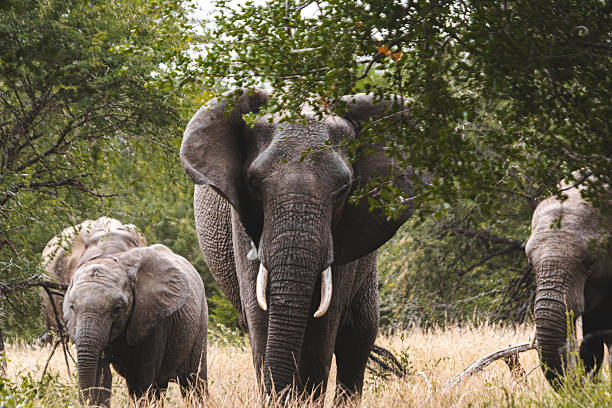
Sabi Sand Reserve
📍 Mpumalanga Province
🗓 Best time: May to September and October to April
Sabi Sand Reserve is one of the most respected private game reserves in the country and a major highlight of a South Africa Safari. Located adjacent to Kruger National Park in Mpumalanga Province, the reserve shares an unfenced boundary with Kruger, allowing wildlife to move freely between the two conservation areas. The reserve is known for its luxury safari lodges, excellent wildlife viewing, and quieter atmosphere compared to larger public parks. A South Africa Safari in Sabi Sand Reserve offers travellers close encounters with wildlife while enjoying personalised game drives and guided bush experiences. The landscape includes riverbeds, savannah grasslands, woodland areas, and scattered waterholes that support a rich ecosystem throughout the year. The reserve is especially famous for leopard sightings, attracting photographers and wildlife enthusiasts from around the world. Its combination of exclusivity, wildlife diversity, and experienced guiding makes Sabi Sand Reserve one of the leading destinations on a South Africa Safari.

Kibale National Park
📍 Western Uganda
🗓 Best time: June to September and December to February
Safaris in Uganda become especially remarkable in Kibale National Park, a lush tropical rainforest located near Fort Portal in western Uganda. Known as the “primate capital of the world,” Kibale offers some of the best chimpanzee tracking experiences in Africa. The park features dense rainforest, swamp areas, and rich biodiversity that create an immersive safari atmosphere. Accommodation ranges from luxury forest lodges to budget eco-camps, all close to wildlife areas. Safaris in Uganda here allow travellers to enjoy chimpanzee trekking, birding, and nature walks in a peaceful environment filled with natural sounds and momorable forest Safaris.

Queen Elizabeth National Park
📍 Westen Uganda
🗓 Best time: March to May and October to November
African safari Uganda experiences reach a perfect balance in Queen Elizabeth National Park, one of the country’s most diverse wildlife destinations. Located in western Uganda between the Rwenzori ranges and Lake Edward, the park combines savannah plains, crater lakes, wetlands, and forests. African safari Uganda travellers enjoy a mix of game drives, boat cruises along the Kazinga Channel, birdwatching, and cultural encounters. The park is famous for its rich wildlife and scenic landscapes, making it one of the most rewarding safari destinations in East Africa for both first time and returning visitors.

Kapama Game Reserve
📍 Limpopo Province
🗓 Best time: May to September and October to April
Kapama Game Reserve offers a luxurious and wildlife rich Safari South Africa experience in the Limpopo Province of northeastern South Africa. The reserve is located near Hoedspruit, close to the Greater Kruger region and the northern Drakensberg Mountains. Covering more than 13,000 hectares of protected wilderness, Kapama combines open savannah, riverine forest, bushveld, and rocky outcrops that support a wide range of wildlife throughout the reserve. Safari South Africa in Kapama feels both exclusive and comfortable because the reserve is privately managed with carefully controlled visitor numbers and high quality safari lodges. Its location near Kruger National Park also allows wildlife to thrive naturally within the surrounding ecosystem. Kapama is especially known for combining luxury accommodation with strong wildlife viewing opportunities, making it popular among honeymoon travellers, photographers, and first time safari visitors. The peaceful atmosphere, scenic landscapes, and professional safari experiences give Kapama Game Reserve a strong place within Safari South Africa itineraries.

Klaserie Private Nature Reserve
📍 Limpopo Province
🗓 Best time: May to September and October to April
Klaserie Private Nature Reserve offers one of the quieter and more authentic bush experiences on South Africa Safaris, located in the western section of the Greater Kruger region in Limpopo Province. Covering more than 60,000 hectares, the reserve shares unfenced borders with Kruger National Park and neighbouring private reserves, allowing wildlife to move naturally across a vast protected ecosystem. A South Africa Safaris experience in Klaserie feels more peaceful because the reserve limits the number of lodges and safari vehicles operating within its boundaries. The landscape consists of open savannah, riverbeds, acacia woodland, mopane trees, and seasonal waterholes that support a healthy concentration of wildlife throughout the year. Unlike busier reserves, Klaserie focuses strongly on low impact tourism and conservation, creating a more intimate safari atmosphere. Its combination of uncrowded game viewing, natural scenery, and remote bush character makes Klaserie Private Nature Reserve a rewarding destination on South Africa Safaris.

Kwandwe Private Game Reserve
📍 Eastern Cape Province
🗓 Best time: May to September and October to April
Kwandwe Private Game Reserve offers a quieter and more conservation focused African Safari South Africa experience in the Eastern Cape Province of South Africa. The reserve is located near the town of Makhanda within the Great Fish River Valley, covering more than 22,000 hectares of restored wilderness. An African Safari South Africa in Kwandwe combines wide open plains, riverine forests, rolling hills, and dense thicket vegetation that support diverse wildlife across the reserve. Kwandwe was developed through major conservation and land restoration efforts that transformed former farmland back into natural habitat. Today, the reserve is recognised for its strong conservation work, responsible tourism, and lower visitor numbers, creating a more exclusive safari atmosphere. The Great Fish River flows through the reserve and supports both wildlife and birdlife throughout the year. This balance of scenery, wildlife, and conservation gives Kwandwe Private Game Reserve a respected place within an African Safari South Africa itinerary.

Kidepo Valley National Park
📍 North Eastern Uganda
🗓 Best time: June to September and December to February
Safaris in Uganda become more adventurous in Kidepo Valley National Park, one of Africa’s most remote and unspoiled wildlife destinations. Located in northeastern Uganda near the borders of South Sudan and Kenya, the park features vast savannah plains, rugged mountains, and seasonal rivers that create spectacular scenery. Safaris in Uganda in Kidepo offer rewarding game drives, birdwatching, cultural encounters, and guided nature walks across untouched wilderness landscapes. Visitors enjoy peaceful safari experiences away from crowded tourist areas while exploring rich wildlife habitats and authentic Karamojong culture within one of Uganda’s most remarkable national parks.

Lalibela Game Reserve
📍 Eastern Cape Province
🗓 Best time: May and September and October to April
Lalibela Game Reserve offers a slower and more relaxed side of a South Africa Safari in the Eastern Cape Province near the town of Grahamstown, now officially known as Makhanda. Unlike some larger safari regions where long driving distances are common, Lalibela puts visitors close to wildlife within a compact private reserve surrounded by rolling hills, open valleys, riverine bush, and natural grasslands. The reserve was created through the restoration of former farmland into protected wilderness, allowing wildlife to return gradually over the years. A South Africa Safari in Lalibela feels personal because the reserve limits visitor numbers and focuses strongly on guided experiences rather than busy tourist traffic. Morning drives often begin with mist resting over the valleys while evenings end beside quiet campfires under open skies. The peaceful setting and carefully protected wildlife areas give Lalibela Game Reserve its own distinct rhythm within a South Africa Safari journey.

South Luangwa National Park
📍 Eastern Zambia
🗓 Best time: June to October.
Zambia Safari Packages at South Luangwa National Park are among the most rewarding wildlife experiences in Africa. Located in eastern Zambia along the Luangwa River, this park is widely regarded as the birthplace of walking safaris. On Zambia Safari Packages here, South Luangwa covers about 9,000 square kilometres of rich floodplains, woodland, and riverine forests. What makes Zambia Safari Packages in this park so special is the incredible density of wildlife, especially leopards, elephants, hippos, and crocodiles. The Luangwa River supports a thriving ecosystem that attracts large concentrations of animals, particularly in the dry season. Unlike many crowded safari destinations, South Luangwa offers a peaceful and authentic wilderness experience where nature feels untouched and raw. If you want close-up wildlife encounters, expert-guided walking safaris, and unforgettable game drives, South Luangwa is one of the best destinations in Zambia Safari Packages.

Grumeti Game Reserve
📍 Western edge of Serengeti National Park
🗓 Best time: June to October
Tanzania Safari Tours at Grumeti Game Reserve is completely different. It is not like the crowded Serengeti where you share roads with dozens of other vehicles. This private reserve sits on the western edge of Serengeti National Park, covering a massive 350,000 acres of pristine wilderness. On Tanzania Safari Tours here, Grumeti was established in 1994 to protect the path of the wildebeest migration. What makes Tanzania Safari Tours here special is the exclusivity. The reserve restricts visitors to around 60 people across a few ultra luxury lodges, meaning you will have the wildlife almost to yourself. You can drive off road for close up sightings, go on walking safaris, and even do night game drives. The wildlife is spectacular. Healthy prides of lions, large herds of elephants, packs of hyenas, and the famous Grumeti River crossings where thousands of wildebeest risk the jaws of giant crocodiles.

Lower Zambezi National Park
📍 Northern Banks of the River Zambezi
🗓 Best time: June to October
Zambia Luxury Safari experiences at Lower Zambezi National Park offer one of Africa’s most exclusive and scenic wilderness adventures. Located along the northern banks of the Zambezi River opposite Zimbabwe’s Mana Pools, the park is celebrated for its untouched landscapes, abundant wildlife, and peaceful atmosphere. A Zambia Luxury Safari in this destination combines river scenery, floodplains, forests, and escarpments that create a breathtaking safari backdrop. Unlike crowded safari destinations, Lower Zambezi offers privacy and exclusivity, making it ideal for high-end travellers seeking intimate wildlife encounters. Canoe safaris are a signature experience on a Zambia Luxury Safari here, allowing guests to glide quietly along the river while observing elephants, hippos, crocodiles, and buffalo at close range. Game drives and guided walking safaris further enhance the experience, offering luxury travellers a perfect blend of adventure, comfort, and raw wilderness in one of Zambia’s most beautiful national parks.

Burigi Game Reserve
📍 Northwestern corner of Tanzania
🗓 Best time: June to October
Tanzania Safari at Burigi Game Reserve is completely different. This remote, little known reserve sits in the northwestern corner of Tanzania, in the Kagera Region, near the border Rwanda and the western shores of Lake Victoria. On Tanzania safari here, Burigi was gazetted as a game reserve, covering an area of approximately 1,500 square kilometers of untouched acacia woodlands, rolling hills, seasonal rivers, and open glades. What makes Tanzania safari here special is the absolute exclusivity and sense of true exploration. This is one of Tanzania's least visited protected areas, meaning you will have the wilderness almost entirely to yourself. The reserve is part of a larger ecosystem that includes the adjacent Rumanyika-Karagwe National Park and Ibanda Game Reserve, together forming a vital wildlife corridor in one of Tanzania's most overlooked regions.

Biharamulo Game Reserve
📍 Northwestern corner of Tanzania
🗓 Best time: June to October
Safari in Tanzania at Biharamulo Game Reserve is completely different. This hidden Paradise sits in the northwestern corner of Tanzania, near the border with Rwanda and Burundi, not far from the western shores of Lake Victoria. On safari in Tanzania here, Biharamulo was gazetted as a game reserve in 1955, covering an area of approximately 1,313 square kilometers of untouched miombo woodland, rolling hills, and seasonal rivers. What makes safari in Tanzania here special is the exclusivity and the raw, unpolished wilderness. This is one of the least visited protected areas in Tanzania, meaning you will have the bush almost entirely to yourself. The reserve is part of a larger ecosystem that includes the adjacent Rumanyika Orugundu Game Reserve, and together they protect a vital corridor for wildlife moving between Tanzania, Rwanda, and Burundi. The landscape is dominated by miombo woodlands, acacia savannah, seasonal swamps, and the winding seasonal rivers that sustain wildlife during the dry months.

Murchison Falls National Park
📍 North Western Uganda
🗓 Best time: December to February and June to September
African Safari Tours Uganda at Murchison Falls National Park offer one of the most complete safari experiences in East Africa. Located in northwestern Uganda, the park is the country’s largest and oldest national park, covering vast savannah plains, river forests, wetlands, and woodlands. On African Safari Tours Uganda here, Murchison Falls is famous for the powerful waterfall where the Nile River squeezes through a narrow gorge before crashing down with incredible force. What makes African Safari Tours Uganda special in this park is the combination of dramatic landscapes, river cruises, and abundant wildlife. Visitors enjoy game drives across open plains filled with elephants, giraffes, buffalo, lions, and antelopes, while boat safaris along the Nile bring close encounters with hippos and crocodiles. The park also offers chimpanzee tracking in Budongo Forest nearby. If you want classic savannah wildlife combined with one of Africa’s most spectacular waterfalls, Murchison Falls is a top destination on African Safari Tours Uganda.

Rwenzori Mountains National Park
📍 Western Uganda
🗓 Best time: June to August and December to February
Uganda Safari Accommodation around Rwenzori Mountains National Park gives travellers access to one of the most distinctive mountain destinations in East Africa. Located in western Uganda along the border with the Democratic Republic of the Congo, the park protects the famous Rwenzori mountain range, often called the Mountains of the Moon. The area is known for glaciers, waterfalls, rivers, valleys, forests, and alpine vegetation shaped by high altitude and heavy rainfall. Uganda Safari Accommodation in this region allows visitors to stay close to trekking routes, nature trails, and cultural communities near the foothills. The park combines mountain landscapes with rich biodiversity, making it suitable for hiking, birdwatching, photography, and cultural experiences. Travellers can choose from eco lodges, guesthouses, mountain camps, and comfortable safari lodges while exploring one of Uganda’s most important protected areas. The peaceful mountain atmosphere and cooler climate make the park different from traditional savannah safari destinations in Uganda.

Hluhluwe-iMfolozi Game Reserve
📍 Northern KwaZulu-Natal
🗓 Best time: May to September and October to April
Hluhluwe-iMfolozi Game Reserve carries a long conservation history that gives it a different feeling from many modern safari destinations in the country. Located in northern KwaZulu-Natal, about three hours north of Durban, the reserve stretches across rolling hills, river valleys, open savannah, and dense woodland shaped by the Hluhluwe and iMfolozi rivers. A South African Safari in this reserve often feels deeply connected to the older traditions of wildlife conservation because Hluhluwe-iMfolozi played a major role in saving the white rhino from near extinction during the twentieth century. The reserve is divided into the greener Hluhluwe section in the north and the more rugged iMfolozi section in the south, creating changing scenery as visitors move through the park. The roads wind through hills and valleys rather than flat plains, giving a South African Safari here a more varied and natural rhythm throughout the journey.

Ithala Game Reserve
📍 Northern KwaZulu-Natal
🗓 Best time: May to September and October to April
Ithala Game Reserve brings a rugged and dramatic feel to a South Africa Safari, offering landscapes that look very different from the flatter bushveld reserves found in other parts of the country. The reserve is located in northern KwaZulu-Natal near the town of Louwsburg, close to the foothills of the Ngotshe Mountains. Deep valleys, rocky cliffs, winding rivers, and open grasslands shape the scenery, giving travellers a safari experience that feels wild and untamed. A South Africa Safari in Ithala is often appreciated for its natural beauty as much as its wildlife, especially during sunrise and sunset when the hills change colour under the shifting light. The reserve’s elevated terrain creates excellent viewpoints across the surrounding wilderness, while quieter roads and fewer vehicles allow visitors to enjoy the environment at a slower pace. Ithala combines mountain scenery, wildlife, and peaceful surroundings into one memorable safari destination.

Lion Sands Game Reserve
📍 Mpumalanga Province
🗓 Best time: May to September and October to April
Lion Sands Game Reserve offers a refined and wildlife rich extension to a Kruger Park Safari South Africa, lying along the Sabie River within the Sabi Sand Nature Reserve and the Kruger National Park ecosystem in Mpumalanga Province. Travellers visiting Kruger National Park often include Lion Sands in their itinerary because the reserve combines close wildlife viewing with quieter and more exclusive safari settings. The reserve stretches across both private concession land inside Kruger National Park and sections connected to Sabi Sand, giving visitors access to varied landscapes of riverine forest, open savannah, and dense bushveld. A Kruger Park Safari South Africa becomes more personal in Lion Sands because game drives are limited to fewer vehicles, allowing guests more time at sightings without heavy crowds. The flowing Sabie River also attracts wildlife throughout the year, shaping much of the safari atmosphere experienced within Lion Sands Game Reserve.

Londolozi Game Reserve
📍 Mpumalanga Province
🗓 Best time: May and September and October to April
Londolozi Game Reserve brings a refined and deeply rooted bush experience to a South Africa Safari, positioned within the western section of the Sabi Sand Nature Reserve in Mpumalanga Province. Sharing an unfenced boundary with Kruger National Park, the reserve allows wildlife to move naturally across a large wilderness area known for strong leopard sightings and carefully protected habitats. A South Africa Safari in Londolozi feels personal from the moment visitors enter the reserve, with the Sand River flowing through sections of the property and shaping the movement of animals across the landscape. Dense riverine forest, open grasslands, and mixed woodland create changing scenery during game drives throughout the day. Londolozi also carries a long conservation history and remains family owned, giving the reserve a more grounded atmosphere compared to larger commercial safari operations. Its balance of wildlife, quiet luxury, and conservation values gives Londolozi a respected place within a South Africa Safari itinerary.
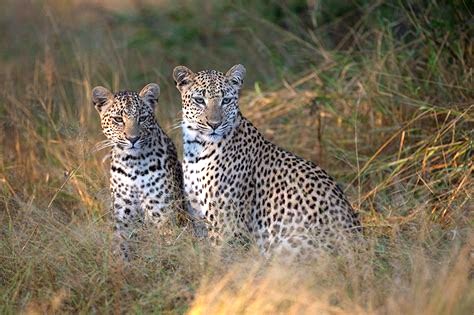
MalaMala Game Reserve
📍 Mpumalanga Province
🗓 Best time: October to March and May to August
MalaMala Game Reserve forms one of the best known private safari areas within the Greater Kruger ecosystem and remains a leading destination for travellers planning a Safari in South Africa. The reserve is located in Mpumalanga Province between the Sabi Sand Nature Reserve and Kruger National Park, sharing an unfenced boundary with Kruger that allows wildlife to move naturally across the region. Covering a large stretch of protected bushveld along the Sand River, MalaMala combines open plains, riverine forest, thornveld, and seasonal watercourses that support wildlife throughout the year. A Safari in South Africa at MalaMala often feels more focused on long wildlife observations rather than crowded sightings, partly because of the reserve’s strict vehicle limits and large traversing areas. The reserve also carries a long safari history dating back decades, with guiding and conservation remaining central to its identity. Its combination of wildlife density, experienced guides, and river landscapes gives MalaMala Game Reserve a strong reputation within a Safari in South Africa itinerary.

Pongola Game Reserve
📍 Northern KwaZulu-Natal
🗓 Best time: May to September and October to April
Pongola Game Reserve offers a very different side of an African Safari South Africa experience, combining wildlife viewing with lakeside scenery and outdoor activities in northern KwaZulu-Natal. The reserve is located near the town of Pongola along the shores of Lake Jozini, South Africa’s third largest dam. Established in the 1890s, it is recognised as one of the oldest private game reserves in the country. Unlike reserves focused only on traditional game drives, Pongola blends bushveld landscapes with water-based safari activities, creating a more varied atmosphere for travellers. Rolling hills, acacia woodland, river systems, and the wide waters of Lake Jozini shape the reserve’s scenery throughout the year. An African Safari South Africa in Pongola Game Reserve feels calm and open, with wildlife often gathering close to the lake and surrounding plains. The reserve’s combination of nature, fishing, boating, and safari experiences gives it a character that stands apart from many inland reserves.

Madikwe Game Reserve
📍 North West Province
🗓 Best time: May to September and October to April
Madikwe Game Reserve offers one of the most exclusive wildlife experiences on a Safari in South Africa, located in the North West Province close to the Botswana border. Covering approximately 75,000 hectares, the reserve is among the largest protected wildlife areas in South Africa and is widely respected for its successful conservation efforts. A Safari in South Africa in Madikwe feels quieter and less crowded compared to many larger public parks because visitor numbers are carefully controlled and accommodation is limited to selected lodges. The reserve was created through a major wildlife restoration project that transformed former farmland into thriving bushveld habitat. Today, the landscape includes open grasslands, rocky hills, acacia woodland, riverbeds, and seasonal wetlands that support diverse wildlife populations. Madikwe is also known for combining luxury safari experiences with strong conservation management, making it an important destination for travellers seeking a more private Safari in South Africa.

Nambiti Private Game Reserve
📍 KwaZulu-Natal Province
🗓 Best time: May to September and October to April
Nambiti Private Game Reserve offers a scenic and wildlife rich Safari Trips South Africa experience in the KwaZulu-Natal Province of South Africa. The reserve is located near the town of Ladysmith, between Johannesburg and Durban, within a region known for both wildlife and important South African battlefield history. Covering more than 20,000 acres of protected land, Nambiti combines rolling grasslands, river systems, waterfalls, thornveld, and rocky hills that create varied habitats for wildlife across the reserve. Safari Trips South Africa in Nambiti feel peaceful and less crowded because the reserve maintains controlled visitor numbers and exclusive lodge experiences. Unlike many reserves located in lowveld bush regions, Nambiti’s landscape has a greener and more open character that creates excellent visibility during game drives. Its location near the Drakensberg region also adds beautiful scenery to the safari atmosphere. This balance of wildlife, scenery, and exclusivity gives Nambiti Private Game Reserve a strong place within Safari Trips South Africa itineraries.

Phinda Private Game Reserve
📍 Northern KwaZulu-Natal
🗓 Best time: May to September and October to April
Phinda Private Game Reserve offers one of the most refined and diverse South African Safari experiences in KwaZulu-Natal Province, South Africa. The reserve is located in northern KwaZulu-Natal near the town of Hluhluwe, positioned between Mkuze Game Reserve and iSimangaliso Wetland Park close to the Indian Ocean coastline. Covering more than 28,000 hectares, the reserve protects seven distinct ecosystems, including rare sand forests, wetlands, mountain ranges, open grasslands, woodland, and river systems. A South African Safari in Phinda Private Game Reserve feels different from many inland safari areas because the landscapes constantly change while travelling through the reserve. The area is widely recognised for strong conservation programmes, luxury safari lodges, and personalised wildlife experiences. Its location also allows travellers to combine bush safaris with nearby coastal activities and marine experiences along the KwaZulu-Natal coast. This combination of varied scenery, wildlife, and conservation gives Phinda Private Game Reserve a special place within a South African Safari itinerary.
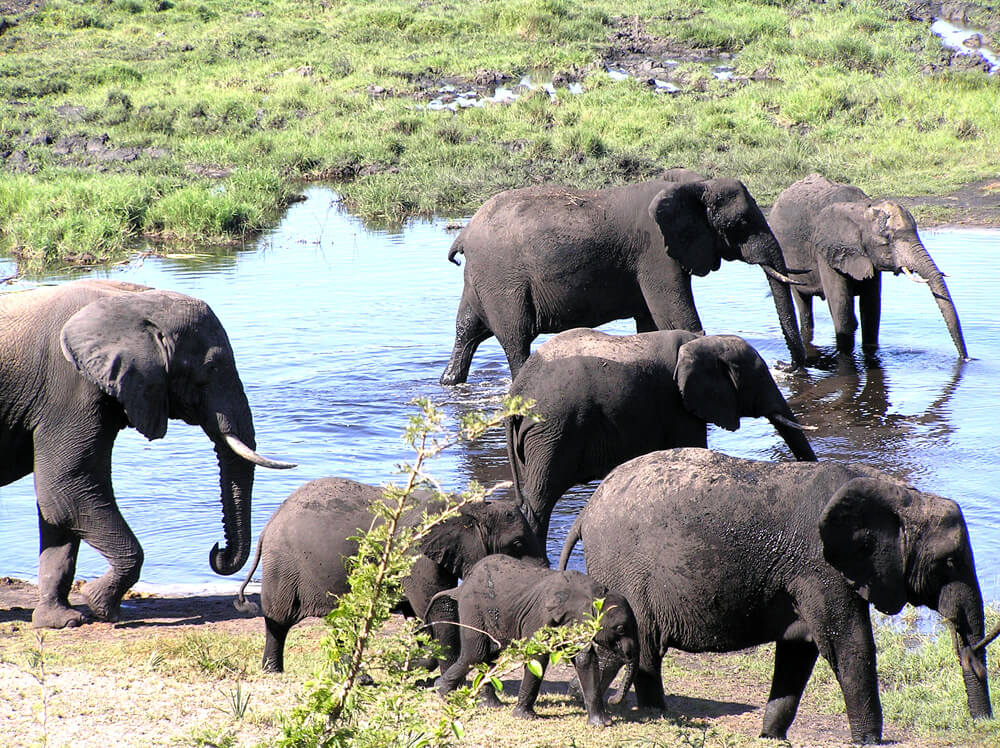
Tembe Elephant Park
📍 Northeastern corner of KwaZulu-Natal
🗓 Best time: May and September and October to April
Tembe Elephant Park offers one of the more remote and traditional African Safari South Africa experiences, hidden within the far northeastern corner of KwaZulu-Natal near the border with Mozambique. The park was established through cooperation between conservation authorities and the local Tembe community to protect the region’s famous elephant population and delicate sand forest ecosystem. Unlike open grassland reserves, Tembe feels dense, wild, and deeply connected to the natural landscape, with thick woodland, forest patches, wetlands, and sandy tracks shaping the safari atmosphere. An African Safari South Africa in Tembe Elephant Park moves at a slower pace, where wildlife sightings often emerge quietly from the vegetation rather than across wide plains. The reserve is especially known for its large tusked elephants, many of which rank among the biggest in southern Africa. Its isolation and rich natural habitat create a more intimate safari environment away from busy tourist routes.

Shamwari Private Game Reserve
📍 Eastern Cape Province
🗓 Best time: May to September and October to April
Shamwari Private Game Reserve offers a luxury wildlife experience in the Eastern Cape and forms one of the leading destinations for a South Africa Safari. The reserve is located near the town of Paterson, approximately 75 kilometres from Gqeberha City, within a malaria free region of South Africa. Covering more than 25,000 hectares, Shamwari Private Game Reserve protects a wide landscape of bushveld, open plains, river systems, and rocky hills that support rich biodiversity throughout the reserve. A South Africa Safari in Shamwari combines wildlife viewing with strong conservation efforts, comfortable lodges, and personalised safari activities. The name “Shamwari” means “my friend” in the Shona language, reflecting the reserve’s focus on hospitality and connection with nature. Its location in the Eastern Cape also makes it easy to combine with the Garden Route and nearby coastal destinations. The mixture of wildlife, scenery, and conservation gives Shamwari Private Game Reserve an important place within a South Africa Safari itinerary.
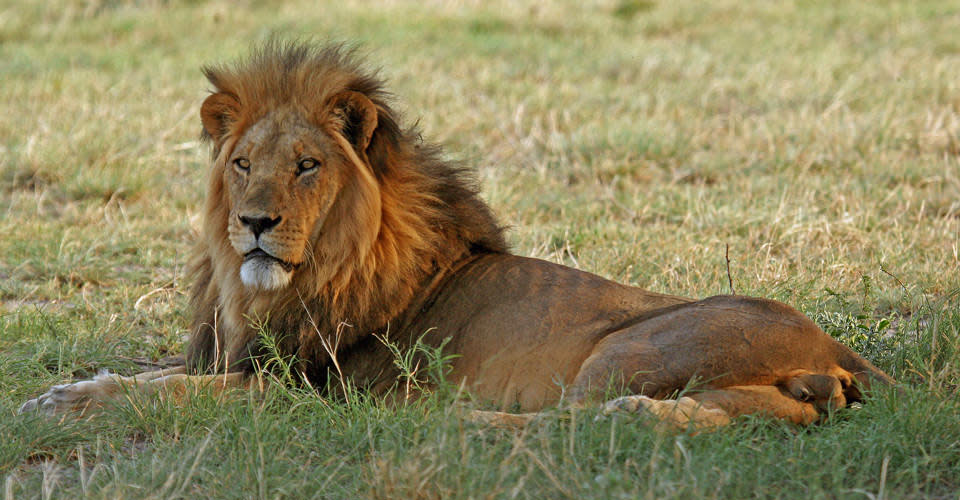
Manyeleti Game Reserve
📍 Mpumalanga Province
🗓 Best time: May to September and October to April
Manyeleti Game Reserve offers a quieter and more exclusive side of a South Africa Safari, positioned between Kruger National Park, Sabi Sand, and Timbavati in Mpumalanga Province. Covering thousands of hectares of untouched bushveld, the reserve forms part of the Greater Kruger ecosystem, allowing wildlife to move freely across unfenced boundaries. A South Africa Safari in Manyeleti Game Reserve feels more private compared to busier safari destinations, mainly because visitor numbers remain lower and lodges are more widely spaced. The landscape combines open grasslands, acacia woodland, riverbeds, and scattered rocky sections that support a healthy concentration of wildlife throughout the reserve. Manyeleti, meaning “Place of the Stars,” reflects the peaceful atmosphere visitors experience during evening game drives and nights under clear African skies. The reserve is also owned by the local Mnisi community, adding cultural significance to a South Africa Safari experience in Manyeleti Game Reserve.

Thornybush Game Reserve
📍 Limpopo Province
🗓 Best time: May to September and October to April
Thornybush Game Reserve offers one of the more refined and wildlife focused experiences on South Africa Safaris, located in Limpopo Province within the Greater Kruger ecosystem. The reserve lies adjacent to Kruger National Park and shares unfenced boundaries with other private reserves, allowing wildlife to move naturally across a much larger protected wilderness area. Unlike some reserves that focus heavily on size alone, Thornybush is known for combining strong wildlife viewing with smaller, carefully managed safari lodges that create a more personal atmosphere. The landscape includes open savannah, thornveld, seasonal riverbeds, and dense bush areas that support different animal species throughout the year. A South Africa Safaris experience in Thornybush often feels quieter and more exclusive because vehicle numbers at sightings are controlled. Its location near Hoedspruit also makes travel relatively easy while still maintaining a remote bush setting.

Usambara Mountains
📍 Tanga Region, northeastern Tanzania
🗓 Best time: June to October
The Usambara Mountains are not the first thing that comes to mind on Tanzania safari tours. Most people think of lions, elephants, and the endless plains of the Serengeti. But the Usambaras are a different world. They are one of the oldest mountain ranges on earth, dating back over 25 million years. On Tanzania safari tours, these mountains are a lush, green escape from the heat of the savannah. They sit in northeastern Tanzania, near the Kenyan border, about a three-hour drive from Dar es Salaam or two hours from Moshi. The range is divided into the West Usambaras and the East Usambaras. The West Usambaras are higher, greener, and more popular for trekking. The East Usambaras are lower, more humid, and home to the Amani Nature Reserve, a biodiversity hotspot. On Tanzania safari tours, the Usambaras offer a completely different experience. You will hike through dense rainforest, past waterfalls and ancient trees. You will meet local farmers and learn about their traditions. You will stay in simple, family-run lodges with stunning views. If you want to see a side of Tanzania that most tourists miss, the Usambaras are calling.

Uluguru Mountains
📍 Morogoro, Eastern Tanzania
🗓 Best time: June to October
The Uluguru Mountains are the closest mountain range to Dar es Salaam. On Tanzania safaris, most travellers drive right past them on the way to Mikumi or the southern parks. They see the steep, green slopes rising from the coastal plain and keep driving. That is a mistake. The Ulugurus are part of the ancient Eastern Arc range, over 30 million years old, and they are one of the most biodiverse places on earth. The mountains are named after the Luguru people, who have lived here for centuries, farming the steep hillsides with terracing that looks like a giant staircase. On Tanzania safaris, the Ulugurus offer a quick escape from the heat and chaos of Dar es Salaam. You can be at the trailhead in less than two hours from the city center. The main town is Morogoro, a bustling, friendly city at the base of the mountains. From here, the slopes rise steeply, covered in dense, misty rainforest. The higher you go, the cooler it gets. The views over the coastal plain and the distant Indian Ocean are breathtaking. If you have a spare day or two in Dar es Salaam, the Uluguru Mountains are the perfect nature escape.

Udzungwa Mountains
📍 Iringa, south-central Tanzania
🗓 Best time: June to October
The Udzungwa Mountains are not like the other mountains in Tanzania. They are not a single peak to conquer. They are a whole range of ancient, forest-covered hills that rise steeply from the plains of the Morogoro region. On Tanzania safari tours, most travellers drive right past the turnoff to Udzungwa on their way from Dar es Salaam to Mikumi or Ruaha. They miss one of the most biodiverse places on earth. The Udzungwas are part of the Eastern Arc mountain range, a chain of ancient mountains that has been isolated for over 30 million years. They are often called the "Galápagos of Africa" because of the high number of plants and animals that live nowhere else. On Tanzania safari tours, the park protects over 1,900 square kilometres of rainforest, montane forest, and miombo woodland. The star attraction is the Sanje Waterfall, which plunges 170 meters into a pool of crystal clear water. But the real magic is in the details. The Udzungwa red colobus monkey, the Sanje crested mangabey, and the Udzungwa forest partridge are all found only here. If you want a safari that is not about the Big Five, but about the small wonders of nature, the Udzungwa Mountains are for you.

Southern Highlands
📍 Mbeya, Southwestern Tanzania
🗓 Best time: November to April
The Southern Highlands are not like the northern safari circuit. On a Tanzania safari, most travellers rush from Serengeti to Ngorongoro, ticking off the Big Five. They completely miss the lush, green, flower-filled world of Tanzania's deep south. The Southern Highlands are a region of rolling hills, tea plantations, misty forests, and waterfalls that plunge into jungle pools . It is an agricultural heartland, producing much of Tanzania's coffee, tea, and fresh produce . But it is also a hidden paradise for hikers, birders, and anyone who wants to escape the crowds. On a Tanzania safari here, you can walk through the "Garden of God," where orchids carpet the ground. You can stand on the edge of a volcanic crater lake. You can visit a Stone Age site where humans made tools half a million years ago. If you want a side of Tanzania that feels undiscovered, the Southern Highlands are calling.

Pare Mountains
📍 Kilimanjaro Region, Northeastern Tanzania
🗓 Best time: June to October
The Pare Mountains are the forgotten range of northeastern Tanzania. On a tour safari Tanzania, most travellers rush between the Usambaras and Kilimanjaro, completely bypassing these rugged, beautiful hills. That is a mistake. The Pare Mountains are divided into North Pare and South Pare, running parallel to the Usambaras near the Kenyan border. They are part of the ancient Eastern Arc range, over 30 million years old, and they are a hidden gem for hikers, birders, and anyone who wants to escape the crowds. On a tour safari Tanzania, the Pare Mountains offer a raw, authentic experience. There are no fancy lodges, no crowded viewpoints, no souvenir stalls. There are just steep trails, terraced hillsides, small villages, and some of the friendliest people you will ever meet. The mountains are named after the Pare people, who have lived here for centuries, farming bananas, coffee, and maize on the steep slopes. If you want to see a side of Tanzania that feels untouched by mass tourism, the Pare Mountains are calling.

Mount Meru
📍 Arusha Region, Northern Tanzania
🗓 Best time: June to October
Mount Meru is not the tallest mountain in Tanzania. That title belongs to Kilimanjaro. But Mount Meru is the quieter, tougher, and in some ways more rewarding neighbor. On a Kenya and Tanzania safari adventure, most travellers rush past Arusha on their way to the Serengeti or the Ngorongoro Crater. They look up at Mount Meru's jagged peak and keep driving. That is a mistake. Mount Meru is a dormant stratovolcano, the fifth highest mountain in Africa at 4,566 meters. It sits inside Arusha National Park, surrounded by forests of juniper and wild olive, home to elephants, buffalo, and the stunning black-and-white colobus monkeys. On a Kenya and Tanzania safari adventure, climbing Mount Meru is often used as an acclimatization trek for Kilimanjaro. But it is a worthy challenge in its own right. The summit, Socialist Peak, offers a dramatic view into a massive crater. On a clear day, you can see Kilimanjaro rising above the clouds to the east. It is steeper than Kilimanjaro, more technical in places, and far less crowded. If you want a true mountaineering experience without the crowds, Mount Meru is the answer.

Mount Kilimanjaro
📍 Kilimanjaro Region, Northeastern Tanzania
🗓 Best time: June to October
Mount Kilimanjaro is not just a mountain. It is the roof of Africa, the tallest free-standing mountain in the world, and one of the most iconic natural wonders on the planet. On Tanzania safaris, most people think of game drives and the Great Migration. But rising above the savannah, at 5,895 meters above sea level, Kilimanjaro stands as a challenge and a dream for adventurers from every corner of the globe. On Tanzania safaris, you do not have to climb it to appreciate it. From the surrounding plains, you can watch the sunrise paint its snowy peak in shades of gold and pink. But for those who choose to climb, the mountain offers a journey through five distinct climate zones, from tropical rainforest at the base to arctic desert at the summit. It takes effort, determination, and good fitness. But standing on Uhuru Peak, watching the sun rise over the African continent, is a feeling that words cannot fully capture.

Mount Hanang
📍 Manyara Region, North-central Tanzania
🗓 Best time: June to October
Mount Hanang is not like Kilimanjaro. It is not like Meru. On a tour safari Tanzania, most travellers have never even heard of it. That is exactly the point. Mount Hanang is the fourth highest mountain in Tanzania, standing at 3,420 meters above sea level . It is a dormant volcano, rising dramatically from the Great Rift Valley floor near the town of Katesh in the Manyara Region . On a tour safari Tanzania, this mountain is for the adventurous. It is steep, remote, and completely uncrowded. There are no queues, no luxury lodges, no porters carrying your bags up a gentle slope. This is a raw, physical challenge. In just 8.5 kilometers of hiking, you gain over 1,600 meters in elevation . It is one of the steepest climbs in Tanzania. The reward is a view from the summit that stretches across the Rift Valley, taking in soda lakes, volcanic craters, and endless plains. If you want to earn your view and get off the beaten path, Mount Hanang on tour safari Tanzania is calling.

Monduli Mountains
📍 Arusha Region, Tanzania
🗓 Best time: June to October
The Monduli Mountains are the closest mountain range to Arusha. On a Tanzania safari tour, most travellers drive right past them on their way to the Serengeti or Ngorongoro. They see the jagged peaks rising from the Great Rift Valley floor and keep driving. That is a mistake. The Monduli Mountains are a hidden gem for hikers, birders, and anyone who wants to experience Maasai culture without the crowds. The range sits just west of Arusha town, forming a dramatic backdrop to the city. On a Tanzania safari tour, the mountains are named after the Monduli people, a subgroup of the Maasai who have lived here for centuries. The landscape is a patchwork of acacia woodlands, open grasslands, and steep, forested ravines. The views from the ridges are stunning. You can see Mount Meru to the east, the Rift Valley escarpment to the west, and on a clear day, the snows of Kilimanjaro. If you have a spare day in Arusha and want to stretch your legs, the Monduli Mountains are the perfect escape.

Mahale Mountains
📍 Kigoma town
🗓 Best time: May to October
The Mahale Mountains are not like any other mountain range in Tanzania. On a Tanzania tour safari, most travellers head to Kilimanjaro or Meru. They chase the highest peaks and the most famous names. But Mahale is different. It is not about the summit. It is about the journey, the forest, and the chimpanzees. The Mahale Mountains rise directly from the shores of Lake Tanganyika, the second deepest lake in the world. The slopes are covered in dense, primeval rainforest that has never been logged. There are no roads. There are no vehicles. On a Tanzania tour safari, you arrive by boat. You land on a white sand beach. You walk into the forest. And within hours, you are sitting meters away from wild chimpanzees, watching them groom each other, play, and hunt. This is not a zoo. This is not a sanctuary. These are wild animals that have chosen to tolerate human presence. The Mahale Mountains are one of the last places on earth where you can have this experience. It is remote. It is expensive. It is difficult to reach. But for those who make the journey, it is life-changing.

Livingstone Mountains
📍 shores of Lake Nyasa, Southwestern Tanzania
🗓 Best time: June to October
The Livingstone Mountains are the forgotten giants of southern Tanzania. On a Tanzania safari tour, most travelers rush through Mbeya on their way to Ruaha or the Selous. They look at the map, see the name "Livingstone," and keep driving. That is a mistake. These mountains are named after the famous Scottish explorer Dr. David Livingstone, who navigated the Lake Nyasa region during his expeditions in the 1860s . But local communities had lived here for centuries before any European arrived to name them, calling the range Kipengele. On a Tanzania safari tour, the Livingstone Mountains rise dramatically from the northeastern shore of Lake Nyasa (Lake Malawi), the third deepest lake in Africa . The escarpment is steep, rising over 2,500 meters within just a few kilometers of the lake shore . The views are breathtaking. The air is cool. The forests are alive with birds found nowhere else on earth. If you want to experience a side of Tanzania that feels completely undiscovered, the Livingstone Mountains are calling.

Crater Highlands
📍 Eastern Great Rift Valley, Northern Tanzania
🗓 Best time: June to October
The Crater Highlands are not a single mountain. They are a chain of ancient volcanoes, craters, and lakes that stretch across the Ngorongoro Conservation Area and into the southern Serengeti. On a Tanzania safari, most travellers know Ngorongoro Crater. But few realise that the crater is just one part of a much larger volcanic wonderland. The Crater Highlands include Mount Loolmalasin, the highest peak in the Ngorongoro district, standing at 3,642 meters. They include Ol Doinyo Lengai, the "Mountain of God," an active volcano that erupts cool, black natrocarbonatite lava. They include the Empakaai Crater, a stunning collapsed caldera with a deep, green lake at its bottom. And they include Lake Natron, a vast, shallow, alkaline lake that glows red and orange with algae and is the main breeding ground for East Africa's lesser flamingos. On a Tanzania safari, exploring the Crater Highlands is a journey through a volcanic landscape that feels like another planet. It is rugged, remote, and breathtakingly beautiful.

Kafue National Park
📍 Western Zambia
🗓 Best time: June to October.
Zambia Safari Packages at Kafue National Park offer one of the most diverse and least crowded wildlife experiences in Africa. Located in western Zambia, this is the country’s largest national park, covering about 22,400 square kilometres of pristine wilderness. On Zambia Safari Packages here, Kafue features vast floodplains, woodlands, grasslands, and river systems, especially the Kafue River. What makes Zambia Safari Packages in this park so special is the incredible variety of habitats that support a wide range of wildlife, including elephants, lions, leopards, buffalo, and antelopes. The park is also famous for its remote feel, meaning visitors often enjoy exclusive wildlife sightings without large tourist crowds. If you are looking for authentic safaris, peaceful game drives, and unique boat based wildlife viewing, Kafue National Park is one of the top destinations in Zambia Safari Packages.
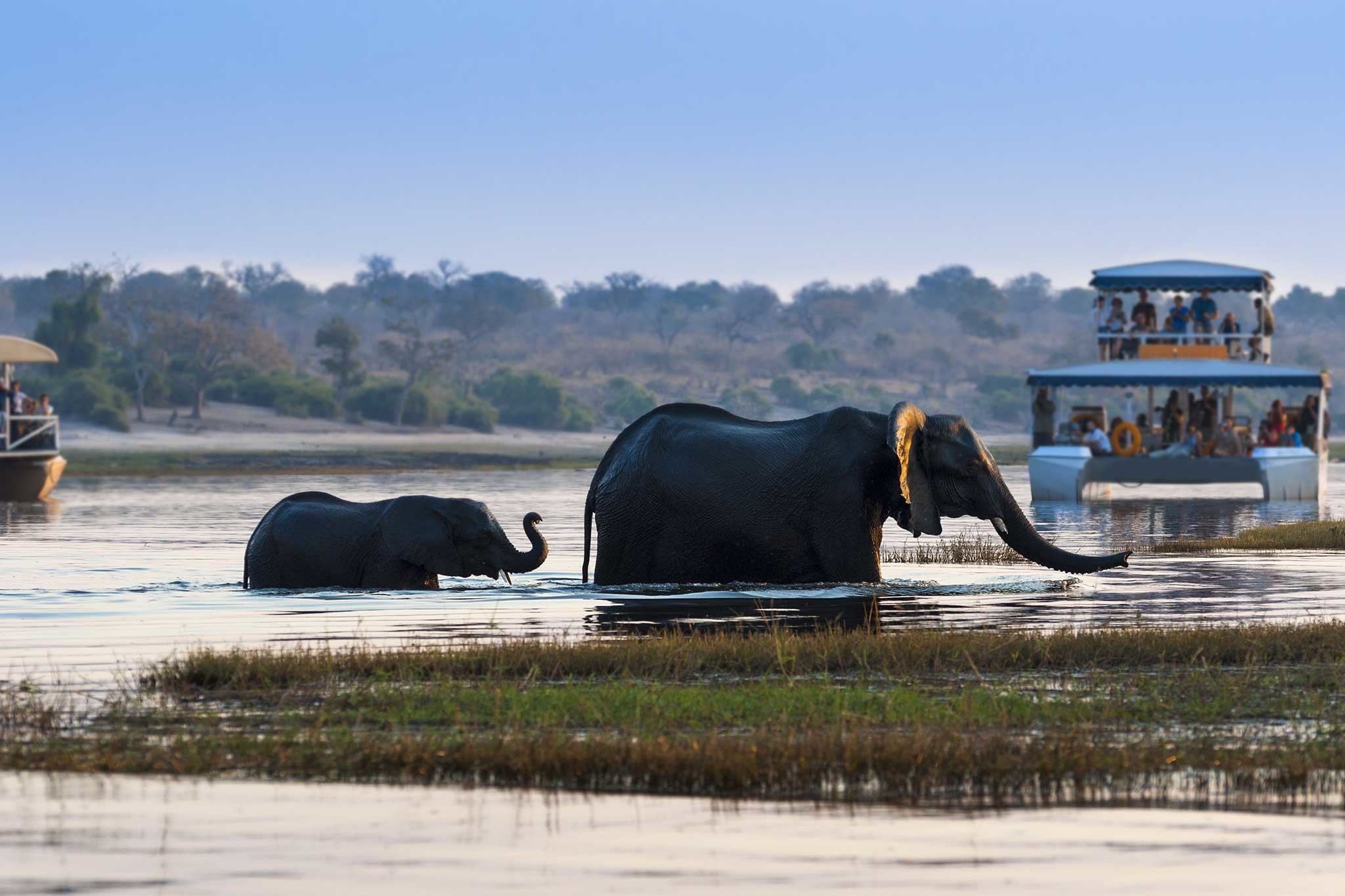
Chobe National Park
📍 Northeastern corner of Botswana
🗓 Best time: Best between May and October
Botswana safari tours in Chobe National Park start with knowing its location in the northeastern corner of Botswana, close to the borders of Namibia, Zambia, and Zimbabwe. The park covers about 11,700 square kilometers, making it one of the largest wildlife reserves in Southern Africa. Established in 1968, Chobe was the first national park in Botswana, created to protect its rich wildlife and ecosystems. For travelers on Botswana safari tours, Chobe lies about 930 kilometers from Gaborone, the capital city, and is easily accessed via Kasane Airport, which is located just outside the park.
Botswana safari tours benefit from Chobe’s strategic position near Kasane town, which serves as the main gateway. Kasane Airport connects directly to Johannesburg and other regional hubs, making access straightforward. The park’s background is tied to conservation efforts that protect elephants, lions, and diverse habitats ranging from floodplains to woodlands. Chobe’s vast area ensures visitors on Botswana safari tours experience varied landscapes and wildlife concentrations. Its proximity to Victoria Falls also makes it a popular extension for travelers combining multiple destinations in Southern Africa.

Timbavati Game Reserve
📍 Mpumalanga Province
🗓 Best time: May to September and October to April
Timbavati Game Reserve is one of the most respected private wildlife reserves in the Greater Kruger region and an outstanding destination for an African Safari South Africa experience. Located in Mpumalanga Province along the western boundary of Kruger National Park, the reserve forms part of a vast unfenced conservation area that allows wildlife to move freely across natural habitats. An African Safari South Africa in Timbavati offers travellers a quieter and more exclusive safari atmosphere compared to busier public parks, while still providing exceptional wildlife sightings throughout the year. The reserve is widely recognised for its natural beauty, open savannah landscapes, seasonal riverbeds, and dense bushveld that support a rich variety of wildlife species. Timbavati is also historically linked to the rare white lions occasionally seen within the reserve, adding further interest for wildlife enthusiasts. The combination of luxury safari lodges, experienced guides, and diverse ecosystems makes Timbavati Game Reserve a rewarding stop on an African Safari South Africa itinerary.

Semuliki National Park
📍 Western Uganda
🗓 Best time: February to June and September to December
Semuliki National Park offers one of the most unique Safari Uganda experiences, located in western Uganda within the remote Albertine Rift Valley near the border with the Democratic Republic of the Congo. Covering approximately 220 square kilometres, the park protects a rare section of lowland tropical rainforest that forms an eastern extension of the vast Congo Basin forests. Unlike Uganda’s savannah parks, Semuliki presents a completely different Safari Uganda atmosphere, with dense forests, winding rivers, swampy areas, and remarkable biodiversity. Established as a national park in 1993, Semuliki is known for its rich birdlife, unique wildlife species, and famous hot springs. A Safari Uganda in Semuliki National Park feels wild and untouched, offering visitors an opportunity to explore one of East Africa’s most biologically diverse ecosystems. The park’s isolation, combined with its tropical rainforest environment, creates a rewarding destination for nature lovers seeking experiences beyond traditional game viewing.

Bwindi Impenetrable National Park
📍 South Western Uganda
🗓 Best time: June to August and December to February
Bwindi Impenetrable National Park is the most famous destination for Gorilla Trekking Uganda and one of Africa’s most remarkable wildlife conservation areas. Located in southwestern Uganda along the edge of the Albertine Rift Valley, the park is home to nearly half of the world’s remaining mountain gorillas. Covering approximately 331 square kilometres of ancient rainforest, Bwindi is recognised as a UNESCO World Heritage Site because of its exceptional biodiversity and conservation significance. Gorilla Trekking Uganda in Bwindi offers visitors the rare opportunity to observe mountain gorillas in their natural habitat while exploring one of the oldest rainforests in Africa. The park’s mist covered hills, dense vegetation, dramatic valleys, and rich wildlife create an extraordinary setting for nature enthusiasts. Beyond gorilla encounters, Bwindi provides visitors with opportunities to experience local cultures, birdwatching, forest walks, and conservation tourism, making Gorilla Trekking Uganda one of the continent’s most rewarding wildlife adventure.
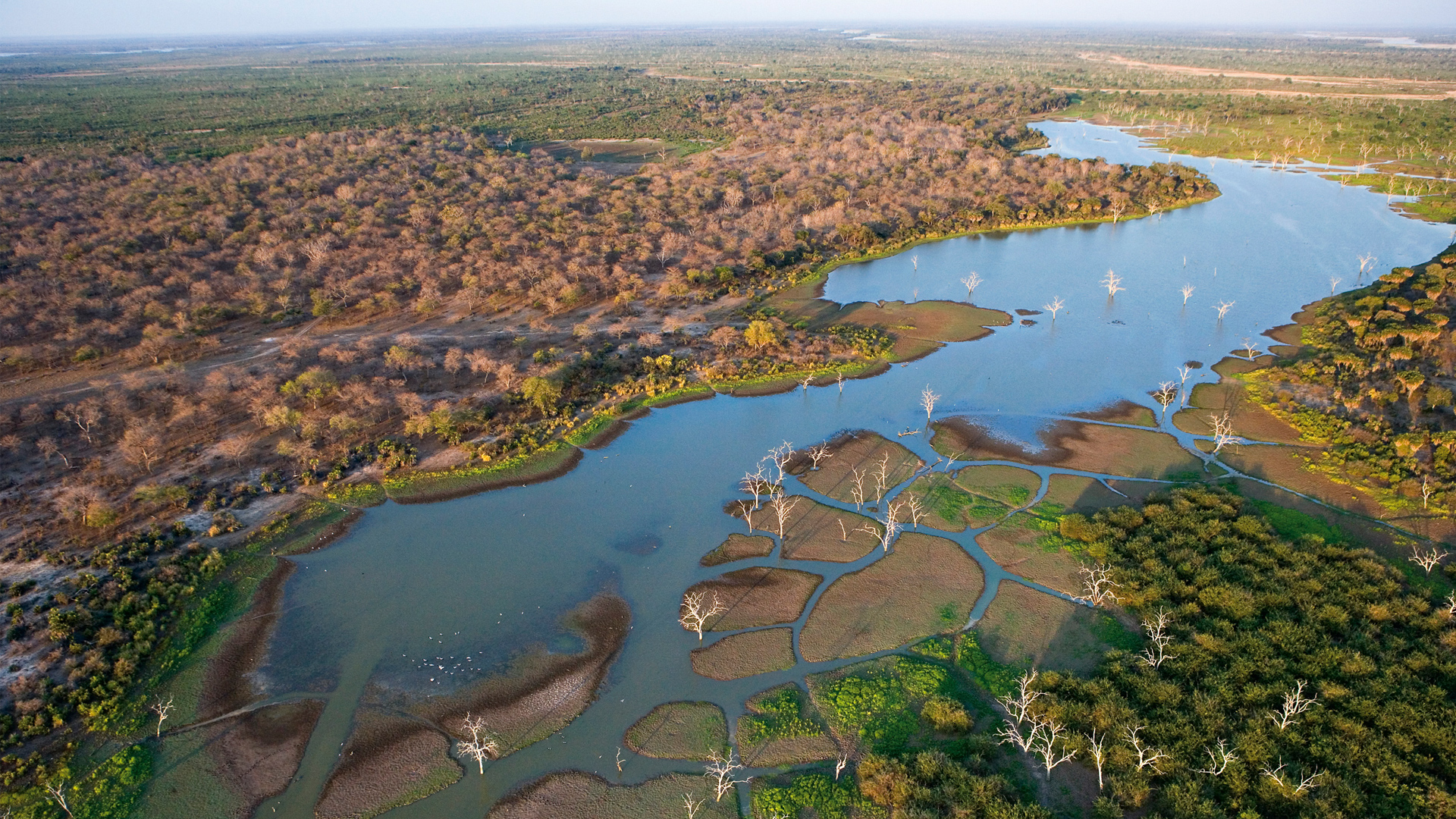
Okavango Delta
📍 located in northern Botswana
🗓 Best time: best between May and October
The Okavango Delta is located in northern Botswana, forming one of the world’s largest inland deltas. It covers about 15,000 square kilometers during peak floods, creating a mosaic of lagoons, channels, and islands. Safaris in Botswana here are unique because the Delta floods during the dry season, offering rich habitats for wildlife. Its background is tied to seasonal waters flowing from Angola into Botswana, making it a UNESCO World Heritage Site. Safaris in Botswana in this region highlight the balance between water and wilderness.
From Gaborone, Botswana’s capital, the Delta is about 1,000 kilometers away. The nearest airport is Maun, which serves as the main gateway. Safaris in Botswana often begin here, with charter flights connecting travelers to remote lodges. Maun Airport makes access practical, ensuring visitors reach the Delta efficiently despite its remote location. Safaris in Botswana benefit from this setup, combining convenience with wilderness immersion

Mgahinga Gorilla National Park
📍 South Western corner of Uganda
🗓 Best time: June to August and December to February
Wildlife viewing is one of the most rewarding highlights of visiting Mgahinga Gorilla National Park during Mountain Gorillas Uganda. Located in the southwestern corner of Uganda within the Virunga Conservation Area, the park offers visitors exceptional opportunities to encounter rare wildlife within a stunning volcanic landscape. While mountain gorillas are the main attraction, Mountain Gorillas Uganda in Mgahinga also introduces travellers to a variety of other wildlife species that thrive within the park’s montane forests and bamboo zones. Visitors may encounter golden monkeys, bushbucks, forest elephants, giant forest hogs, buffaloes, and numerous smaller mammals. The park’s dramatic scenery, dominated by the volcanic peaks of Mount Muhabura, Mount Gahinga, and Mount Sabyinyo, creates a spectacular backdrop for wildlife adventures. The combination of unique biodiversity, scenic beauty, and cultural experiences makes Mountain Gorillas Uganda in Mgahinga Gorilla National Park an outstanding safari experience for nature enthusiasts.

Mount Elgon National Park
📍 Eastern Uganda
🗓 Best time: June to August and December to February
Mount Elgon National Park is one of Uganda’s most stunning and diverse protected areas, offering a unique addition to a Tour Safari Uganda adventure. Located in eastern Uganda along the border with Kenya, the park is centred around Mount Elgon, an extinct volcano with one of the largest volcanic bases in the world. Rising to 4,321 metres above sea level at Wagagai Peak, Mount Elgon provides visitors with spectacular landscapes, waterfalls, caves, cliffs, and montane forests. While Tour Safari Uganda is often associated with the forests of southwestern Uganda, combining it with Mount Elgon allows travellers to experience a completely different side of the country. The park is known for its cool climate, breathtaking hiking trails, rich biodiversity, and cultural encounters with the local Bagisu and Sabiny communities. Exploring Mount Elgon National Park during Tour Safari Uganda offers a rewarding blend of adventure, nature, and stunning mountain view.

Ouanoukrim Mountain
📍 South of Marrakesh
🗓 Best time: April to June and September to October
Ouanoukrim Mountain sits in the High Atlas Mountains, near the more famous Toubkal. It is the second highest peak in North Africa, reaching 4,089 meters. On Morocco trips, this mountain is often overlooked by trekkers who rush straight to Toubkal. But that is exactly what makes it special. You have dramatic ridges, rocky slopes, stunning views, and far fewer people. The mountain actually has two summits: Timzguida and Ouanoukrim, connected by a high ridge. On Morocco trips, climbing Ouanoukrim is a serious challenge. It is steep, rugged, and requires good fitness. But the reward is a view that rivals Toubkal, without the crowds. The trail passes through remote valleys, past Berber villages, and along high ridges where golden eagles soar. The altitude is no joke. Some people get sick. Summer is hot in the valleys. Winter is freezing with snow on the peak. Trails are rocky and steep. Still, if you want a quieter, more adventurous alternative to Toubkal, this is the place.

Jbel Tidirhine Mountain
📍 Al Hoceïma Province
🗓 Best time: April to June
Jbel Tidirhine is different from all the other mountains on this list. It is not in the High Atlas. It is not in the Anti-Atlas. It stands alone in the Rif Mountains, the highest peak in northern Morocco at 2,456 meters. On Moroccan tours, most travelers head south to the Sahara or the High Atlas. They ignore the Rif completely. That is a mistake. Jbel Tidirhine is not a technical climb. It is a hike, a long and steep one, but not dangerous. The reward is a view that stretches from the Mediterranean Sea to the peaks of the High Atlas. On a clear day, you can see the coast of Spain, just 14 kilometers across the strait. The approach passes through the famous blue city of Chefchaouen, one of the most beautiful towns in Morocco. You will walk through forests of cork oak and fir. You will pass through villages where life has not changed in generations. And you will stand on a summit that feels like the roof of the Rif. This is a mountain for travelers who want something different. For those who have seen the south and want to discover the north. For anyone who understands that Morocco is more than the desert.

Jbel Sirwa Mountain
📍 South of Toubkal
🗓 Best time: March to May
Jbel Sirwa is the odd one out. It is not in the High Atlas. It is not in the Middle Atlas. It stands alone in the Anti-Atlas range, a volcanic peak rising from the desert at 3,305 meters. On a Morocco tour package, most travelers rush past this region on their way from Marrakech to the Sahara. They look out the bus window at the dark, craggy mountains and think nothing of them. Their loss. Jbel Sirwa is a geological wonder. The mountain is the remnant of an ancient volcano, its slopes strewn with basalt and obsidian. The summit is a wide crater, now eroded, but still recognizable. The views from the top are unlike anything else in Morocco. To the north, the snow-capped peaks of the High Atlas. To the south, the endless dunes of the Sahara. And all around, a lunar landscape of black rock and red earth. This is a mountain for travelers who have seen the green valleys of the north and want something completely different. For those who love geology as much as they love climbing. For anyone who understands that the best adventures are often the ones that surprise you.

Jbel Ayachi Mountain
📍 Central Morocco
🗓 Best time: mid-May to mid-June
Jbel Ayachi is different from the other High Atlas peaks. It is not in the Toubkal massif. It is not surrounded by trekkers and refuges and mule trains. It stands alone in the eastern High Atlas, near the town of Midelt, at 3,747 meters. On Morocco tour packages, this mountain is the highest point of the Ayachi massif, a remote, arid range that feels more like the American West than North Africa. The slopes are covered in volcanic rock, black and sharp. The valleys are wide and dry. The villages are few and far between. Climbing Jbel Ayachi is not about technical difficulty. It is about endurance. The approach is long. The terrain is rough. The weather is unpredictable. But the reward is a view that stretches from the Middle Atlas to the Sahara. On a clear day, you can see the dunes of Merzouga shimmering in the distance. This is a mountain for travelers who want to get off the grid. For those who have done the classic routes and crave something wilder. For anyone who understands that the best adventures are the ones you have to work for.

Pian Upe Game Reserve
📍 North Eastern Uganda
🗓 Best time: December to March and June to September
Wildlife viewing is one of the most exciting experiences for travellers exploring Pian Upe Game Reserve during Uganda Safari Tours. Located in northeastern Uganda between Mount Elgon National Park and Kidepo Valley National Park, Pian Upe is the country’s second-largest protected area and one of its most untouched wilderness destinations. While Uganda Safari Tours is best known for gorilla trekking in southwestern Uganda, combining it with Pian Upe offers visitors an opportunity to discover a completely different landscape filled with open savannahs, rocky outcrops, acacia woodlands, and vast plains. The reserve supports a remarkable variety of wildlife, including cheetahs, roan antelopes, zebras, elands, buffaloes, and Uganda kobs. Visitors may also encounter ostriches, which are found in very few places within Uganda. The reserve’s remote setting, rich biodiversity, and peaceful atmosphere make Uganda Safari Tours combined with Pian Upe Game Reserve an exceptional safari experience for wildlife enthusiasts seeking off the beaten track adventures.

ghil M'Goun Mountain
📍 Drâa-Tafilalet region.
🗓 Best time: May to June and September to October
Most people come to Morocco for Toubkal. They stand in line at the refuge, shuffle up the same rocky slope, and take the same photo at the summit. Then they leave, never knowing there is a mountain nearby that is wilder, more remote, and arguably more beautiful. That mountain is Ighil M'Goun. At 4,071 meters, it is the third highest peak in North Africa. But height is not what makes it special. What makes it special is the silence. On a Morocco trip, you can spend days on M'Goun without seeing another trekking group. The route crosses high plateaus where nomadic shepherds still live in black tents. It passes through gorges so deep the sun barely reaches the bottom. It follows ancient paths that have been used for centuries. This is not a crowded summit push. It is a journey across a mountain range. You will need six to eight days. You will sleep in simple gîtes or under the stars. You will walk through valleys where the only sound is the wind and the bells of grazing goats. If you want to feel like an explorer, this is your mountain.

Biguinnoussene Mountain
📍 Marrakech-Tensift-Al Haouz
🗓 Best time: mid-May to mid-June
Biguinnoussene is the mountain that climbers discover after they have done Toubkal, Ouanoukrim, and Afella. It sits at 4,002 meters, the sixth highest peak in North Africa, and it is the least visited of all the 4,000 meter summits in the Toubkal massif. On Morocco tours, most people do not even know it exists. They walk right past its base on their way to the main refuge, eyes fixed on the highest point, completely unaware that a few extra hours of effort could take them to a summit that feels like their own private discovery. Biguinnoussene is not a technical climb. There are no exposed ridges or nerve-wracking scrambles. What it offers is something rarer: genuine solitude. On a busy summer day, Toubkal can have 200 climbers on its summit. On the same day, Biguinnoussene might have five. You will not have to wait in line for your summit photo. You will not have to share the view with strangers. You will sit on the top, look out at the vastness of the High Atlas, and feel like you have the whole range to yourself. That feeling is worth more than a few extra meters of altitude.

Ishasha Sector
📍 western Uganda
🗓 Best time: June to August and December to February
Ishasha Sector offers one of the most remarkable wildlife experiences included in the Best Safaris in Uganda. Located in the southern part of Queen Elizabeth National Park, western Uganda, Ishasha is world famous for its rare tree climbing lions that can often be seen resting in large fig trees. This unique behaviour makes the sector one of the most unique safari destinations in East Africa. A visit to Ishasha during the Best Safaris in Uganda combines scenic savannah landscapes, rich biodiversity, and unforgettable wildlife encounters. The area features vast open plains, acacia woodlands, seasonal rivers, and distant views of the Virunga Volcanoes. Its remote and peaceful atmosphere makes it ideal for travellers seeking authentic safari experiences away from crowded routes. Ishasha also serves as a key stopover for visitors travelling between Queen Elizabeth National Park and Bwindi Impenetrable National Park, making it an essential highlight of the Best Safaris in Uganda itineraries.

Ziwa Rhino Sanctuary
📍 Nakasongola District
🗓 Best time: December to February and June to September
Ziwa Rhino Sanctuary offers one of the most unique wildlife experiences on the Luxury Safari Uganda. Located in Nakasongola District along the Kampala Gulu highway, approximately 176 kilometres north of Kampala, the sanctuary was established to reintroduce southern white rhinos to Uganda after they became extinct in the wild within the country during the 1980s. Covering over 70 square kilometres of savannah grassland, woodland, and wetland habitats, Ziwa Rhino Sanctuary is now the only place in Uganda where visitors can see rhinos in their natural environment. A visit to the sanctuary provides an exciting opportunity to track rhinos on foot while learning about conservation efforts aimed at restoring Uganda’s rhino population. The sanctuary is often included in itineraries to Murchison Falls National Park, making it an important stop on the Luxury Safari Uganda. Its combination of wildlife conservation, nature walks, birdlife, and educational experiences creates a rewarding destination for travellers of all interests.

Umkhuze Game Reserve
📍 Northern KwaZulu-Natal Province
🗓 Best time: May and September and October to April
Umkhuze Game Reserve offers a very different side of a South Africa Safari, where wetlands, acacia woodland, open plains, and dense sand forest all meet within one protected area in northern KwaZulu-Natal. The reserve forms part of the larger iSimangaliso Wetland Park region and lies close to the borders of Eswatini and Mozambique. Unlike some of the busier safari destinations in the country, Umkhuze moves at a slower and quieter pace, allowing visitors to focus on nature without constant vehicle traffic around sightings. A South Africa Safari in Umkhuze is often appreciated for its strong birdlife, traditional wilderness atmosphere, and scenic hides overlooking waterholes. Ancient fig trees, pans, and river systems shape the landscape, while walking trails and lookout points create a more relaxed safari rhythm. The reserve’s peaceful setting gives travellers time to enjoy wildlife, photography, and nature in a calmer environment.

Kyambura Wildlife Reserve
📍 Eastern section of Queen Elizabeth
🗓 Best time: June to August and December to February
Wildlife viewing is one of the most rewarding experiences for travellers exploring Kyambura Wildlife Reserve during African Safari Uganda. Located in the eastern section of Queen Elizabeth National Park, Kyambura Wildlife Reserve is famous for its spectacular underground forest known as the Kyambura Gorge. Often referred to as the Valley of Apes the reserve offers a unique contrast to the open savannah landscapes commonly associated with African Safari Uganda. The dramatic gorge, carved by the Kyambura River, stretches for several kilometres and shelters a rich ecosystem of tropical forest surrounded by vast grasslands. Visitors can enjoy exciting wildlife encounters, scenic landscapes, and primate tracking experiences within this remarkable natural environment. The combination of forested gorge habitats, savannah plains, wetlands, and crater lakes makes African Safari Uganda in Kyambura Wildlife Reserve an unforgettable adventure for nature enthusiasts and wildlife lovers.
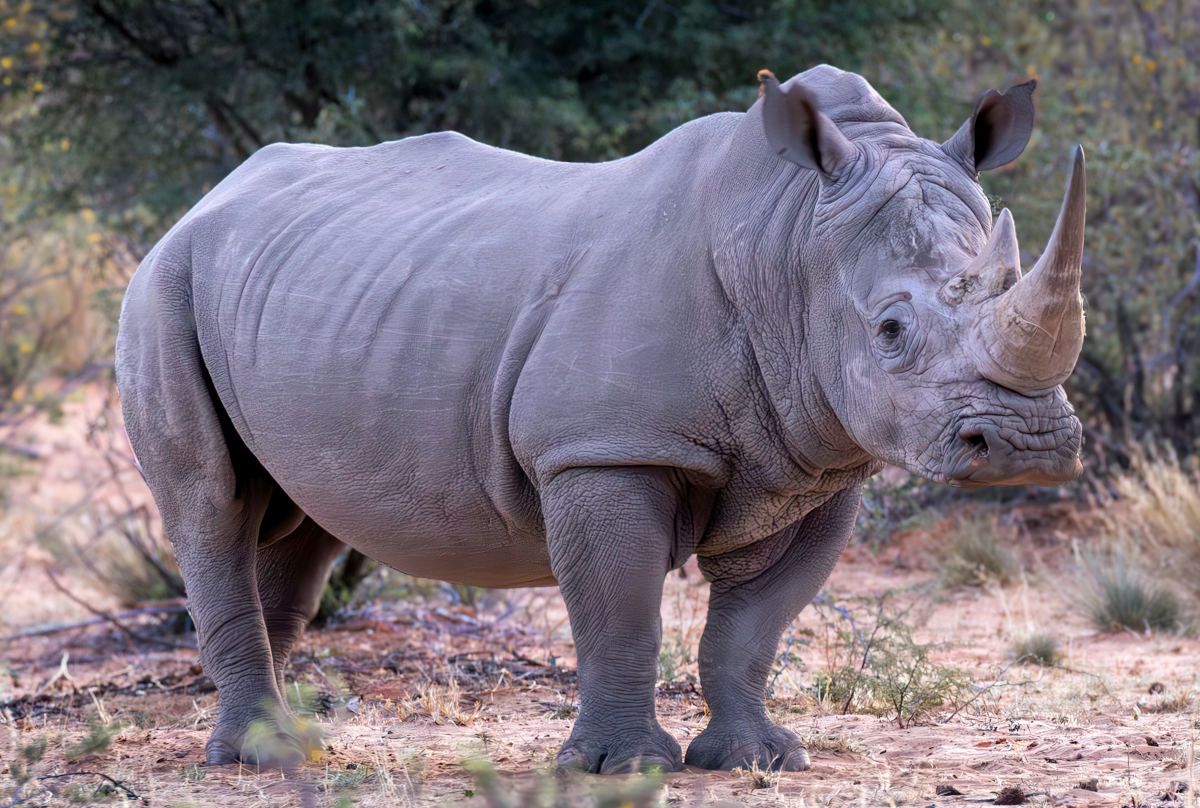
Welgevonden Game Reserve
📍 Waterberg Region , Limpopo Province
🗓 Best time: May to September and October to April
Welgevonden Game Reserve offers a peaceful and exclusive South African Safari experience within the Waterberg region of Limpopo Province. Covering more than 35,000 hectares of protected wilderness, the reserve is known for its beautiful mountain scenery, rolling hills, open plains, rocky cliffs, and river valleys that create a varied natural environment for wildlife. A South African Safari in Welgevonden Game Reserve feels more private because visitor numbers are carefully controlled and commercial day tourism is not allowed inside the reserve. The area is also recognised for its conservation efforts, especially in protecting endangered species and maintaining low impact tourism. The reserve lies within the UNESCO recognised Waterberg Biosphere, adding ecological importance to the landscape. Its combination of scenic beauty, rich wildlife, and quieter safari conditions makes Welgevonden Game Reserve a rewarding destination on a South African Safari itinerary.

Zulu Nyala Game Reserve
📍 KwaZulu-Natal Province
🗓 Best time: May and September and October to April
Zulu Nyala Game Reserve offers a relaxed and accessible wildlife experience within the northern part of KwaZulu-Natal, close to the town of Hluhluwe in eastern South Africa. Covering rolling grasslands, acacia woodland, small lakes, and bushveld landscapes, the reserve forms part of a region well known for both wildlife and Zulu cultural heritage. A South Africa Safari through Zulu Nyala Game Reserve feels different from the larger wilderness areas because the reserve focuses on comfortable guided experiences within a manageable setting. Wildlife is often seen at close range as animals move between open plains and watering areas near safari routes. The reserve is also recognised for its peaceful atmosphere and traditional lodge style, which appeals to travellers looking for a slower paced safari environment. Its location near the Elephant Coast allows visitors on a South Africa Safari to combine wildlife viewing with nearby coastal and cultural attractions across KwaZulu-Natal.

Amakhala Game Reserve
📍 Eastern Cape Province
🗓 Best time: May and September and October to April
Amakhala Game Reserve offers a relaxed and varied wildlife experience in the Eastern Cape Province, located near the small town of Sidbury between Gqeberha and Grahamstown. Set within the Bushman’s River valley, the reserve stretches across rolling plains, riverine forest, open grassland, and dense thicket vegetation that support a wide range of wildlife habitats. A Safari in South Africa through Amakhala Game Reserve feels both peaceful and personal because the reserve combines conservation land with smaller safari lodges spread across the landscape. The name “Amakhala” comes from the Xhosa language meaning “aloes,” inspired by the aloe plants that grow naturally throughout the region. Unlike some larger safari areas, Amakhala blends wildlife viewing with quiet surroundings and Eastern Cape scenery, making it suitable for travellers seeking a slower paced Safari in South Africa close to both the coast and Garden Route travel regions.

Karuma Wildlife Reserve
📍 North Western Uganda
🗓 Best time: December to February and June to September
Wildlife viewing is one of the most rewarding experiences for travellers exploring Karuma Wildlife Reserve during Uganda Safari Accomodation. Located in northwestern Uganda between Murchison Falls National Park and the Karuma Falls area along the Victoria Nile, Karuma Wildlife Reserve forms part of the greater Murchison Falls Conservation Area. The reserve is characterised by rolling savannah grasslands, woodland habitats, riverine vegetation, and scenic landscapes that support a variety of wildlife species. While many visitors focus on Murchison Falls National Park, Uganda Safari Accomodation experiences in Karuma Wildlife Reserve offer a quieter and less crowded opportunity to enjoy Uganda’s natural beauty. The reserve provides excellent wildlife viewing, birdwatching, nature walks, and photographic opportunities. Its strategic location along major safari routes makes it a valuable addition to any Uganda Safari Accomodation itinerary, especially for travellers seeking authentic wilderness experiences beyond the more popular safari destinations.
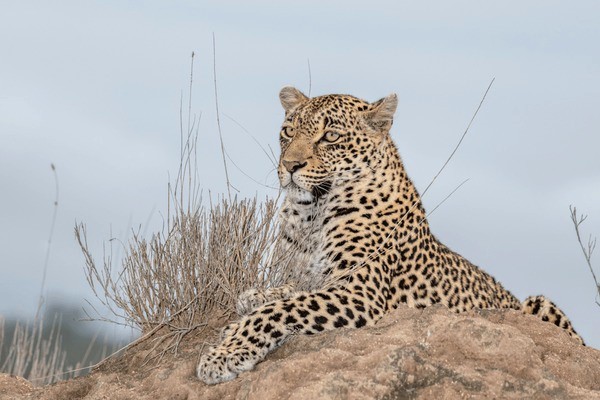
Djuma Game Reserve
📍 Mpumalanga Province
🗓 Best time: May to September and October to April
Djuma Game Reserve sits within the western section of the Sabi Sand Nature Reserve in Mpumalanga Province, close to Kruger National Park. For travellers planning a Safari in South Africa, Djuma is known for its strong leopard sightings, experienced trackers, and relaxed safari atmosphere that feels connected to the rhythm of the bush rather than large tourist crowds. The reserve covers open grasslands, dry riverbeds, marula woodland, and dense bushveld where wildlife moves naturally across the Greater Kruger ecosystem. Djuma also became widely recognised through live wildlife broadcasts that introduced viewers around the world to daily safari life in this part of South Africa. Days here usually begin with the sound of birds before sunrise and end beside campfires under wide African skies. This natural pace gives Djuma Game Reserve a grounded and authentic place within a Safari in South Africa experience.

Bugungu Wildlife Reserve
📍 North Western Uganda
🗓 Best time: December to February and June to September.
Wildlife viewing is one of the most rewarding experiences for travellers exploring Bugungu Wildlife Reserve while searching for the Best Safari Lodge experience in Uganda. Located in northwestern Uganda along the southern boundary of Murchison Falls National Park, Bugungu Wildlife Reserve forms part of the greater Murchison Falls Conservation Area. Covering approximately 473 square kilometres, the reserve consists of rolling grasslands, riverine forests, acacia woodlands, wetlands, and scenic escarpments overlooking Lake Albert. While many visitors focus on the famous attractions of Murchison Falls National Park, Bugungu offers a quieter and more exclusive wilderness experience. Travellers seeking the Best Safari Lodge adventure can enjoy exceptional wildlife viewing, birdwatching, nature walks, and breathtaking landscapes without the crowds often found in more popular parks. Its strategic location between Lake Albert and Murchison Falls National Park makes Bugungu Wildlife Reserve a valuable addition to any Uganda safari itinerary.
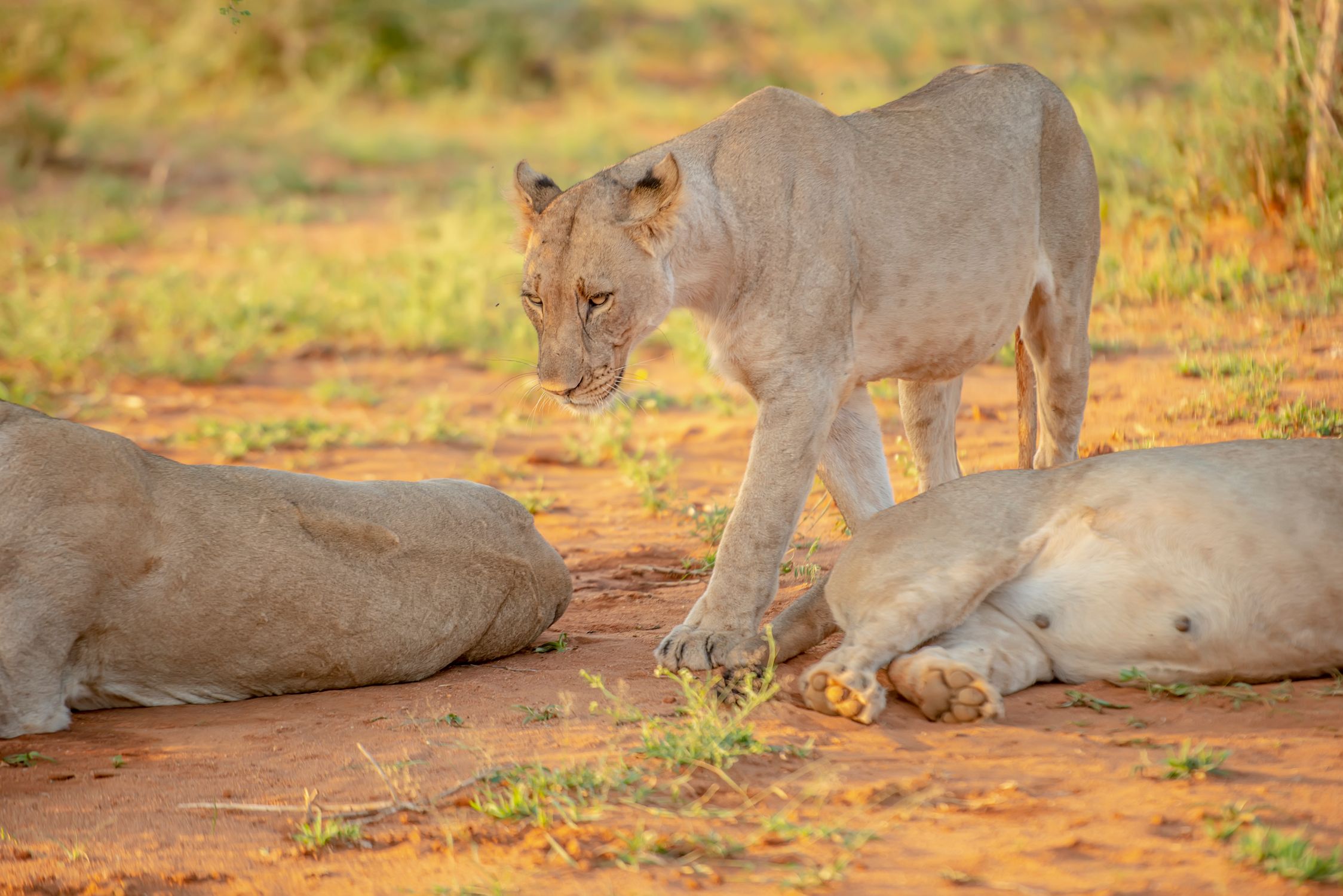
Balule Nature Reserve
📍 Limpopo Province
🗓 Best time: May and September and October to April
Balule Nature Reserve offers a quieter and more natural side of South Africa Safaris, lying within the Greater Kruger region in Limpopo Province near Hoedspruit. Unlike some of the more commercial safari destinations, Balule keeps a relaxed bush atmosphere where wildlife moves freely across unfenced land connected to Kruger National Park and neighbouring reserves. The reserve stretches across open savannah, riverine woodland, acacia bush, and seasonal riverbeds that support a healthy ecosystem throughout the year. Travellers on South Africa Safaris often choose Balule because it combines strong wildlife viewing with a more peaceful setting away from larger tourist crowds. Game drives here feel slower and more personal, with fewer vehicles around sightings and more time spent observing the bush naturally. The reserve is also known for its intimate lodges and authentic safari atmosphere, making Balule Nature Reserve an appealing destination for visitors wanting a quieter experience on South Africa Safaris.

Kariega Game Reserve
📍 Eastern Cape
🗓 Best time: May and September and October to April
Kariega Game Reserve offers a quieter and more varied wildlife experience along the Eastern Cape of South Africa, located near the town of Kenton on Sea between Gqeberha and Port Alfred. Stretching across thousands of hectares of private conservation land, the reserve lies around the Kariega and Bushman’s Rivers, where open plains, river valleys, dense bushveld, and rolling hills create a rich natural setting. South Africa Safaris through Kariega Game Reserve combine traditional game viewing with river scenery that feels different from the dry bush landscapes found in other safari regions. The reserve is known for its peaceful atmosphere, well managed conservation programmes, and comfortable lodges spread across different sections of the property. Boat cruises along the river also add another dimension to wildlife exploration within the reserve.

Akioud Mountain
📍 Marrakech-Safi Region
🗓 Best time: July to September
Akioud is the mountain that most people drive past without noticing. It sits at 4,030 meters, the fifth highest peak in North Africa, tucked away in the Toubkal massif. On Moroccan trips, trekkers rush toward the main summit, their eyes fixed on the highest point, completely unaware that a few hours of extra effort could take them to a place just as beautiful and far more peaceful. Akioud does not have the fame of Toubkal. It does not have the refuge queues or the crowded summit. What it has is exposure. The final ridge to the top is narrow, with drops on both sides that will make your stomach tighten. It is not a technical climb, but it is not for the faint of heart either. You need steady nerves and good balance. The reward is a view of the entire Toubkal massif spread out before you, with no other trekkers jostling for space in your photograph. This is a mountain for people who have already done the standard route and want something more. Or for those who simply prefer a challenge that requires a bit of nerve.

Afella Mountain
📍 South of Marrakech
🗓 Best time: mid-May to mid-June
Most people climbing in the High Atlas have their eyes fixed on Toubkal. They queue up on the same trail, stay in the same refuge, and chase the same summit photo. But there is a quieter, more rugged alternative that most tourists never even hear about. That mountain is Afella. At 4,043 meters, it is the fourth highest peak in North Africa. On Moroccan trips, Afella sits in the shadow of its taller neighbors, but that is exactly what makes it appealing. The crowds do not come here. The trails are rough, the slopes are steep, and the views are just as spectacular as anything you will see from the higher summits. Afella is not a mountain for people who want a quick, easy climb. It is for those who have already done Toubkal and want something different. Or for those who simply prefer solitude over a summit queue. You will need good fitness, a head for heights, and a willingness to scramble on loose rock. But if you put in the effort, Afella rewards you with a wilderness experience that the Toubkal crowds will never know.

Adrar Bou Naceur Mountain
📍 Sefrou Province, Fès-Meknès
🗓 Best time: mid-May to mid-June
Adrar Bou Naceur is the highest peak in the Middle Atlas range, standing at 3,340 meters. On best Morocco tours, most travelers head straight for the High Atlas, chasing the glory of Toubkal. They ignore the Middle Atlas completely. That is their loss. Adrar Bou Naceur is not a technical climb. There are no exposed ridges or scrambling sections. What it offers is something different: a landscape of rolling cedar forests, volcanic plateaus, and hidden lakes. The approach passes through the famous cedar forests of Azrou, home to the endangered Barbary macaque. You will walk through groves of ancient trees, their branches twisted by centuries of wind. You will cross high plateaus where nomadic shepherds graze their flocks. And on a clear day, from the summit, you can see the peaks of the High Atlas to the south and the hills of the Rif to the north. This is a mountain for travelers who love forests as much as they love peaks. For those who want a quieter, gentler climbing experience. For anyone who understands that the best adventures are not always the hardest.

Toubkal Mountain
📍 Central-western Morocco
🗓 Best time: May to June
Toubkal is the king of North Africa. At 4,167 meters, it is the highest peak in the Atlas Mountains and the highest summit in the entire Arab world. On Moroccan Trips, most travelers look up at its snow-capped pyramid from the valleys below and think it is only for serious mountaineers. Not true. Toubkal is a trekking peak, not a technical climb. You do not need ropes, ice axes, or years of experience. You need good fitness, proper preparation, and a sense of adventure. The mountain rises above the Imlil Valley, a green and fertile region of terraced fields, walnut trees, and Berber villages. The standard route follows the south cirque, a wide, open valley that leads to the summit. The views from the top are unforgettable. To the north, the rolling hills of the High Atlas. To the south, the Sahara Desert, shimmering in the heat haze. To the east and west, endless ridges of mountains, peak after peak, fading into the distance. This is a mountain for travelers who want to stand on the roof of North Africa. For those who love the mountains but do not want to learn technical climbing. For anyone who understands that the best adventures are often the ones that push you just a little bit further.

Jebel n'Tarourt Mountain
📍 Southwestern Morocco
Jebel n'Tarourt is the forgotten giant. It is not Toubkal, the highest in North Africa. It is not M'Goun, the famous trekking peak. It stands in the High Atlas, a 4,001-meter summit that most travelers have never heard of. On Moroccan Trips, tourists rush past its foothills on their way from Marrakech to the Sahara, staring out the window at the rugged peaks and thinking nothing of them. Their loss. Jebel n'Tarourt is the sixth highest peak in North Africa and one of only five mountains in Morocco that rise above 4,000 meters . It is a mountain for travelers who have already done Toubkal and want something harder. For those who love solitude as much as they love climbing. For anyone who understands that the best adventures are often the ones that require a little more effort. The summit offers views that few Western eyes have seen. To the north, the majestic Toubkal massif. To the south, the volcanic peaks of the Siroua and the endless expanse of the Anti-Atlas. To the east and west, ridge after ridge of the High Atlas, fading into the distance . This is a mountain for the true adventurer.
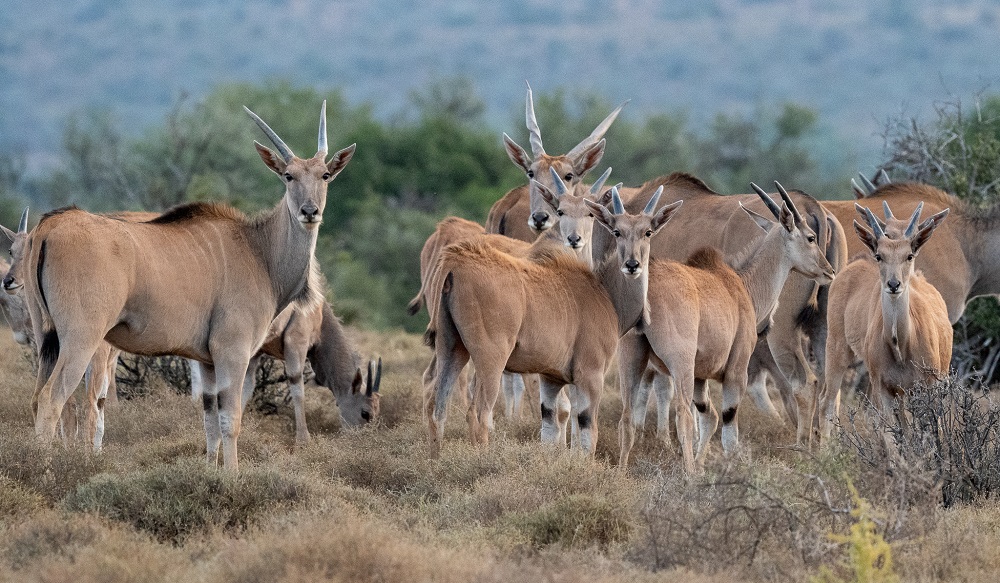
Samara Karoo Reserve
📍 Eastern Cape Province
🗓 Best time: April to September and October to March
Samara Karoo Reserve offers a very different perspective of a Safari South Africa experience, far removed from the dense bushveld and river systems commonly associated with traditional safaris. It’s located in the Great Karoo region near the town of Graaff Reinet in the Eastern Cape Province, Samara sits within a vast semi-arid landscape of open plains, rugged mountains, ancient valleys, and endless horizons. The reserve was created through one of South Africa’s most ambitious conservation restoration projects, transforming former livestock farms back into natural habitat. A Safari South Africa in Samara is as much about the landscape as it is about wildlife, with visitors spending time exploring dramatic scenery that changes colour throughout the day. The reserve's remote location creates a sense of space and tranquillity that is difficult to find elsewhere. Rather than feeling crowded or hurried, a visit to Samara unfolds slowly, allowing travellers to appreciate the wild beauty of the Karoo while learning about one of the country's most remarkable conservation success stories.
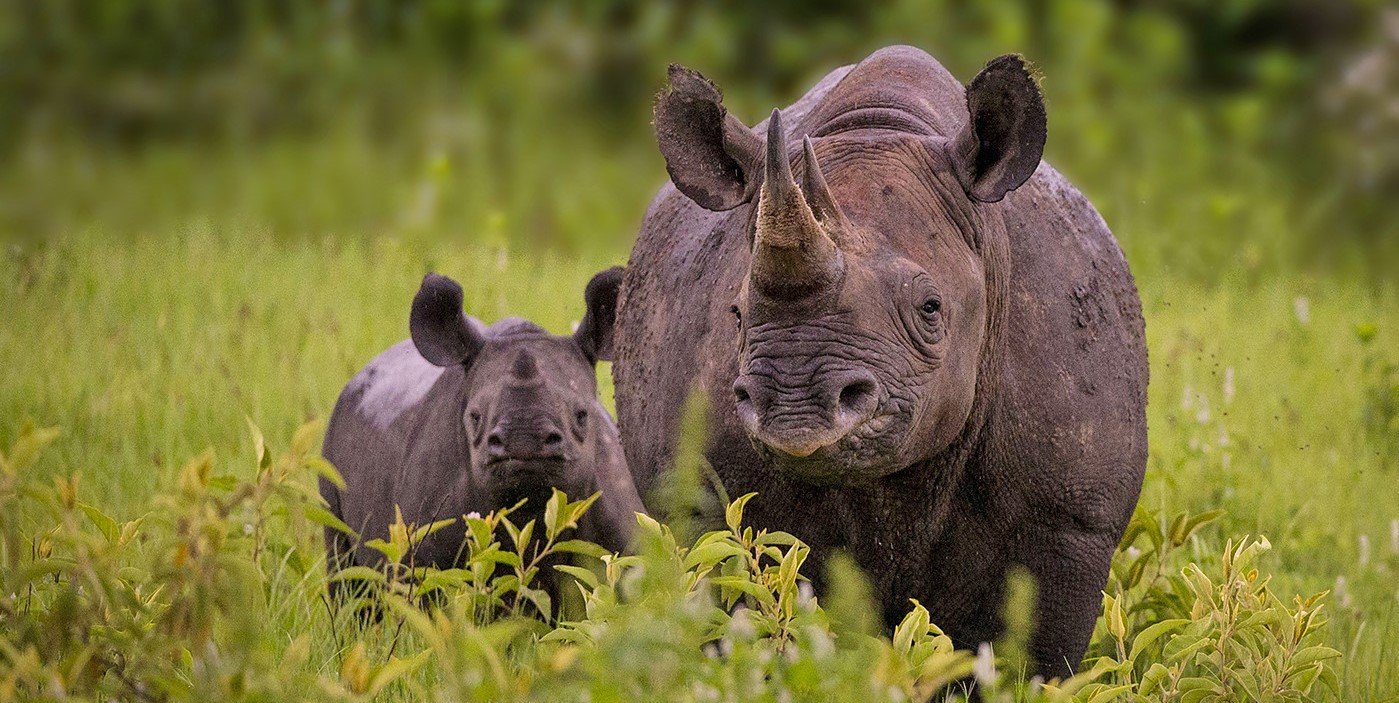
Kuzuko Game Reserve
📍 Eastern Cape Province
🗓 Best time: May to September and October to April
Kuzuko Game Reserve offers a different side of the Eastern Cape, where wide open landscapes, mountain views, and wildlife combine to create a rewarding South Africa Safari Tour experience. The reserve is located in the Greater Addo region of the Eastern Cape Province, approximately 140 kilometres north of Gqeberha near the Zuurberg Mountains. Unlike some of South Africa’s busier wildlife destinations, Kuzuko provides a sense of space and tranquillity, allowing visitors to enjoy nature without large crowds. The reserve forms part of a broader conservation landscape linked to the Addo ecosystem and is known for its successful wildlife restoration programmes. Travellers on a South Africa Safari Tour often choose Kuzuko because it combines comfortable accommodation, dramatic scenery, and excellent game viewing within a malaria-free environment that suits families, couples, and wildlife enthusiasts alike.
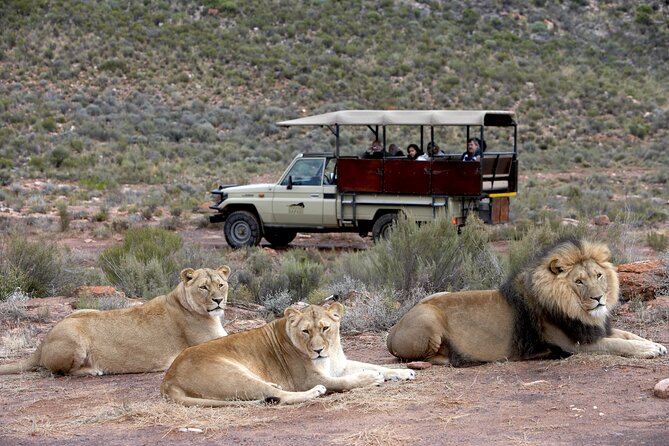
Aquila Private Game Reserve
📍 Western Cape Province
🗓 Best time: November to March and May to August
Aquila Private Game Reserve offers one of the most accessible wildlife experiences in the Western Cape, making it a popular addition to a South Africa Safari Trip. The reserve is located near the Town of Touws River in the Cape Winelands District of the Western Cape Province, approximately 170 kilometres northeast of Cape Town. Unlike many safari destinations that require domestic flights or long road journeys, Aquila allows travellers to experience African wildlife within a few hours of South Africa’s most visited city. The reserve stretches across a landscape of rolling plains, rocky outcrops, mountains, and semi-arid Karoo vegetation. A South Africa Safari Trip to Aquila appeals to visitors looking to combine Cape Town attractions with wildlife viewing in a relatively short time. Its location, accessibility, and range of safari activities have made it one of the most visited private game reserves in the Western Cape.

Sanbona Wildlife Reserve
📍 Little Karoo region, Western Cape
🗓 Best time: May to September and August to October
Sanbona Wildlife Reserve sits in the heart of the Little Karoo, about three hours from Cape Town, within the rugged landscapes of the Little Karoo. Covering more than 58,000 hectares, it is one of the largest privately owned wildlife reserves in South Africa. Unlike many safari destinations dominated by dense bushveld, Sanbona is characterised by vast open plains, dramatic mountain ranges, ancient rock formations, and semi-desert vegetation that create a strikingly different setting for a Safari South Africa experience. Travellers often arrive expecting wildlife and leave talking just as much about the scenery. The reserve also protects important archaeological and rock art sites linked to the San people, adding cultural interest alongside wildlife viewing. A Safari South Africa in Sanbona offers a combination of wide open spaces, conservation success stories, and a sense of remoteness that is increasingly difficult to find elsewhere.
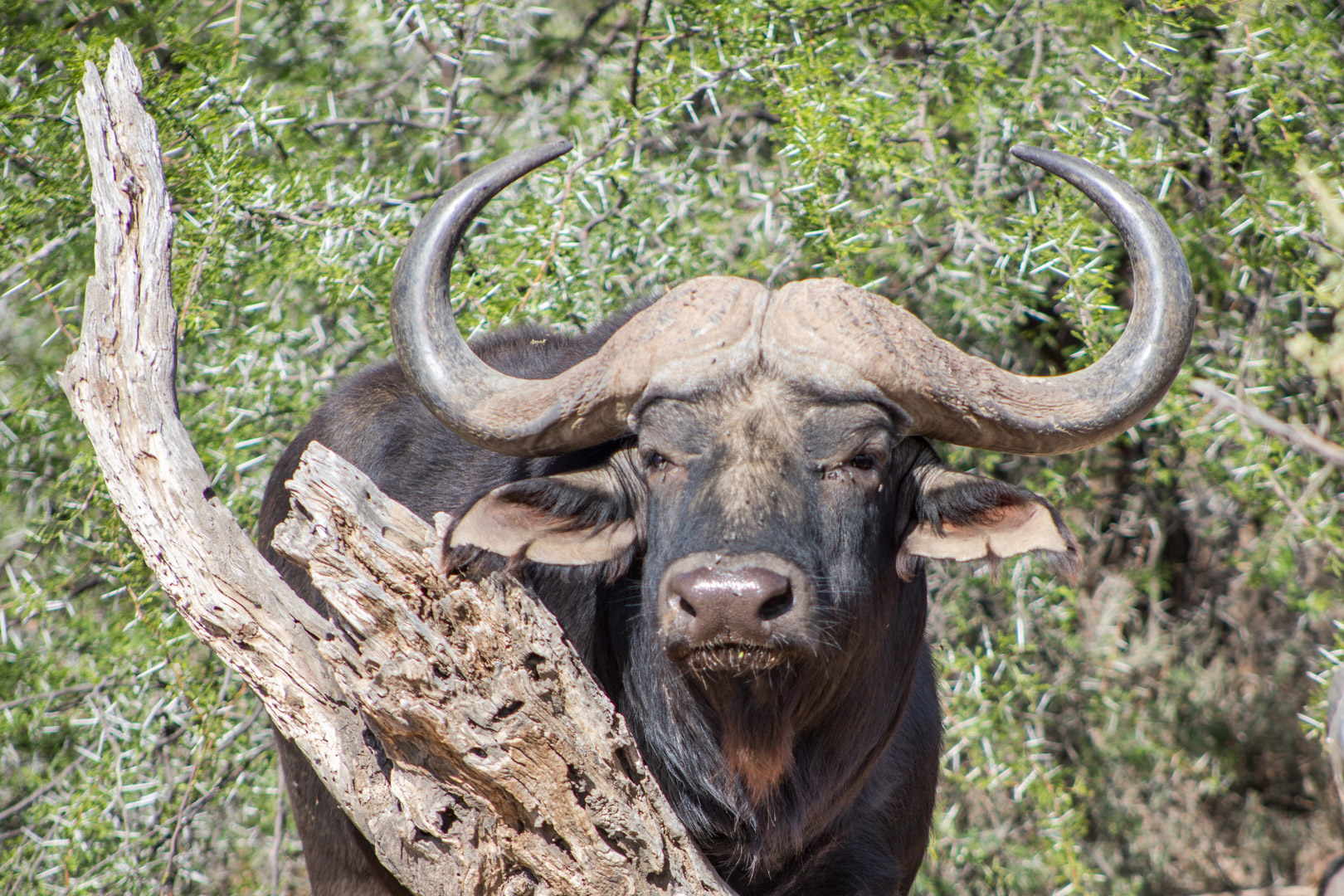
Gondwana Game Reserve
📍 Western Cape Province
🗓 Best time: May and September and October to April
Gondwana Game Reserve offers a distinctive wildlife experience along South Africa’s famous Garden Route, making it a valuable addition to a South Africa Safari Tour. The reserve is located near the town of Mossel Bay in the Western Cape Province, approximately four hours by road from Cape Town and a short distance from George Airport. Covering more than 11,000 hectares, Gondwana is one of the few private reserves in the Western Cape where visitors can view the Big Five within a malaria free environment. The landscape differs from the bushveld reserves of northern South Africa, featuring rolling hills, mountain backdrops, indigenous fynbos vegetation, and open valleys. This setting creates a safari experience that combines wildlife viewing with the natural beauty of the Cape region. Many travellers include Gondwana as part of a South Africa Safari Tour while exploring the Garden Route, enjoying both wildlife and coastal attractions within a single journey.

Inverdoorn Game Reserve
📍 Ceres Karoo Region, Western Cape Province
🗓 Best time: April to September and October to March
Inverdoorn Game Reserve offers a very different setting from the bushveld landscapes often associated with a Safari South Africa. It is Located in the Ceres Karoo region of the Western Cape Province, approximately 250 kilometres northeast of Cape Town, the reserve sits within a semi-arid environment characterised by wide open plains, rugged mountains, and vast stretches of Karoo vegetation. For travellers visiting Cape Town who wish to experience wildlife without travelling to the eastern parts of the country, Inverdoorn provides a convenient safari option within driving distance of the city. The reserve covers thousands of hectares of restored wilderness where conservation has become a major focus over recent decades. A Safari South Africa at Inverdoorn combines wildlife viewing with the dramatic scenery of the Karoo, where distant mountain ranges and expansive skies create a sense of space rarely found elsewhere. The reserve has also gained recognition for its involvement in wildlife rehabilitation and species reintroduction programmes, helping restore animals that once disappeared from parts of the Western Cape.

Tswalu Kalahari Reserve
📍 Kalahari region, Northern Cape Province
🗓 Best time: May and September and October to April
A South Africa Safari in Tswalu Kalahari Reserve introduces travellers to a side of the country that feels completely different from the bushveld landscapes often associated with African wildlife. Located in the southern Kalahari region of the Northern Cape Province, near the town of Kuruman, Tswalu is South Africa's largest private game reserve, covering more than 100,000 hectares of protected wilderness. Here, red sand dunes stretch towards the horizon, camelthorn trees stand against wide open skies, and wildlife survives in one of the country's most dramatic environments. Rather than focusing on crowded game viewing routes, Tswalu invites visitors to slow down and appreciate space, silence, and nature on a grand scale. A South Africa Safari in this reserve combines wildlife, conservation, luxury, and a genuine sense of remoteness that is increasingly rare in modern travel.

Pumba Private Game Reserve
📍 Eastern Cape Province
🗓 Best time: May and September and October to April
Pumba Private Game Reserve offers a different side of a South Africa Safari, where wildlife experiences are combined with the rolling landscapes of the Eastern Cape Province near Makhanda. Covering more than 6,000 hectares, the reserve stretches across a landscape of acacia woodland, grass-covered hills, indigenous vegetation, and tranquil lakes that create a striking contrast to the drier safari regions found elsewhere in the country. A South Africa Safari at Pumba is often appreciated for its peaceful setting and smaller scale, allowing visitors to enjoy wildlife viewing without large numbers of vehicles. The reserve is particularly known for its rare white lions, which have become one of its most recognised attractions. Beyond wildlife, the scenery itself plays an important role in the experience, with open valleys, reflective water bodies, and changing light creating a relaxing atmosphere throughout the day.
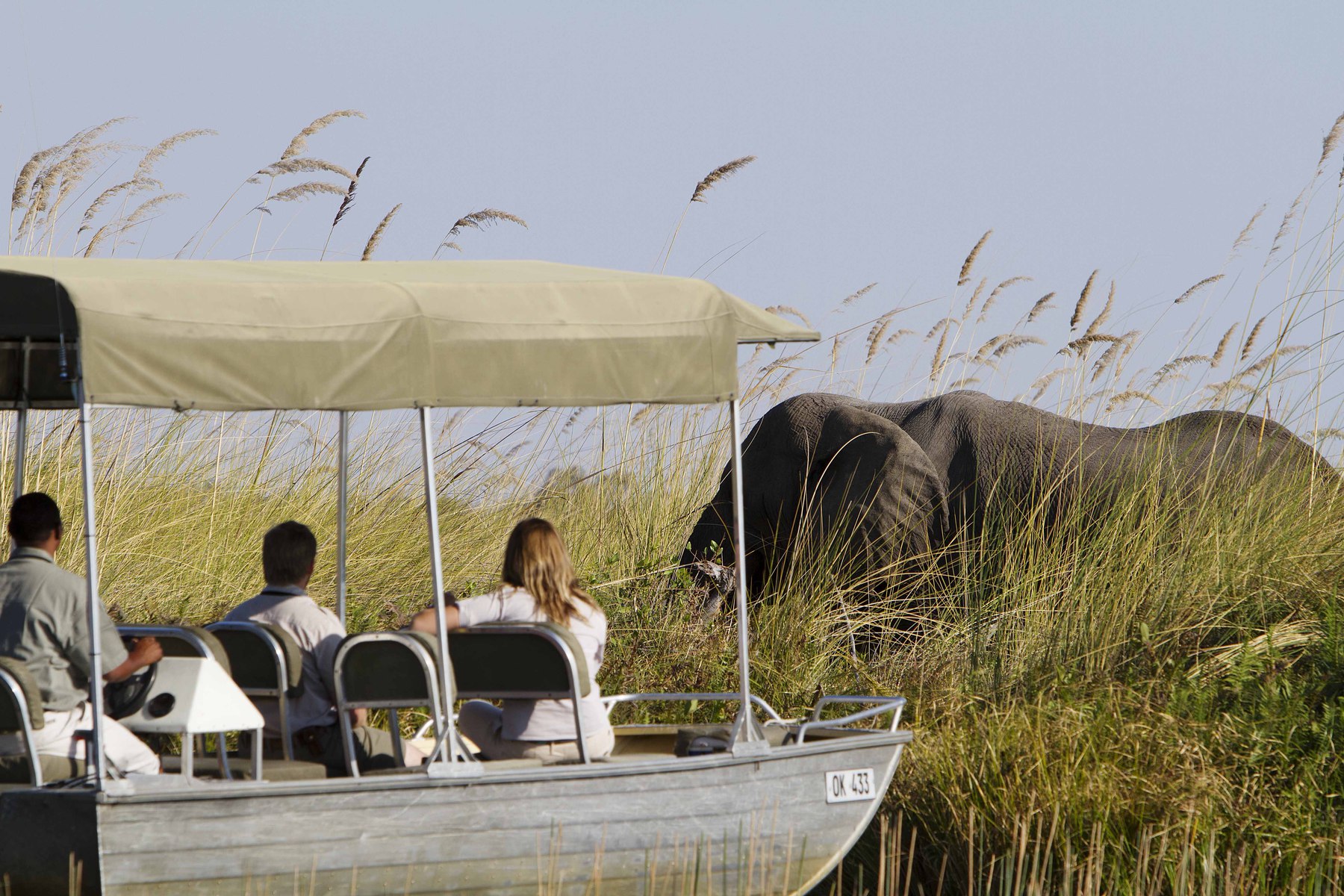
Moremi Game Reserve
📍 eastern part of the Okavango Delta in northern Botswana
🗓 Best time: The dry season from May to October is ideal
For best Botswana Africa safari Moremi Game Reserve is located in the eastern part of the Okavango Delta in northern Botswana. It covers about 5,000 square kilometers, making it one of the most diverse protected areas in Africa. On a Botswana Africa safari, travelers find a mix of permanent water channels, seasonal floodplains, and dry savannahs. The reserve was established in 1963 by the local BaTawana people to protect wildlife from hunting and habitat loss. From Gaborone, Botswana’s capital city, the reserve is about 1,000 kilometers away, requiring a flight to Maun, the nearest airport. Maun serves as the main gateway for a Botswana Africa safari, with charter flights or 4x4 transfers connecting visitors to lodges inside the reserve.
Moremi Game Reserve’s background reflects community-led conservation efforts that have preserved its rich biodiversity. Covering a large portion of the Okavango Delta, it is unique because it combines both land and water ecosystems. On a Botswana Africa safari, travelers experience habitats ranging from mopane woodlands to lagoons and grasslands. The reserve is about 1,000 kilometers from Gaborone, making Maun Airport the most practical entry point. Maun is roughly 100 kilometers south of the reserve and offers flights and transfers to camps. This accessibility makes Moremi a central highlight for a Botswana Africa safari, balancing remoteness with convenience for international and regional travelers.

Central Kalahari Game Reserve
📍 Located in the heart of Botswana
🗓 Best time: December to March
Central Kalahari Game Reserve is located in the heart of Botswana and covers about 52,800 square kilometers, making it one of the largest protected reserves in Africa. On a best Botswana safari, visitors find themselves in a remote wilderness with vast open plains and sand dunes. The reserve was established in 1961 to protect wildlife and the traditional lifestyle of the San people. From Gaborone, the capital city, the reserve is about 550 kilometers away, with the nearest airport being in Maun, which is roughly 250 kilometers from the northern entrance. This distance requires careful planning for a best Botswana safari, ensuring travelers allocate enough time for transfers and logistics.

Makgadikgadi Pans National park
📍 lie in northeastern Botswana
🗓 Best time: The dry season from May to October is better
Makgadikgadi Pans lie in northeastern Botswana, covering one of the largest salt pan systems in the world. Spread across more than 12,000 square kilometers, the pans are remnants of an ancient lake that dried thousands of years ago. On a Botswana safari, travelers find themselves in a unique desert landscape that contrasts sharply with the lush Okavango Delta. The nearest airport is in Maun, about 200 kilometers away, making it the main gateway for visitors. From Gaborone, Botswana’s capital, the pans are roughly 700 kilometers by road, requiring a full day’s drive. This distance emphasizes the remoteness of the area, which adds to its appeal for those seeking authentic wilderness experiences during a Botswana safari.
The background of Makgadikgadi Pans is deeply tied to its geological past. Once a massive inland sea, the pans now form a vast, shimmering expanse of salt flats that stretch to the horizon. During the dry season, the pans appear stark and desolate, while in the wet season they transform into shallow lakes that attract wildlife. This seasonal change makes the area a fascinating destination for a Botswana safari, offering travelers two very different experiences depending on the time of year. The pans are also culturally significant, with San communities living nearby, adding depth to the safari experience.
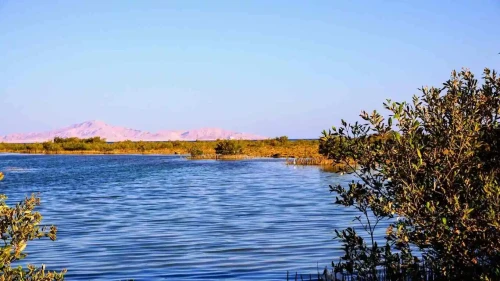
Nabq Protected Area
📍 North of Sharm El Sheikh
🗓 Best time: October and April and June to September
Nabq Protected Area is one of the most ecologically diverse protected zones in Egypt and a rewarding stop on any Egypt Tour covering the Sinai Peninsula. Located approximately 35 kilometres north of Sharm El Sheikh along the Gulf of Aqaba, the reserve covers around 600 square kilometres of coastline, desert, and mountain terrain. Established in 1992, Nabq protects a remarkable mix of ecosystems including coral reefs, mangrove forests, sea grass beds, sandy plains, rocky wadis, and high mountain terrain. It is particularly recognised for holding the most northerly and largest mangrove stand along the Gulf of Aqaba, making it ecologically significant on a global scale. The reserve is also recognised as an Important Bird Area by BirdLife International. Egypt Tour visits to Nabq offer travellers a genuinely unspoiled natural experience away from the more crowded resort destinations along the Red Sea coast.
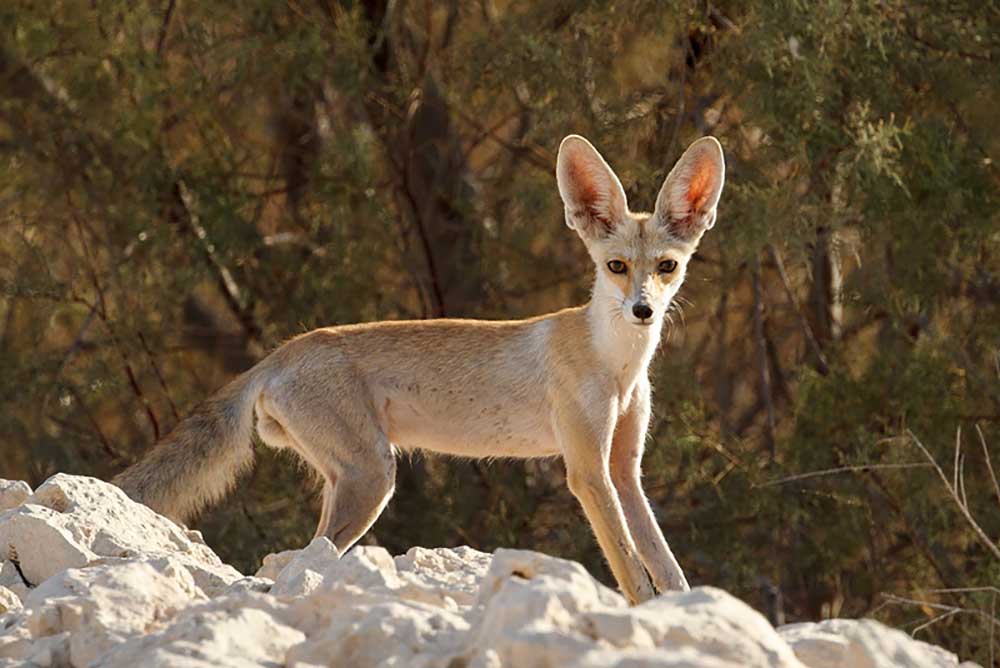
Abu Galum Protected Area
📍 Gulf of Aqaba
🗓 Best time: October and April and June to September
Abu Galum Protected Area is one of Sinai's most unspoiled natural treasures and a truly wild destination for Trips to Egypt. Sitting along the Gulf of Aqaba between Dahab and Nuweiba, this stunning reserve covers around 400 square kilometres of rugged coastline, towering mountains, and crystal clear waters. Established in 1992, it protects some of the richest coral reefs in the whole of Sinai, alongside mountain valleys, coastal dunes, and rare desert wildlife. Unlike busier resort destinations, Abu Galum feels genuinely remote and untouched, giving visitors a real sense of adventure. You can snorkel straight from the beach, trek through dramatic valleys, or ride a camel along the shoreline. Trips to Egypt that include Abu Galum offer something truly different raw, beautiful, and completely memorable.
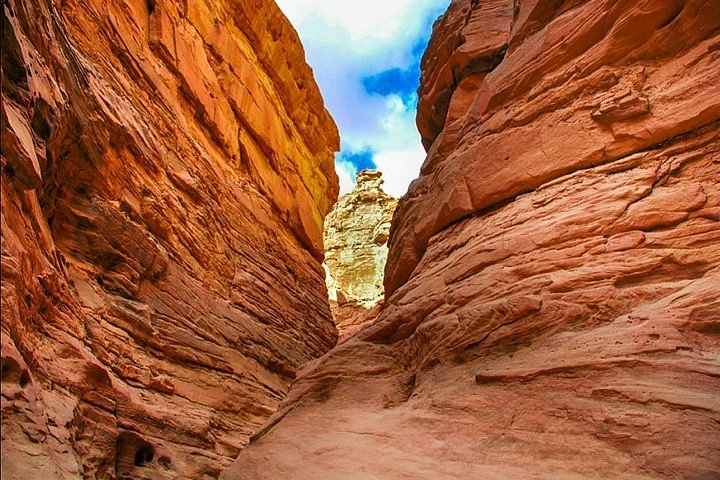
Taba Protectorate
📍 South Sinai Governorate
🗓 Best time: October and April and June to September
Taba Protectorate is the most northerly protected area in South Sinai and a rewarding destination on Egypt Tours along the Gulf of Aqaba. Located southwest of the town of Taba, the protectorate covers 3,595 square kilometres of raw desert terrain, ancient mountains, and deep valleys. It was established in 1998 to protect its mammals, reptiles, rare birds, and natural water reserves. The area also holds geological formations and ancient monuments dating back 5,000 years, adding a rich historical layer to any visit. With Bedouin culture still active across the valleys and a landscape that remains largely untouched, this is a destination that feels genuinely different from the busier resort towns along the coast. Egypt Tours that include Taba Protectorate offer visitors something real, remote, and deeply memorable.
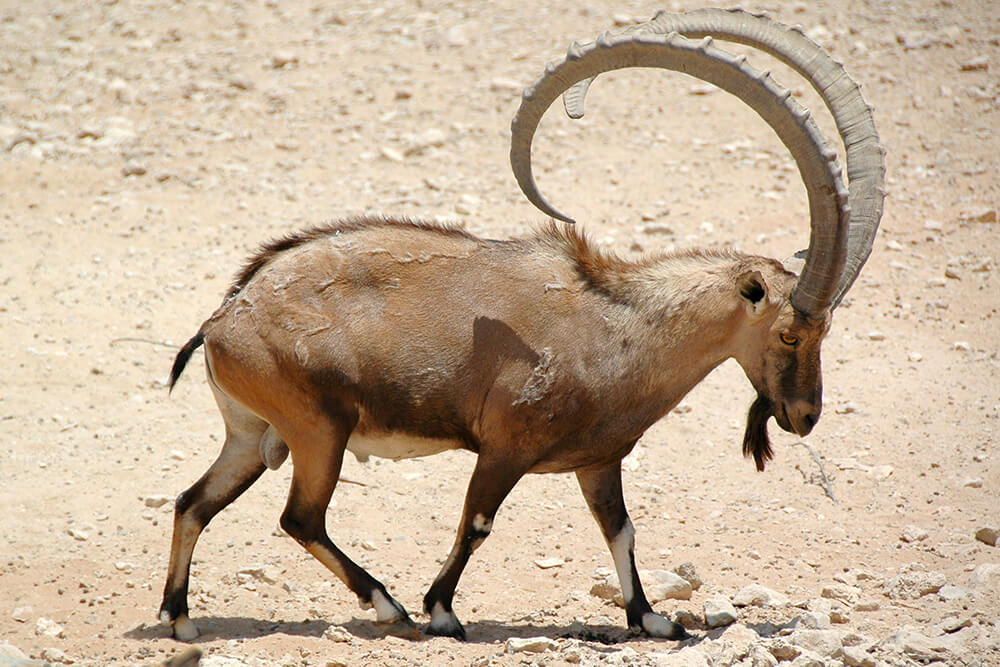
Gebel Elba Protectorate
📍 Halaib Triangle, Northeast Africa
🗓 Best time: October and April
Gebel Elba Protectorate sits in the far southeastern corner of Egypt along the Red Sea coast near the Sudanese border, making it one of the most remote and rewarding destinations on Egypt Tours. Established in 1986, the protectorate covers an enormous 35,600 square kilometres of mountains, desert plains, coral coastline, mangroves, and 22 offshore Red Sea islands. The area is named after Mount Elba, which rises to 1,435 metres and is famously wrapped in mist and cloud for much of the year. This moisture creates a lush mountain ecosystem found nowhere else in Egypt, supporting extraordinary plant and animal life. Egypt Tours to Gebel Elba reach a part of the country that very few visitors ever see, offering a genuinely wild and completely different natural experience.

Katonga Wildlife Reserve
📍 Located in western Uganda
🗓 Best time: June to September and December to February
Safari Tours Uganda at Katonga Wildlife Reserve offers a very different safari experience compared to Uganda’s more famous national parks. Located in western Uganda along the Katonga River, this protected wetland ecosystem forms part of an important wildlife corridor connecting Lake Victoria basin habitats. Safari Tours Uganda here reveals a quiet, less visited reserve where swampy grasslands, river channels, and papyrus wetlands dominate the landscape. Katonga Wildlife Reserve covers about 207 square kilometres and was established to protect wetland biodiversity and reintroduce key species. What makes Safari Tours Uganda here unique is the peaceful environment with limited tourist numbers, allowing close connection to nature without disturbance. Wildlife such as sitatunga antelope, reedbuck, bushbuck, hippos, and primates thrive in this wetland system. Birdlife is extremely rich due to the permanent water environment. Safari Tours Uganda at Katonga is ideal for travellers seeking soft adventure, canoe experiences, birdwatching, and guided nature walks in an untouched wetland wilderness setting away from crowded safari routes.

Gilf Kebir National Park
📍 New Valley Governorate
🗓 Best time: October and April
Gilf Kebir National Park offers one of the most remote and remarkable wilderness experiences available on Egypt Tours. Located in the far southwestern corner of Egypt near the borders of Libya and Sudan, the park covers a vast section of the Western Desert that remains largely untouched by modern development. The name Gilf Kebir means Great Barrier, referring to the enormous sandstone plateau that dominates the landscape. Unlike many destinations included on Egypt Tours, this protected area is known for its dramatic desert scenery, prehistoric rock art, ancient human history, and complete sense of isolation. Visitors travel across immense open plains, rugged escarpments, and hidden valleys that reveal evidence of a much wetter prehistoric past. For travellers seeking adventure, exploration, and natural history, Gilf Kebir National Park provides a completely different side of Egypt Tours beyond the country's famous archaeological monuments.

Wadi El-Hitan Protectorate
📍 Faiyum Governorate, western Desert
🗓 Best time: October and April
Wadi El-Hitan, commonly known as the Valley of the Whales, is one of Egypt’s most extraordinary natural heritage sites and a fascinating destination included on Best Egypt Tours. Located within the Fayoum Depression about 150 kilometres southwest of Cairo, this UNESCO World Heritage Site preserves hundreds of fossil remains dating back approximately 40 million years. These fossils reveal an important chapter in the evolution of whales from land dwelling mammals into marine creatures. Unlike Egypt’s famous temples and pyramids, Wadi El-Hitan presents a story written by nature itself. Visitors exploring the desert landscape encounter fossil skeletons scattered across ancient seabeds, making Best Egypt Tours to Wadi El-Hitan both educational and visually rewarding.

Masai Mara National Reserve
📍 located in southwest Kenya
🗓 Best time: The peak season is July to October
Masai Mara National Reserve is located in southwest Kenya, bordering Tanzania’s Serengeti. It covers about 1,510 square kilometers of open grassland, riverine forests, and acacia woodlands. This reserve is part of the larger Mara ecosystem, which supports wildlife migration between Kenya and Tanzania. Kenya safari tours here provide direct access to one of Africa’s richest wildlife regions. The reserve was established in 1961 and has grown into a leading conservation area. From Nairobi, the capital city, the distance is about 270 kilometers by road, taking five to six hours. For faster access, flights land at nearby airstrips such as Keekorok, Ol Kiombo, and Musiara, making Kenya safari tours convenient for travelers who prefer air travel

Gishwati Mukura National Park
📍 Western Rwanda
🗓 Best time: June to September and December to February
A Rwanda Safari to Gishwati Mukura National Park offers a chance to explore one of Rwanda’s most important conservation destinations. Located in western Rwanda, the park combines the restored Gishwati and Mukura forests, creating a rich habitat for wildlife and biodiversity. A Rwanda Safari here features guided forest walks, primate encounters, birdwatching, waterfalls, and indigenous plant life within a peaceful rainforest setting. Unlike Rwanda’s savannah parks, Gishwati-Mukura provides a quiet and intimate nature experience. Its strong conservation efforts and community involvement make it a rewarding destination for travellers seeking an authentic Rwanda Safari.

Volcanoes National Park
📍 North Western Rwanda
🗓 Best time: June to September and December to February
A Rwanda Gorilla Trekking adventure in Volcanoes National Park offers an exceptional opportunity to encounter endangered mountain gorillas in their natural habitat. Located in northwestern Rwanda within the Virunga Mountains, the park is famous for its volcanic landscapes, rich biodiversity, and successful conservation efforts. A Rwanda Gorilla Trekking experience takes visitors through bamboo forests and misty mountain slopes to observe habituated gorilla families. Beyond gorilla encounters, travellers can enjoy golden monkey tracking, nature walks, and cultural experiences. The park remains the leading destination for an authentic Rwanda Gorilla Trekking safari.

Rugezi Marsh Game Reserve
📍 Northern Rwanda
🗓 Best time: June to September and December to February.
A Rwanda Safari to Rugezi Marsh offers an opportunity to explore one of Rwanda’s most important wetland ecosystems. Located in northern Rwanda between Burera and Gicumbi districts, this protected Ramsar Site is renowned for its rich biodiversity, scenic beauty, and ecological importance. A Rwanda Safari here introduces visitors to vast papyrus swamps, rolling hills, and exceptional birdlife that thrive within the marsh. Guided nature walks and birdwatching excursions provide opportunities to spot rare species and enjoy stunning landscapes. Rugezi Marsh’s conservation success and tranquil environment make it an ideal destination for an authentic Rwanda Safari experience.

Akanyaru Game Reserve
📍 Southern border between Rwanda and Burundi,
🗓 Best time: June to September and December to February
A Rwanda Safari Lodge to Akanyaru Wetlands offers an opportunity to explore one of Rwanda’s most important wetland ecosystems. Located along the southern border between Rwanda and Burundi, the wetlands are renowned for their rich biodiversity, scenic landscapes, and ecological significance. A Rwanda Safari Lodge here introduces visitors to expansive marshes, papyrus vegetation, winding waterways, and diverse wildlife. Guided nature walks and birdwatching excursions allow travellers to experience the area’s natural beauty while learning about wetland conservation. The tranquillity, biodiversity, and unique habitats of Akanyaru Wetlands make it an excellent destination for an authentic Rwanda Safari Lodge experience.

Nyabarongo River Wetlands Game Reserve
📍 Central Rwanda,
🗓 Best time: June to September and December to February
A Best Safaris in Rwanda journey to Nyabarongo River Wetlands offers an opportunity to explore one of Rwanda’s most important freshwater ecosystems. Located in central Rwanda, the Nyabarongo River forms part of the upper headwaters of the Nile and supports rich wetland biodiversity. A Best Safaris in Rwanda experience here introduces travellers to vast papyrus swamps, winding river channels, seasonal floodplains, and scenic landscapes across several districts. Unlike Rwanda’s mountainous parks, the wetlands provide a calm environment ideal for birdwatching and nature exploration. Guided walks and boat excursions reveal aquatic life and rare birds, making it a unique safari destination.

Cyamudongo Forest Game Reserve
📍 Southwestern Rwanda
🗓 Best time: June to September and December to February
A Rwanda Safari Accommodation experience in Cyamudongo Forest Game Reserve offers a rare chance to explore one of Rwanda’s smallest yet most important forest ecosystems. Located in southwestern Rwanda within the Nyungwe landscape, Cyamudongo is known for its dense rainforest, rich biodiversity, and chimpanzee populations. A Rwanda Safari Accommodation stay here immerses travellers in untouched wilderness with misty hills and ancient trees. Unlike larger parks, it offers a more intimate forest experience. Guided walks, chimpanzee tracking, and birdwatching make it ideal for a peaceful rainforest escape.

Mukura Forest Reserve
📍 Western Rwanda
🗓 Best time: June to September and December to February
A Safaris in Rwanda experience in Mukura Forest Reserve offers a wonderful opportunity to explore one of Rwanda’s important rainforest ecosystems. Located in western Rwanda, the reserve forms part of the Gishwati Mukura landscape and supports rich biodiversity. A Safaris in Rwanda adventure here introduces visitors to dense forests, rolling hills, diverse wildlife, and impressive birdlife in a peaceful natural environment. Guided forest walks, birdwatching tours, and ecological excursions allow travellers to discover the reserve’s beauty while learning about conservation efforts and habitat restoration.

Gishwati Forest, Game Reserve
📍 Western Rwanda
🗓 Best time: June to September and December to February
African Safari Tours Rwanda experience in Gishwati Forest Reserve offers travellers a chance to explore one of Rwanda’s most important restored rainforest ecosystems. Located in western Rwanda, the reserve forms part of the Gishwati Mukura conservation landscape and is known for its rich biodiversity and conservation achievements. African Safari Tours Rwanda adventure here features lush forests, diverse wildlife, primates, and impressive birdlife. Guided nature walks, primate tracking, and birdwatching excursions provide memorable experiences, making Gishwati Forest Reserve an excellent destination for nature and conservation enthusiasts.

Mosi-oa-Tunya National Park
📍 Livingstone along the Zambezi River
🗓 Best time: May to October
A Zambia Safari Tours experience in Mosi-oa-Tunya National Park offers an excellent opportunity to explore one of Zambia’s most accessible wildlife destinations. Located near Livingstone along the Zambezi River, the park is renowned for its white rhino conservation programme and proximity to the world famous Victoria Falls. Visitors on Zambia Safari Tours can enjoy game drives, guided walking safaris, birdwatching, and river based activities while encountering diverse wildlife. Its combination of natural beauty, conservation success, and outdoor adventures makes it a rewarding safari destination.

Bangweulu Wetlands
📍 Northern Zambia,
🗓 Best time: May to October
African Safari Zambia experience in Bangweulu Wetlands offers a remarkable opportunity to explore one of Africa’s most important wetland ecosystems. Located in northern Zambia, Bangweulu Wetlands covers vast floodplains, swamps, grasslands, and waterways that support exceptional biodiversity. African Safari Zambia adventure here introduces visitors to unique wildlife, rare bird species, and breathtaking wetland landscapes. The area is particularly famous for its conservation efforts and abundant birdlife. Guided game drives, boat excursions, birdwatching tours, and community visits provide unforgettable opportunities to experience this extraordinary wilderness.

North Luangwa National Park
📍 North Eastern Zambia
🗓 Best time: June to October.
A Zambia Safari Tours experience in North Luangwa National Park offers a unique opportunity to explore one of Africa’s most remote and untouched wilderness destinations. Located in northeastern Zambia along the Luangwa River, the park is renowned for its rich wildlife, pristine landscapes, and exceptional conservation efforts. Visitors on Zambia Safari Tours can enjoy guided walking safaris, game drives, and wildlife tracking experiences while encountering elephants, buffaloes, predators, and diverse birdlife. Its exclusivity, natural beauty, and authentic safari atmosphere make North Luangwa truly remarkable.

Liuwa Plain National Park
📍 Western Zambia
🗓 Best time: May to October and November and April
A Luxury Safari Zambia experience in Liuwa Plain National Park offers an exceptional opportunity to explore one of Africa’s most remote and untouched wilderness destinations. Located in western Zambia, the park is famous for its vast grasslands, seasonal floodplains, abundant wildlife, and impressive birdlife. Visitors can enjoy game drives, walking safaris, birdwatching excursions, and cultural experiences with local communities. Liuwa Plain is also renowned for its annual wildebeest migration, making it a remarkable destination for travellers seeking exclusivity, adventure, and authentic safari experiences.

Kasanka National Park
📍 Northern Zambia
🗓 Best time: Our Best Zambia Safari Accommodation Packages
On a Zambia Safari Accommodation experience in Kasanka National Park offers an exceptional opportunity to explore one of Zambia’s most biodiverse and rewarding wildlife destinations. Located in northern Zambia, the park is famous for its rich wetlands, forests, rivers, and abundant wildlife. Visitors can enjoy game drives, birdwatching, canoe excursions, and nature walks while discovering unique species and beautiful landscapes. Kasanka is also renowned for hosting the world’s largest mammal migration, making it a remarkable destination for travellers seeking an authentic and exclusive safari adventure.

Nxai Pan National Park
📍 Lies in northeastern Botswana
🗓 Best time: From December to April
Nxai Pan National Park lies in northeastern Botswana, covering about 2,578 square kilometers. It is part of the Makgadikgadi region, known for ancient salt pans formed from a prehistoric lake. The park is roughly 160 kilometers from Maun, the safari hub, and about 900 kilometers from Gaborone, Botswana’s capital. The nearest airport is Maun International Airport, making access practical for safaris in Botswana. This location offers travelers a chance to combine remote wilderness with manageable logistics, balancing convenience and adventure

West Lunga National Park
📍 North Western Zambia
🗓 Best time: May to October
A Zambia Safari Tours experience in West Lunga National Park offers a unique opportunity to explore one of Zambia’s most remote and untouched wilderness destinations. Located in northwestern Zambia, the park is characterised by vast miombo woodlands, rivers, grasslands, and diverse wildlife habitats. Visitors can enjoy game drives, guided nature walks, birdwatching excursions, and wildlife tracking experiences in a peaceful environment far from crowded safari routes. Its pristine landscapes, rich biodiversity, and sense of exclusivity make West Lunga National Park an excellent destination for adventurous safari travellers.

Nyika National Park
📍 North Eastern Zambia
🗓 Best time: May to October
A safari journey in Nyika National Park offers visitors a remarkable opportunity to explore one of southern Africa’s most stunning highland wilderness areas through Zambia Safari Trips designed for authentic adventure. Located in northeastern Zambia, the park is known for its rolling grasslands, montane forests, rocky outcrops, and sweeping plateaus. The cool climate, abundant biodiversity, and peaceful atmosphere create excellent conditions for wildlife viewing, hiking, photography, and nature walks. Travellers enjoy untouched landscapes and rewarding wilderness experiences when exploring Nyika National Park on Zambia Safari Trips.

Mweru Wantipa National Park
📍 Northern Zambia
🗓 Best time: May to October
A safari adventure in Mweru Wantipa National Park offers visitors an exciting opportunity to discover one of Zambia’s most remote wilderness destinations through Best Zambia Safari experiences. Located in northern Zambia near Lake Mweru Wantipa, the park features vast wetlands, grasslands, woodlands, and rich biodiversity. Visitors can enjoy wildlife viewing, birdwatching, and nature walks while exploring its untouched landscapes. The park’s remote location has preserved its ecological importance and natural beauty. Travellers enjoy authentic wilderness encounters when exploring Mweru Wantipa National Park through Best Zambia Safari experiences.

Nsumbu National Park
📍 Northern Zambia
🗓 Best time: May to October
A safari adventure in Nsumbu National Park offers visitors an exceptional opportunity to discover one of Zambia’s most remote and stunning wilderness destinations through Best Safari Lodges that provide comfort in a pristine natural setting. Located along the shores of Lake Tanganyika in northern Zambia, the park features rolling hills, sandy beaches, forests, and open grasslands rich in wildlife. Visitors can enjoy game drives, birdwatching, nature walks, and lake-based activities while exploring this peaceful wilderness. Travellers experience spectacular scenery, diverse ecosystems, and unforgettable wildlife encounters when visiting Nsumbu National Park through Best Safari Lodges.

Lusenga Plain National Park
📍 Northern Province near Lake Tanganyika
🗓 Best time: May to October.
A safari journey in Lusenga Plain National Park offers travellers a unique opportunity to discover one of Zambia’s hidden wilderness destinations through African Tour Safari Zambia experiences. Located in Northern Province near Lake Tanganyika, the park features open plains, woodlands, rivers, and diverse wildlife habitats. Its remote and peaceful setting creates excellent opportunities for wildlife viewing, birdwatching, photography, and nature exploration. Visitors enjoy authentic safari adventures, rich biodiversity, and beautiful natural landscapes while experiencing the unspoilt charm of Lusenga Plain National Park.
.jpg)
Lusaka National Park
📍 Outside Lusaka
🗓 Best time: May to October
A safari journey in Lusaka National Park offers travellers an excellent opportunity to experience Zambia’s newest national park through African Safari Zambia adventures. Located just outside Lusaka, the park provides easy access to authentic wildlife encounters in a protected conservation area. Its grasslands, woodlands, and diverse habitats support species such as white rhinos, giraffes, zebras, and antelopes. Ideal for game viewing, photography, and nature exploration, the park combines accessibility with conservation value, allowing visitors to enjoy memorable wildlife experiences close to Zambia’s capital city.

Lukusuzi National Park
📍 Eastern Zambia
🗓 Best time: May to October
A safari journey in Lukusuzi National Park offers travellers an exceptional opportunity to explore one of Zambia’s most remote and unspoilt wilderness areas through Zambia Safari Holidays adventures. Located in eastern Zambia near the border with Malawi, the park covers vast expanses of miombo woodland, grasslands, rivers, and seasonal wetlands that support a rich variety of wildlife and bird species. Its untouched landscapes, low visitor numbers, and authentic wilderness atmosphere make it an ideal destination for travellers seeking a peaceful and rewarding safari experience away from the more frequented parks. Lukusuzi National Park combines natural beauty, biodiversity, and adventure, making it a valuable addition to Zambia Safari Holidays itineraries.

Luambe National Park
📍 Luangwa Valley
🗓 Best time: May to October
A safari journey in Luambe National Park offers travellers a unique opportunity to discover one of Zambia’s hidden wildlife destinations through Zambia Safari Tours. Located in the Luangwa Valley, the park features riverine forests, open plains, and diverse habitats that support a variety of wildlife species. Its remote setting and low visitor numbers create a peaceful atmosphere for game viewing, birdwatching, and photography. Visitors enjoy authentic wilderness experiences, rich biodiversity, and excellent wildlife encounters while exploring the natural beauty of Luambe National Park.

Blue Lagoon National Park
📍 Central Province within the Kafue Flats
🗓 Best time: May to October
wetland ecosystems through Luxury Safaris in Zambia. Located in Zambia’s Central Province within the Kafue Flats, Blue Lagoon National Park is renowned for its seasonal floodplains, rich birdlife, and diverse wildlife habitats. The park provides visitors with opportunities to experience Zambia’s natural beauty in a tranquil environment away from crowded safari destinations. Its vast wetlands, grasslands, and waterways support a remarkable variety of wildlife and bird species, making it an attractive destination for nature enthusiasts, photographers, and birdwatchers seeking authentic wilderness experiences on Luxury Safaris in Zambia.

Isangano National Park
📍 Northern Province near the Bangweulu
🗓 Best time: May to October.
A safari journey in Isangano National Park offers travellers a chance to explore one of Zambia’s least-visited wilderness destinations through Safaris in Zambia. Located in the Northern Province near the Bangweulu Wetlands, the park features vast grasslands, wetlands, dambos, and scattered woodlands that support diverse wildlife and birdlife. Its remote setting and low visitor numbers create a peaceful atmosphere for nature lovers. Visitors enjoy authentic safari experiences, rich biodiversity, and rewarding wildlife encounters while discovering the natural beauty of Isangano National Park.

Lavushi Manda National Park
📍 Muchinga Province
🗓 Best time: May to October
A safari journey in Lavushi Manda National Park offers travellers a chance to explore one of Zambia’s most stunning and least visited wilderness destinations through Luxury Safaris in Zambia. Located in Muchinga Province, the park features rolling hills, rivers, waterfalls, forests, and vast grasslands that support diverse wildlife and birdlife. Its remote location and untouched landscapes create a peaceful environment for nature lovers. Visitors enjoy authentic safari experiences, rich biodiversity, and beautiful natural surroundings while exploring Lavushi Manda National Park.

Lochinvar National Park
📍 Southern edge of the Kafue Flats
🗓 Best time: May to October
A safari journey in Lochinvar National Park offers travellers an opportunity to explore one of Zambia’s most important wetland destinations through Safari Zambia experiences. Located on the southern edge of the Kafue Flats, the park is known for its floodplains, lagoons, grasslands, and rich birdlife. It is particularly famous for its large populations of Kafue lechwe. Visitors enjoy wildlife viewing, birdwatching, photography, and peaceful nature experiences while discovering the ecological beauty of Lochinvar National Park.

Kaputa Game Reserve
📍 Northern Province near Lake Tanganyika
🗓 Best time: May to October
A safari journey in Kaputa Game Reserve offers travellers a chance to explore one of Zambia’s remote and lesser-known wildlife destinations through Zambia Safari Accommodation experiences. Located in Northern Province near Lake Tanganyika, the reserve features woodlands, wetlands, grasslands, and riverine habitats that support diverse wildlife and birdlife. Its peaceful setting and low visitor numbers create an ideal environment for nature lovers. Visitors enjoy authentic wilderness experiences, rich biodiversity, and rewarding wildlife encounters while exploring Kaputa Game Reserve.

West Petauke Game Reserve
📍 Eastern Province
🗓 Best time: May to October
A safari journey in West Petauke Game Reserve offers travellers a chance to explore one of Zambia’s lesser known wildlife destinations through Best Zambia Safari Tours experiences. Located in Eastern Province, the reserve features woodlands, grasslands, seasonal wetlands, and river systems that support diverse wildlife and birdlife. Its remote setting and low visitor numbers create a peaceful atmosphere for nature lovers seeking authentic safari adventures. Visitors enjoy rich biodiversity, beautiful landscapes, and rewarding wildlife encounters while discovering the natural beauty of West Petauke Game Reserve.

Namboma Game Reserve
📍 Western Province near the upper Zambezi River
🗓 Best time: May to October
A safari journey in Namboma Game Reserve offers travellers an opportunity to discover one of Zambia’s lesser known conservation areas through Safari Zambia experiences. Located in Western Province near the upper Zambezi River basin, the reserve features vast grasslands, seasonal wetlands, woodlands, and riverine habitats that support a variety of wildlife and bird species. Its remote setting and limited visitor numbers provide a peaceful atmosphere for nature enthusiasts seeking authentic safari adventures. Visitors enjoy rich biodiversity, beautiful natural landscapes, and rewarding wildlife encounters while exploring this hidden wilderness destination.

Lukusuzi Game Reserve
📍 Eastern Province near Lundazi
🗓 Best time: May to October
A safari journey in Lukusuzi Game Reserve offers travellers an opportunity to explore one of Zambia’s most remote wilderness destinations through Zambia Luxury Safari experiences. Located in Eastern Province near Lundazi, the park features vast miombo woodlands, rolling grasslands, river valleys, and rugged escarpments that support diverse wildlife and birdlife. Its isolated setting and low visitor numbers provide a peaceful atmosphere for nature lovers seeking authentic safari adventures. Visitors enjoy rich biodiversity, beautiful landscapes, and rewarding wildlife encounters in an unspoilt environment.

Mwandi Game Reserve
📍 Western Province near Mwandi town
🗓 Best time: May to October.
A safari journey in Mwandi Game Reserve offers travellers an opportunity to experience Zambia’s remote wilderness through Zambia Safari and Tours. Located in Western Province near Mwandi town and the Zambezi River, the reserve features Kalahari woodlands, floodplains, grasslands, and riverine habitats that support diverse wildlife and birdlife. Its peaceful setting and low visitor numbers provide an authentic safari experience, with opportunities for wildlife viewing, birdwatching, photography, and nature appreciation.

Sikongo Game Reserve
📍 Sikongo District near the Angola border
🗓 Best time: May to October
A safari journey in Sikongo Game Reserve offers travellers an opportunity to experience Western Zambia’s remote wilderness through a Zambia Tour Safari. Located in Sikongo District near the Angola border, the reserve features woodlands, grasslands, and seasonal wetlands that support diverse wildlife and bird species. Its peaceful setting and low visitor numbers create an authentic safari atmosphere for nature lovers. Visitors enjoy wildlife viewing, birdwatching, scenic landscapes, and nature photography while discovering this unique conservation area during a memorable Zambia Tour Safari.

Sesheke Game Reserve
📍 Sesheke town along the upper Zambezi River
🗓 Best time: May to October
A safari journey in Sesheke Game Reserve offers travellers an opportunity to experience the natural beauty of Western Zambia through a Tour Safari Zambia. Located near Sesheke town along the upper Zambezi River, the reserve features woodlands, grasslands, riverine habitats, and seasonal floodplains that support diverse wildlife and birdlife. Its peaceful environment provides an authentic safari experience for nature lovers. Visitors enjoy wildlife viewing, birdwatching, photography, and scenic landscapes while exploring this remarkable destination on a Tour Safari Zambia.

Kazungula Game Reserve
📍 Southern Province near Kazungula town
🗓 Best time: May to October
A safari journey in Kazungula Game Reserve offers travellers an opportunity to experience Zambia’s remarkable wildlife landscapes through a Tour Safari Zambia. Located in Southern Province near Kazungula town, where the Zambezi and Chobe Rivers meet, the reserve forms part of an important transboundary conservation area. Its habitats include woodlands, grasslands, riverine forests, and floodplains that support diverse wildlife and birdlife. Visitors enjoy rewarding wildlife encounters, birdwatching, photography, scenic river views, and nature appreciation while discovering this unique destination on a Tour Safari Zambia.

Mulobezi Game Reserve
📍 South western part of Zambia
🗓 Best time: May to October
A safari journey in Mulobezi Game Reserve offers travellers an opportunity to experience one of Zambia’s fascinating wildlife destinations through Safari Tours Zambia. Located in the southwestern part of Zambia near Mulobezi town in Western Province, the reserve is characterised by extensive woodlands, grasslands, and natural habitats that support a variety of wildlife species. Its remote setting provides a peaceful atmosphere for nature lovers seeking authentic safari experiences. Visitors enjoy wildlife viewing, birdwatching, photography, and scenic landscapes while exploring this remarkable conservation area on Safari Tours Zambia.

Sichifulo Game Reserve
📍 South Western
🗓 Best time: May to October
A safari journey in Sichifulo Game Reserve offers travellers an opportunity to explore one of Zambia’s remote wildlife destinations through Safari in Africa Zambia. Located in the southwestern region of the country near the Upper Zambezi ecosystem, the reserve features diverse habitats including woodlands, grasslands, floodplains, and riverine vegetation. These natural environments support a variety of wildlife and bird species. Visitors enjoy wildlife viewing, birdwatching, photography, and nature exploration while experiencing the tranquillity and scenic beauty of Sichifulo Game Reserve on Safari in Africa Zambia.

Mumbwa Game Reserve
📍 Central Province
🗓 Best time: May to October
A safari journey in Mumbwa Game Reserve offers travellers an opportunity to explore one of Zambia’s stunning wildlife destinations through Zambia Tour and Safaris. Located in Central Province, the reserve features diverse habitats including woodlands, grasslands, riverine areas, and seasonal wetlands that support a variety of wildlife and bird species. Its tranquil setting provides an authentic safari experience for nature lovers. Visitors enjoy wildlife viewing, birdwatching, photography, and nature exploration while discovering Mumbwa Game Reserve.

Nkala Game Reserve
📍 Southern Zambia
🗓 Best time: May to October
A safari journey in Nkala Game Reserve offers travellers an opportunity to explore one of Zambia’s lesser known wildlife destinations through Safari in Africa Zambia. Located in southern Zambia, the reserve features diverse habitats including woodlands, grasslands, and seasonal wetlands that support a variety of wildlife and bird species. Its peaceful setting provides an authentic safari experience for nature enthusiasts. Visitors enjoy wildlife viewing, birdwatching, photography, and nature exploration while discovering the reserve’s stunning beauty and conservation importance on Safari in Africa Zambia.

Namwala Game Management Area
📍 Southern Province adjacent to Kafue National Park
🗓 Best time: May to October
A safari journey in Namwala Game Management Area offers travellers an opportunity to experience one of Zambia’s important conservation landscapes through Best Safari Zambia. Located in Southern Province adjacent to Kafue National Park, the area covers approximately 3,600 square kilometres of miombo woodlands, grasslands, river systems, and floodplains. It supports a variety of wildlife and bird species, making it ideal for game viewing, birdwatching, photography, fishing, and nature exploration. Its peaceful setting and relatively low visitor numbers provide an authentic safari experience for travellers seeking Zambia’s natural beauty.

Lupande Game Management Area
📍 Eastern Province Nearby to South Luangwa National Park
🗓 Best time: May to October.
A safari journey in Lupande Game Management Area offers travellers an opportunity to experience one of Zambia’s most important wildlife conservation landscapes through Zambia Zimbabwe Safaris. Located in Eastern Province adjacent to South Luangwa National Park, the area covers vast expanses of woodlands, grasslands, river systems, and seasonal wetlands. It supports a remarkable diversity of wildlife and bird species, making it ideal for game viewing, birdwatching, photography, walking safaris, and nature exploration. Its strategic location bordering South Luangwa creates exceptional safari opportunities for travellers seeking authentic wildlife experiences in Zambia.

Munyamadzi Game Management Area
📍 Eastern Province within the greater Luangwa Valley
🗓 Best time: May to October
A safari journey in Munyamadzi Game Management Area offers travellers an opportunity to experience one of Zambia’s important wildlife conservation landscapes through Best African Zambia Safari. Located in Eastern Province within the greater Luangwa Valley ecosystem, the area features extensive woodlands, riverine habitats, grasslands, and seasonal floodplains that support diverse wildlife populations. It provides excellent opportunities for game viewing, birdwatching, photography, walking safaris, and nature exploration. Its relatively remote setting and rich biodiversity create an authentic safari experience for travellers seeking to discover Zambia’s remarkable natural heritage.

Lumimba Game Management
📍 Eastern Province near the Luangwa Valley
🗓 Best time: May to October
A safari journey in Lumimba Game Management Area offers travellers an opportunity to experience one of Zambia’s remote and ecologically important conservation landscapes through Zambia tour Safari. Located in Eastern Province near the Luangwa Valley ecosystem, the area covers vast expanses of miombo woodlands, grasslands, river systems, and seasonal wetlands. It supports a variety of wildlife and bird species, making it ideal for game viewing, birdwatching, photography, walking safaris, and nature exploration. Its secluded setting and low visitor numbers provide an authentic safari experience for travellers seeking Zambia’s untouched wilderness.

Matheniko Wildlife Reserve
📍 Moroto District
🗓 Best time: December to March and June to September
Visiting Matheniko Wildlife Reserve on Safari Tours Uganda offers travellers a raw and authentic wilderness experience in north eastern Uganda within the Karamoja sub-region. The reserve lies in Moroto District and forms part of the greater Kidepo ecosystem, characterised by semi arid plains, rocky hills, and open savannah landscapes. Its remote location ensures minimal disturbance, creating ideal conditions for adventurous safari seekers. Visitors enjoy game drives, birdwatching, photography encounters with Karimojong communities, making Matheniko a unique destination for nature and cultural exploration.

Sandwe Game Management Area
📍 Petauke District, Eastern Province,
🗓 Best time: May to October.
Visiting Sandwe Game Management Area on Best Zambia Safari Trips offers travellers a chance to explore one of Zambia’s important wildlife conservation areas near the Kafue ecosystem. This stunning wilderness features vast miombo woodlands, open grasslands, seasonal rivers, and wetlands that support diverse wildlife populations. Its remote and unspoiled environment provides authentic safari experiences away from busy tourist destinations. Visitors enjoy game viewing, birdwatching, nature photography, and cultural interactions with local communities, making Sandwe a rewarding destination for adventure and conservation enthusiasts alike.

Chisomo Game Management Area
📍 Eastern Province
🗓 Best time: May to October
Visiting Chisomo Game Management Area on Safari Tours Zambia offers travellers an authentic wildlife experience within Zambia’s rich conservation landscape. Located near the South Luangwa ecosystem in Eastern Province, the area serves as an important buffer zone protecting wildlife habitats and supporting local communities. Chisomo features miombo woodlands, grasslands, and seasonal streams that sustain diverse wildlife and bird species. Visitors can enjoy game drives, birdwatching, nature walks, photography, and cultural experiences, making it a rewarding destination for safari enthusiasts seeking unspoilt wilderness.

Malama Game Management Area
📍 Eastern Province
🗓 Best time: May to October
Visiting Malama Game Management Area on Zambia Best Safari offers travellers an exciting opportunity to experience one of Zambia’s important wildlife conservation areas. Located adjacent to South Luangwa National Park in Eastern Province, the area serves as a crucial wildlife buffer zone supporting diverse habitats and animal populations. Malama features miombo woodlands, grasslands, and seasonal rivers that attract a variety of wildlife and bird species. Visitors can enjoy game drives, birdwatching, photography, walking safaris, and cultural experiences in this scenic and unspoilt wilderness destination.

Musalangu Game Management Area
📍 Northern Province
🗓 Best time: May to October
Visiting Musalangu Game Management Area on Zambia Safari Accommodation offers travellers an opportunity to explore one of Zambia’s important wildlife conservation landscapes situated within the vast northern wilderness of the country. Located in Northern Province near the Bangweulu ecosystem, Musalangu Game Management Area serves as a critical buffer zone that supports wildlife conservation while promoting sustainable coexistence between local communities and natural habitats. The area is characterised by extensive miombo woodlands, seasonal wetlands, open grasslands, and diverse ecosystems that support a variety of wildlife species. Visitors can enjoy game viewing, birdwatching, photography, nature walks, and cultural interactions while discovering the unique beauty and ecological significance of this remarkable conservation area.

Lunga Luswishi Game Management
📍 Central Province
🗓 Best time: May to October.
Visiting Lunga Luswishi Game Management Area on Zambia Safaris offers travellers an opportunity to explore one of Zambia’s important wildlife conservation areas located within the greater Kafue ecosystem. Situated in Central Province, the Game Management Area serves as a vital buffer zone that supports wildlife movement between protected habitats and surrounding community lands. The area is characterised by extensive miombo woodlands, open grasslands, seasonal rivers, and diverse natural ecosystems that sustain a rich variety of wildlife species. Visitors can enjoy game drives, birdwatching, photography, guided nature walks, and cultural interactions while experiencing the natural beauty and ecological importance of this remarkable wilderness destination.

Luangwa Game Management Area
📍 Eastern Province
🗓 Best time: May to October.
Visiting Luangwa Game Management Area on Zambia Safari Accommodation offers travellers an opportunity to explore one of Zambia’s ecologically significant wildlife conservation areas within the greater Luangwa Valley ecosystem. Located in Eastern Province, the area serves as an important buffer zone that supports wildlife movement between protected habitats and surrounding communities. The reserve features extensive miombo woodlands, open grasslands, seasonal rivers, and diverse natural habitats that sustain abundant wildlife and birdlife. Visitors can enjoy game drives, birdwatching, photography, walking safaris, and cultural experiences while discovering the natural beauty of this remarkable wilderness destination.

Kasonso Busanga Game Management Area
📍 Northern sector of Kafue National Park,
🗓 Best time: May to October
Visiting Kasonso Busanga Game Management Area on Zambia Best Luxury Safaris offers travellers an opportunity to discover one of Zambia’s remarkable wildlife conservation landscapes within the greater Kafue ecosystem. Located in the northern sector of Kafue National Park, Kasonso Busanga Game Management Area serves as an important buffer zone that supports wildlife conservation while promoting sustainable coexistence between local communities and natural habitats. The area is characterised by extensive Busanga floodplains, seasonal wetlands, open grasslands, and miombo woodlands that provide ideal habitats for diverse wildlife species. Visitors can enjoy game drives, birdwatching, photography, walking safaris, and cultural experiences while exploring this spectacular wilderness destination renowned for its natural beauty and ecological significance.

Kafinda Game Management Area
📍 Central Province
🗓 Best time: May to October
Visiting Kafinda Game Management Area on Zambia Tour Safari offers travellers an opportunity to explore a lesser known but ecologically important conservation zone within Zambia’s central wildlife network. Located in Central Province near the greater Kafue ecosystem, Kafinda Game Management Area covers approximately 1,500 km² of mixed woodland, dambos, seasonal rivers, and open grasslands. It acts as a buffer zone supporting wildlife movement between protected areas and surrounding communities. The area is ideal for game drives, birdwatching, photography, and guided nature experiences in a quiet, uncrowded wilderness environment.

Blue Lagoon Game Management Area
📍 Central Province
🗓 Best time: May to October
Visiting Blue Lagoon Game Management Area on Zambia Safari Accommodation offers travellers a chance to explore one of Zambia’s most accessible yet ecologically important wetland landscapes in Kafue ecosystem. Located in Kafue Flats of Central Province, the area covers about 500 km² and sits west of Lusaka. It is known for seasonal floodplains, lagoons, grasslands, and dambos that support rich wildlife and birdlife. The area acts as a buffer between human settlements and Kafue National Park, making it ideal for game drives, birdwatching, photography, and relaxed nature-based experiences close to Zambia’s capital city.

Musa Game Management Area
📍 South Eastern Edge of the Kafue National Park.
🗓 Best time: May to October.
Visiting Musa Game Management Area on Safaris in Zambia offers travellers an opportunity to explore one of Zambia’s emerging wildlife conservation landscapes situated within the country’s wider network of protected ecosystems. Located in a strategic conservation corridor, Musa Game Management Area plays an important role in supporting wildlife movement between national parks and surrounding community lands. The area is characterised by miombo woodlands, open grasslands, seasonal rivers, and diverse natural habitats that support a wide range of wildlife species. Visitors can enjoy game drives, birdwatching, photography safaris, guided nature walks, and cultural interactions while experiencing the untouched beauty of this wilderness destination.

Munkanya Game Management Area
📍 Eastern Province
🗓 Best time: May to October
Visiting Munkanya Game Management Area on Safari Tours Zambia offers travellers an opportunity to experience one of Zambia’s important wildlife conservation landscapes. Located within the greater Luangwa ecosystem in Eastern Province, the area serves as a crucial buffer zone supporting wildlife movement and habitat protection. Munkanya features extensive miombo woodlands, open grasslands, seasonal rivers, and diverse wildlife habitats. Visitors can enjoy game viewing, birdwatching, nature walks, photography, and cultural encounters while exploring this relatively unspoilt wilderness destination.

Kibara Game Management Area
📍 Central Province
🗓 Best time: May to October
Visiting Kibara Game Management Area on Zambia Best Luxury Safaris offers travellers an opportunity to explore a remarkable wildlife conservation landscape within the greater Kafue ecosystem. Located near Kafue National Park in Central Province, the area serves as an important buffer zone supporting wildlife movement and habitat protection. Kibara features extensive miombo woodlands, open savannah grasslands, seasonal rivers, and diverse ecosystems that sustain abundant wildlife. Visitors can enjoy luxury game drives, birdwatching, photography, guided nature walks, and cultural experiences while discovering Zambia’s rich natural heritage.

Kakumbi Game Management Area
📍 Eastern Province
🗓 Best time: May to October
Visiting Kakumbi Game Management Area on Zambia Safari Accommodation offers travellers an opportunity to explore one of Zambia’s most important wildlife conservation areas within the renowned South Luangwa ecosystem. Located in Eastern Province adjacent to South Luangwa National Park, Kakumbi Game Management Area serves as a vital buffer zone that supports wildlife movement between protected habitats and neighbouring communities. The area features extensive miombo woodlands, open savannah grasslands, seasonal streams, and rich riverine habitats that sustain diverse wildlife populations. Visitors can enjoy game drives, birdwatching, photography, walking safaris, and cultural encounters while experiencing the remarkable natural beauty and biodiversity of this exceptional wilderness destination.

Chunga Game Management Area
📍 Central Province
🗓 Best time: Our Best Safaris on African Safari Tours Zambia
Visiting Chunga Game Management Area on African Safari Tours Zambia offers travellers a chance to explore a key wildlife buffer zone within the central Kafue ecosystem of Zambia. Located in Central Province near the Chunga area of Kafue National Park, it covers approximately 2,000 km² of varied terrain including miombo woodlands, open plains, dambos, and seasonal rivers. The area supports wildlife movement between protected zones and surrounding community lands. It is ideal for game drives, birdwatching, photography, and guided safari experiences in a remote but ecologically significant wilderness setting.

Bangweulu Game Management Area
📍 Northern Zambia
🗓 Best time: May to October
Visiting Bangweulu Game Management Area on Zambia Tour Safari offers travellers an opportunity to explore one of Zambia’s most significant wetland conservation landscapes. Located within the famous Bangweulu ecosystem in Northern Zambia, the area forms an important buffer zone surrounding the Bangweulu Wetlands. Characterised by vast floodplains, swamps, grasslands, seasonal lagoons, and woodland habitats, the Game Management Area supports exceptional biodiversity. Visitors can enjoy wildlife viewing, birdwatching, photography, cultural encounters, and nature exploration while experiencing one of Africa’s most remarkable freshwater ecosystems.

Mufunta Game Management Area
📍 Kaoma District, Western Province
🗓 Best time: May to October
Visiting Mufunta Game Management Area on African Safari Zambia offers travellers an opportunity to explore one of Zambia’s important wildlife buffer zones within the western Kafue ecosystem. Covering approximately 5,104 km² in Kaoma District, Western Province, the area connects wildlife corridors between Kafue National Park and surrounding community lands. It is characterised by miombo woodlands, wooded grasslands, dambos, river valleys, and seasonal wetlands that support a wide range of wildlife and ecological processes, making it a rewarding destination for game drives, birdwatching, photography, and guided nature experiences.

Tabwa Game Management Area
📍 Northern Zambia
🗓 Best time: May to October
Visiting Tabwa Game Management Area on Zambia Tour Safari offers travellers an opportunity to explore one of Zambia’s important wildlife conservation landscapes located in the northern part of the country near Lake Tanganyika. The Game Management Area serves as a vital buffer zone that supports wildlife conservation while allowing local communities to benefit from sustainable natural resource use. Characterised by miombo woodlands, open grasslands, seasonal wetlands, riverine habitats, and scenic landscapes, Tabwa Game Management Area supports diverse wildlife and bird species. Visitors can enjoy game viewing, birdwatching, photography, cultural encounters, and nature exploration while experiencing a less crowded and authentic safari destination within Zambia’s rich conservation network.

Chisala Game Management Area
📍 Northern Zambia
🗓 Best time: May to October
Visiting Chisala Game Management Area on Zambia Tour Safari offers travellers an opportunity to explore one of Zambia’s ecologically important conservation landscapes. Located in Northern Zambia within the greater Bangweulu ecosystem, Chisala Game Management Area serves as a vital buffer zone that supports wildlife conservation while promoting sustainable community development. The area features extensive floodplains, wetlands, grasslands, woodlands, and seasonal waterways that provide habitats for a diverse range of wildlife and bird species. Visitors can enjoy wildlife viewing, birdwatching, photography, cultural experiences, and nature exploration while discovering one of Zambia’s remarkable wilderness destinations.

East Madi Wildlife Reserve
📍 North-Western Uganda
🗓 Best time: December to February
Visiting East Madi Wildlife Reserve on Uganda Safaris offers travellers an opportunity to explore one of Uganda’s most remote and ecologically important conservation areas. Located in north-western Uganda along the eastern banks of the Albert Nile in Adjumani District, the reserve covers approximately 831 square kilometres of savannah grasslands, riverine forests, seasonal wetlands, and woodland ecosystems. East Madi Wildlife Reserve forms part of the greater Madi ecological landscape and provides a critical habitat for wildlife while supporting conservation and community coexistence. Its untouched wilderness, peaceful atmosphere, and rich biodiversity make it an ideal destination for travellers seeking authentic Uganda Safaris experiences away from busy national parks.

Kigezi Wildlife Reserve
📍 South Western Uganda
🗓 Best time: June to August and December to February
Visiting Kigezi Wildlife Reserve on Best Safaris in Uganda offers travellers an opportunity to discover one of Uganda’s lesser known conservation areas located in the south western part of the country. Situated within the stunning Kigezi Highlands near the borders of Rwanda and the Democratic Republic of Congo, Kigezi Wildlife Reserve encompasses rolling hills, valleys, grasslands, wetlands, and woodland habitats that support a variety of wildlife species. The reserve provides a peaceful wilderness experience away from the more frequently visited national parks, making it an attractive destination for nature lovers, birdwatchers, and travellers seeking authentic safari experiences. Visitors can enjoy wildlife viewing, birdwatching, nature walks, photography, and cultural interactions while exploring one of the hidden gems featured on the Best Safaris in Uganda.

Kabwoya Wildlife Reserve
📍 Western Uganda
🗓 Best time: June to August and December to February
Visiting Kabwoya Wildlife Reserve on African Safari Uganda offers travellers an opportunity to explore one of Uganda’s most stunning wildlife conservation areas situated along the eastern shores of Lake Albert in western Uganda. Covering approximately 87 square kilometres, the reserve features rolling savannah grasslands, acacia woodlands, wetlands, and spectacular views of the Albertine Rift Valley. Known for its diverse wildlife, rich birdlife, and peaceful atmosphere, Kabwoya provides excellent opportunities for game viewing, nature walks, birdwatching, photography, and relaxation within a beautiful natural environment.

Bokora Corridor Wildlife Reserve
📍 North Eastern Karamoja Region.
🗓 Best time: December to March and June to August
Visiting Bokora Corridor Wildlife Reserve on Uganda Safaris offers travellers an opportunity to explore one of Uganda’s vast and lesser known conservation areas located in the north-eastern Karamoja region. Covering extensive semi-arid savannah landscapes, the reserve forms an important wildlife corridor connecting protected ecosystems within the greater Karamoja conservation area. Characterised by open grasslands, acacia woodlands, seasonal rivers, rocky outcrops, and scenic plains, Bokora Corridor Wildlife Reserve provides a unique wilderness experience. Visitors can enjoy wildlife viewing, birdwatching, nature photography, cultural encounters, and exploration of remote landscapes while discovering one of the hidden treasures featured on Uganda Safaris.

Lukusuzi Game Management Area
📍 Eastern Zambia.
🗓 Best time: May to October
Visiting Lukusuzi Game Management Area on Safaris in Zambia offers travellers an opportunity to explore a remote and ecologically rich conservation landscape in Eastern Zambia. Situated adjacent to Lukusuzi National Park, the area serves as an important wildlife buffer zone supporting biodiversity and habitat connectivity. Characterised by miombo woodlands, grasslands, seasonal rivers, and wetlands, the Game Management Area provides excellent opportunities for wildlife viewing, birdwatching, photography, cultural encounters, and nature exploration within an authentic wilderness setting.

Tsavo West National Park
📍 southeastern Kenya
🗓 Best time: June to October
A Kenya Safari Tours experience at Tsavo West National Park is different. It is not like the endless plains of the Masai Mara or the open savannahs of Tsavo East. On Kenya Safari Tours here, the park is located in southeastern Kenya, separated from its sister park by the Nairobi-Mombasa highway . It was established in 1948 and covers approximately 9,000 square kilometers . A Kenya Safari Tours experience here gives you a completely different landscape: volcanic hills, rugged lava flows, denser vegetation, and the crystal-clear Mzima Springs, creating a visually dramatic and varied ecosystem . The best part of Kenya Safari Tours here is the chance to see the endangered black rhino in the Ngulia Sanctuary and watch hippos underwater at the springs, making your Kenya Safari Tours truly unique .

Tsavo East National Park
📍 southeastern Kenya
🗓 Best time: June to October
A Kenya Safari Tours experience at Tsavo East National Park is different. It is not like the endless plains of the Masai Mara or the wildlife-rich shores of Lake Nakuru. On Kenya Safari Tours here, the park is located in southeastern Kenya, between Nairobi and Mombasa . It was opened in 1948 and covers approximately 13,700 square kilometers, making it one of Kenya's oldest and largest national parks . A Kenya Safari Tours experience here gives you a completely different landscape: wide-open savannahs, red-earth plains, the dramatic Yatta Plateau—the world's longest lava flow—and the life-giving Galana River . The best part of Kenya Safari Tours here is the chance to see the legendary "red elephants" of Tsavo, dusted in the park's signature ochre soil, making your Kenya Safari Tours truly unique .

Sibiloi National Park
📍 Lake Nakuru
🗓 Best time: June to September and January to February
A Kenya Safari Tours experience at Sibiloi National Park is truly unique. It is not like the endless plains of the Masai Mara or the wildlife-rich shores of Lake Nakuru. On Kenya Safari Tours here, the park lies on the wild and rugged northeastern shores of Lake Turkana, the world's largest permanent desert lake, in Marsabit County . It was established in 1973 and covers approximately 1,570 square kilometers . A Kenya Safari Tours experience here gives you a completely different landscape: semi-desert plains, volcanic formations, and the stunning turquoise waters of the "Jade Sea" . The best part of Kenya Safari Tours here is that you can explore the very place where human history began, walking in the footsteps of our earliest ancestors and witnessing a living, breathing ecosystem adapted to one of the harshest environments on Earth, making your Kenya Safari Tours truly unique .

Saiwa Swamp National Park
📍 Lake Nakuru
🗓 Best time: December to March and June to September
A Kenya Safari Tours experience at Saiwa Swamp National Park is different. It is not like the endless plains of the Masai Mara or the wildlife-rich shores of Lake Nakuru. On Kenya Safari Tours here, the park is a compact wetland sanctuary tucked below the Cherangani Hills near Kitale in western Kenya . It was gazetted as a national park in 1974 and covers only 2.9 square kilometers , making it the smallest national park in Kenya . A Kenya Safari Tours experience here gives you a completely different landscape: papyrus swamps, riverine forests, and water channels that create a rich wetland ecosystem unlike anywhere else in the country . The best part of Kenya Safari Tours here is the chance to see the rare and elusive sitatunga antelope in its natural habitat, making your Kenya Safari Tours truly unique.

Ruma National Park
📍 Lake Nakuru
🗓 Best time: June to October and January to February
A Kenya Safari Tours experience at Ruma National Park is different. It is not like the endless plains of the Masai Mara or the wildlife-rich shores of Lake Nakuru. On Kenya Safari Tours here, the park sits in the Lambwe Valley in Homa Bay County, close to the shores of Lake Victoria . Established in 1966, it covers 120 square kilometers of rolling grasslands and acacia woodlands . A Kenya Safari Tours experience here gives you a completely different landscape: dramatic escarpments like the Nyatoto Ridge, open savannah, and seasonal wetlands that create a unique ecosystem. The best part of Kenya Safari Tours here is that it is the only place in Kenya where you can see the endangered roan antelope in the wild, making your Kenya Safari Tours truly unique .

Ol Donyo Sabuk National Park
📍 Lake Nakuru
🗓 Best time: January to March and July to October
A Kenya Safari Tours experience at Ol Donyo Sabuk National Park is different. It is not like the endless plains of the Masai Mara or the wildlife-rich shores of Lake Nakuru. On Kenya Safari Tours here, the park is dominated by a single majestic mountain rising abruptly from the Athi Plains, located approximately 85 kilometers northeast of Nairobi in Machakos County . It was gazetted as a national park in 1967 and covers 20.7 square kilometers, making it one of Kenya's smallest but most scenic parks . A Kenya Safari Tours experience here gives you a completely different landscape: a rugged mountain cloaked in montane forest, offering panoramic views of the surrounding countryside, including the snow-capped peaks of Mount Kenya and Mount Kilimanjaro on clear days . The best part of Kenya Safari Tours here is the combination of a scenic hike to the summit with the unique historical legacy of Lord William Macmillan, making your Kenya Safari Tours truly unique .

Ndere Island National Park
📍 western Kenya
🗓 Best time: June to October and January to February
A Kenya Safari Tours experience at Ndere Island National Park is different. It is not like the endless plains of the Masai Mara or the wildlife-rich shores of Lake Nakuru. On Kenya Safari Tours here, the park is a small island rising gently from the waters of Lake Victoria, Africa's largest freshwater lake, just off the coast of Kisumu in western Kenya . It was gazetted as a national park in November 1986 and covers only 4.2 square kilometers, making it one of Kenya's smallest parks . A Kenya Safari Tours experience here gives you a completely different landscape: rolling grasslands, acacia trees, papyrus swamps along the shoreline, and breathtaking panoramic views across Lake Victoria's vast waters . The best part of Kenya Safari Tours here is the combination of tranquil island walking, rich birdlife, and the chance to see the rare sitatunga antelope, making your Kenya Safari Tours truly unique.

Nairobi National Park
📍 south of Nairobi
🗓 Best time: July to September
A Kenya Safari Tours experience at Nairobi National Park is truly unique. It is not like the endless plains of the Masai Mara or the remote wilderness of northern Kenya. On Kenya Safari Tours here, the park is located only a few kilometers south of Nairobi's bustling city center, making it the only national park in the world that borders a capital city . It was established in 1946 and covers 117 square kilometers, but on a Kenya Safari Tours experience here, you can see wildlife with skyscrapers forming the backdrop, making your Kenya Safari Tours truly unique .

Mount Longonot National Park
📍 northwest of Nairobi
🗓 Best time: January to March and June to October
A Kenya Safari Tours experience at Mount Longonot National Park is different. It is not like the endless plains of the Masai Mara or the wildlife-rich shores of Lake Nakuru. On Kenya Safari Tours here, the park is dominated by a near-perfect volcanic cone rising dramatically from the floor of the Great Rift Valley, located just 60 kilometers northwest of Nairobi . It was gazetted as a national park in 1983 and covers a compact 52 square kilometers, making it one of Kenya's smallest but most visually striking parks . A Kenya Safari Tours experience here gives you a completely different landscape: a dormant stratovolcano with a thick forest growing inside its crater, creating a stunning contrast between steep volcanic ridges and lush greenery inside the crater . The best part of Kenya Safari Tours here is the combination of a challenging hike to the crater rim with breathtaking panoramic views across the Great Rift Valley, Lake Naivasha, and the Aberdare Range, making your Kenya Safari Tours truly unique.

Mount Kenya National Park
📍 Western Kenya
🗓 Best time: January to March and July to October
A Kenya Safari Tours experience at Mount Kenya National Park is different. It is not like the endless plains of the Masai Mara or the wildlife-rich shores of Lake Nakuru. On Kenya Safari Tours here, the park is centered around Africa's second-highest peak, an ancient extinct volcano that straddles the equator yet is crowned with glaciers . Established in 1949, the park covers 2,124 square kilometers and is a UNESCO World Heritage Site . A Kenya Safari Tours experience here gives you a completely different landscape: dense montane forests, bamboo thickets, alpine moorlands, glacial lakes, and the dramatic peaks of Batian, Nelion, and Point Lenana . The best part of Kenya Safari Tours here is the unique combination of adventure, with trekking through five distinct ecological zones, and the chance to observe rare high-altitude wildlife, making your Kenya Safari Tours truly unique .

Mount Elgon National Park, Kenya
📍 north of Kisumu
🗓 Best time: June to October and January to February
A Kenya Safari Tours experience at Mount Elgon National Park is different. It is not like the endless plains of the Masai Mara or the wildlife-rich shores of Lake Nakuru. On Kenya Safari Tours here, the park straddles the Kenya-Uganda border in western Kenya, about 140 kilometers north of Kisumu . It was established in 1968 and covers approximately 1,279 square kilometers, making it one of Kenya's more expansive but less crowded parks . A Kenya Safari Tours experience here gives you a completely different landscape: an ancient extinct shield volcano, the largest solitary volcano in East Africa, featuring montane forests, bamboo zones, alpine moorlands, and the dramatic caldera at its summit . The best part of Kenya Safari Tours here is the unique combination of hiking through diverse ecological zones, exploring lava caves, and observing salt-mining elephants, making your Kenya Safari Tours truly unique.

Meru National Park
📍 Eastern Kenya
🗓 Best time: June to October
A Kenya Safari Tours experience at Meru National Park is different. It is not like the endless plains of the Masai Mara or the crowded wildlife hotspots of the southern circuit. On Kenya Safari Tours here, the park sits in eastern Kenya, straddling the equator and crossed by 13 rivers and mountain-fed streams . It was established in 1966 and covers approximately 870 square kilometers, making it Kenya's fifth-largest national park . But a Kenya Safari Tours experience here gives you a completely different landscape: towering doum palms, open grasslands, riverine forests, and swamps nourished by the park's many waterways . The best part of Kenya Safari Tours here is that you can explore one of Kenya's most unspoiled and uncrowded wilderness areas, made famous by the real-life story of Born Free, making your Kenya Safari Tours truly unique .

Marsabit National Park & Reserve
📍 Marsabit County
🗓 Best time: from June to September and January to February
A Kenya Safari Tours experience at Marsabit National Park & Reserve is different. It is not like the endless plains of the Masai Mara or the wildlife-rich shores of Lake Nakuru. On Kenya Safari Tours here, the park rises dramatically from the arid northern landscape like a lush, misty island of green in the vast desert of Marsabit County. Established in 1967 and covering approximately 1,554 square kilometers, Marsabit is a montane oasis featuring dense forests, extinct volcanic craters known locally as "gofs," and three sparkling crater lakes. But a Kenya Safari Tours experience here gives you a completely different landscape: volcanic craters, dense montane forests, and tranquil crater lakes, all surrounded by a sea of semi-desert. The best part of Kenya Safari Tours here is the chance to walk in the footsteps of Ahmed, Kenya's legendary giant-tusked elephant, and to experience the unique singing wells of the Samburu and Rendille people, making your Kenya Safari Tours truly unique.

Malka Mari National Park
📍 northeastern corner of Kenya
🗓 Best time: June to October
A Kenya Safari Tours experience at Malka Mari National Park is different. It is not like the endless plains of the Masai Mara or the wildlife-rich shores of Lake Nakuru. On Kenya Safari Tours here, the park sits in the extreme northeastern corner of Kenya, in Mandera County along the Kenya-Ethiopia border on the Mandera plateau . It was gazetted as a national park in 1989 and covers approximately 1,500 square kilometers . But a Kenya Safari Tours experience here gives you a completely different landscape: semi-arid bushland and scrubby grassland, dramatic rolling hills, rocky valleys, and riparian woodlands along the Daua River . The best part of Kenya Safari Tours here is that you can explore one of Kenya's most remote and least visited wilderness areas, making your Kenya Safari Tours truly unique .

Lake Nakuru National Park
📍 northwest of Nairobi
🗓 Best time: June to October
A Kenya Safari Tours experience at Lake Nakuru National Park is different. It is not like the endless plains of the Masai Mara or the dense forests of Aberdare. On Kenya Safari Tours here, the park lies in the heart of Kenya's Great Rift Valley, about 160 kilometers northwest of Nairobi . It was established in 1961 and covers approximately 188 square kilometers, making it one of Kenya's smaller but most spectacular parks . A Kenya Safari Tours experience here gives you a completely different landscape: shimmering soda lake, acacia woodlands, rocky escarpments, and grassy plains that roll to the horizon . The best part of Kenya Safari Tours here is the chance to see both black and white rhinos in one of Kenya's most successful sanctuaries, making your Kenya Safari Tours truly unique .

Kora National Park
📍 east of Mount Kenya
🗓 Best time: June to October
A Kenya Safari Tours experience at Kora National Park is different. It is not like the endless plains of the Masai Mara or the snow-capped peaks of Mount Kenya. On Kenya Safari Tours here, the park lies in Tana River County, approximately 125 kilometers east of Mount Kenya . It was gazetted as a nature reserve in 1973 and declared a national park in 1989, following the tragic murder of conservationist George Adamson by poachers . Covering an expansive 1,788 square kilometers, Kora offers one of Kenya's most remote and untouched wilderness experiences . A Kenya Safari Tours experience here gives you a landscape of dramatic inselbergs, rocky outcrops, acacia woodlands, and the life-giving Tana River. The best part of Kenya Safari Tours here is stepping into a landscape that feels truly wild and raw, steeped in the legacy of the famous Born Free story, making your Kenya Safari Tours truly unique .

Hell's Gate National Park
📍 northwest of Nairobi
🗓 Best time: January to March and July to October
A Kenya Safari Tours experience at Hell's Gate National Park is different. It is not like the endless plains of the Masai Mara or the forested slopes of Mount Kenya. On Kenya Safari Tours here, the park is located in the Great Rift Valley, near Lake Naivasha, about 90 kilometers northwest of Nairobi . It was established in 1984 and covers approximately 68.25 square kilometers, making it one of Kenya's smallest but most geologically dramatic parks . But a Kenya Safari Tours experience here gives you a completely different landscape: towering red cliffs, water-carved gorges, volcanic rock formations, and billowing geothermal steam vents . The best part of Kenya Safari Tours here is that you can explore the park on foot or by bicycle, which you cannot do in most other parks, making your Kenya Safari Tours truly unique .

Chyulu Hills National Park
📍 southern Kenya
🗓 Best time: June to October
A Kenya Safari Tours experience at Chyulu Hills National Park is different. It is not like the endless plains of the Masai Mara or the snow-capped peaks of Mount Kenya. On Kenya Safari Tours here, the park lies between Tsavo West and Amboseli National Parks in southern Kenya, approximately 150 kilometers southeast of Nairobi . It was established in 1983 and covers approximately 700 square kilometers of rolling volcanic hills . But a Kenya Safari Tours experience here gives you a completely different landscape: lush green volcanic cones, cloud forests, open savannah plains, and dramatic black lava flows known as "Sheitani" . The best part of Kenya Safari Tours here is the breathtaking views of Mount Kilimanjaro and the chance to explore ancient lava tubes, including the famous Leviathan Caves, making your Kenya Safari Tours truly unique .

Central Island National Park
📍 Lake Turkana
🗓 Best time: June and July
A Kenya Safari Tours experience at Central Island National Park is different. It is not like the endless plains of the Masai Mara or the snow-capped peaks of Mount Kenya. On Kenya Safari Tours here, the park lies almost at the heart of Lake Turkana, the world's largest permanent desert lake, in northern Kenya . It was gazetted as a national park in 1983 and covers only 5 square kilometers, making it one of Kenya's smallest but most dramatic parks . But a Kenya Safari Tours experience here gives you a completely different landscape: a volcanic island with three crater lakes, active fumaroles, and rugged lava fields . The best part of Kenya Safari Tours here is the chance to see the world's largest concentration of Nile crocodiles breeding in a volcanic crater, making your Kenya Safari Tours truly unique .

Arabuko Sokoke National Park
📍 north of Mombasa
🗓 Best time: June to October
A Kenya Safari Tours experience at Arabuko Sokoke National Park is different. It is not like the endless plains of the Masai Mara or the snow-capped peaks of Mount Kenya. On Kenya Safari Tours here, the park sits along Kenya's coastline, inland from the resort town of Watamu, roughly 110 kilometers north of Mombasa . It was designated as a national park in 1990 and covers approximately 420 square kilometers, making it the largest and most intact coastal forest remaining in East Africa . But a Kenya Safari Tours experience here gives you a completely different landscape: coastal forest, miombo woodlands, and thickets that create a unique biodiversity hotspot . The best part of Kenya Safari Tours here is the incredible concentration of rare and endemic species you simply cannot find anywhere else in the world, making your Kenya Safari Tours truly unique.

Amboseli National Park
📍 southern Kenya
🗓 Best time: June to October
A Kenya Safari Tours experience at Amboseli National Park is different. It is not like the endless plains of the Masai Mara or the dense forests of Aberdare. On Kenya Safari Tours here, the park sits in southern Kenya, near the border with Tanzania. It was established as a national park in 1974 and covers 392 square kilometers, making it relatively compact but incredibly rich in wildlife. But a Kenya Safari Tours experience here gives you a completely different landscape: open savannah plains, seasonal lakes, and permanent swamps fed by underground springs from Mount Kilimanjaro. The best part of Kenya Safari Tours here is the breathtaking backdrop of Africa's highest peak and the chance to see the largest elephant herds in Kenya, making your Kenya Safari Tours truly unique.

Aberdare National Park
📍 north of Nairobi
🗓 Best time: June to October
A Kenya Safari Tours experience at Aberdare National Park is different. It is not like the endless plains of the Masai Mara or the hot savannahs of Tsavo. On Kenya Safari Tours here, the park sits in the central highlands of Kenya, about 150 kilometers north of Nairobi. It was established in 1950 and covers approximately 766 square kilometers, with mountain peaks rising above 4,000 meters, making it the highest national park in Africa . But a Kenya Safari Tours experience here gives you a completely different landscape: misty forests, bamboo zones, open moorlands, and thundering waterfalls. The best part of Kenya Safari Tours here is the cool mountain air and the chance to see rare forest species you cannot find in other parks, making your Kenya Safari Tours truly unique .

Watamu Marine National Park & Reserve
📍 north of Mombasa
🗓 Best time: July to October
A Kenya Safari Tours experience at Watamu Marine National Park & Reserve is different. It is not like the savannahs of the Masai Mara or the forests of Kakamega. On Kenya Safari Tours here, the park lies off Kenya's coast at Watamu, approximately 120 kilometers north of Mombasa . It was established in 1968, making it one of Kenya's oldest marine protected areas . A Kenya Safari Tours experience here gives you a completely different landscape: vibrant coral reefs, mangrove forests, secluded sandbanks, and the crystal-clear turquoise waters of the Indian Ocean . The best part of Kenya Safari Tours here is the chance to explore one of Africa's richest marine ecosystems, recognized by UNESCO as part of a World Biosphere Reserve, making your Kenya Safari Tours truly unique .

South Turkana National Reserve
📍 northern Kenya
🗓 Best time: June to October
A Kenya Safari Tours experience at South Turkana National Reserve is different. It is not like the popular wildlife hotspots of the Masai Mara or the well-trodden paths of Amboseli. On Kenya Safari Tours here, the reserve lies in the remote and rugged landscapes of northern Kenya, in Turkana County, off the Kitale-Lodwar highway in the foothills of Mount Nasalot near Lake Turkana . It was established as a protected area to conserve the unique ecosystems of this arid region, covering approximately 1,091 square kilometers . A Kenya Safari Tours experience here gives you a completely different landscape: vast semi-arid plains, volcanic hills, dense thorn bushes, riverine forests, and stunning mountain vistas . The best part of Kenya Safari Tours here is that you can explore one of Kenya's least visited nature reserves, offering a true wilderness experience with minimal crowds, making your Kenya Safari Tours truly unique .

Tana River Primate National Reserve
📍 Lower Tana River
🗓 Best time: June to October and January to February
A Kenya Safari Tours experience at Tana River Primate National Reserve is different. It is not like the popular wildlife hotspots of the Masai Mara or the well-trodden paths of Amboseli. On Kenya Safari Tours here, this reserve lies along the Lower Tana River, 350 kilometers east of Nairobi and 240 kilometers north of Mombasa in southeastern Kenya . It was gazetted in 1976 and originally covered 170 square kilometers . A Kenya Safari Tours experience here gives you a completely different landscape: semi-arid savannah interspersed with riverine forest patches that are remnants of ancient Central African forests . The best part of Kenya Safari Tours here is the chance to see the critically endangered Tana River mangabey and Tana River red colobus, two primates found nowhere else on Earth, making your Kenya Safari Tours truly unique .

South Kitui National Reserve
📍 Kitui County
🗓 Best time: June to October and January to March
A Kenya Safari Tours experience at South Kitui National Reserve is different. It is not like the busy tourist circuits of the Masai Mara or the well-trodden paths of Amboseli. On Kenya Safari Tours here, the reserve lies in the semi-arid landscapes of Kitui County in eastern Kenya, bordering the Tsavo East ecosystem . It was gazetted in 1979 and covers approximately 1,830 square kilometers, making it a vast and largely undeveloped wilderness . A Kenya Safari Tours experience here gives you a completely different landscape: arid plains, rocky outcrops, seasonal river valleys, and acacia woodlands . The best part of Kenya Safari Tours here is that you can explore one of Kenya's hidden gems, offering a true sense of isolation and discovery far from the crowds, making your Kenya Safari Tours truly unique .

South Island National Park
📍 Lake Turkana
🗓 Best time: June to September
A Kenya Safari Tours experience at South Island National Park is different. It is not like the wildlife-rich savannahs of the Masai Mara or the forested slopes of Aberdare. On Kenya Safari Tours here, the park is located in Lake Turkana, the world's largest permanent desert lake, in the remote northern region of Kenya . It was established as a national park in 1983 and covers approximately 39 square kilometers . A Kenya Safari Tours experience here gives you a completely different landscape: a rugged volcanic island with black lava rock, steaming geothermal vents, and the jade-green waters of the lake . The best part of Kenya Safari Tours here is the chance to see one of the largest concentrations of Nile crocodiles in Africa and an incredible diversity of waterbirds, all within the isolation of a UNESCO World Heritage Site , making your Kenya Safari Tours truly unique.

Shimba Hills National Reserve
📍 Mombasa
🗓 Best time: July to September and January to February
A Kenya Safari Tours experience at Shimba Hills National Reserve is different. It is not like the open savannahs of the Masai Mara or the semi-arid landscapes of Samburu. On Kenya Safari Tours here, the reserve sits in the coastal hinterland of Kenya, near the Indian Ocean, approximately 33 kilometers from Mombasa and 45 minutes from Diani Beach . It was established in 1968 and covers about 300 square kilometers . A Kenya Safari Tours experience here gives you a completely different landscape: rolling hills, lush coastal rainforest, dense forests, and breathtaking viewpoints overlooking the Indian Ocean . The best part of Kenya Safari Tours here is the chance to see the rare sable antelope, which is found nowhere else in Kenya, and the high concentration of elephants, making your Kenya Safari Tours truly unique .

Shaba National Reserve
📍 orthern region of Kenya,
🗓 Best time: June to October and January to February
A Kenya Safari Tours experience at Shaba National Reserve is different. It is not like the lush grasslands of the Masai Mara or the wildlife-rich shores of Lake Nakuru. On Kenya Safari Tours here, the reserve lies in the semi-arid northern region of Kenya, along the Ewaso Nyiro River, neighboring Samburu and Buffalo Springs National Reserves . It was established as a protected area and covers approximately 239 square kilometers of rugged, volcanic terrain . A Kenya Safari Tours experience here gives you a completely different landscape: dramatic volcanic formations, doum palm forests, riverine woodlands, and a raw, off-the-beaten-path wilderness. The best part of Kenya Safari Tours here is the chance to see the rare "Samburu Special Five" and experience a quieter, more soulful alternative to more crowded parks, making your Kenya Safari Tours truly unique .

Samburu National Reserve
📍 northern region of Kenya
🗓 Best time: June to October and January to February
A Kenya Safari Tours experience at Samburu National Reserve is different. It is not like the lush grasslands of the Masai Mara or the wildlife-rich shores of Lake Nakuru. On Kenya Safari Tours here, the reserve lies in the semi-arid northern region of Kenya, about 350 kilometers from Nairobi, on the banks of the Ewaso Ng'iro River . It was established in 1963 and covers approximately 104 square kilometers . A Kenya Safari Tours experience here gives you a completely different landscape: dramatic, semi-arid savannahs, rugged hills, riverine forests fed by the Ewaso Ng'iro River, and a raw, off-the-beaten-path wilderness. The best part of Kenya Safari Tours here is the chance to see the "Samburu Special Five"—rare species found nowhere else in Kenya—making your Kenya Safari Tours truly unique .

Rimoi National Reserve
📍 Marakwet County
🗓 Best time: July to October
A Kenya Safari Tours experience at Rimoi National Reserve is different. It is not like the well-trodden safari circuits of the Masai Mara or the popular wildlife hotspots of Amboseli. On Kenya Safari Tours here, the reserve is tucked away in the dramatic Kerio Valley of Elgeyo-Marakwet County, along the western escarpment of the Great Rift Valley . It was gazetted in 1983 and covers approximately 66 square kilometers . A Kenya Safari Tours experience here gives you a completely different landscape: a deep valley floor covered in dry thorn bush, rugged hills, and the breathtaking Elgeyo Escarpment rising over 1,800 meters above . The best part of Kenya Safari Tours here is the chance to see one of Kenya's largest elephant populations in a peaceful and uncrowded setting, making your Kenya Safari Tours truly unique .

Rahole National Reserve
📍 northeastern Kenya
🗓 Best time: June to October and December to February
A Kenya Safari Tours experience at Rahole National Reserve is different. It is not like the lush grasslands of the Masai Mara or the wildlife-rich shores of Lake Nakuru. On Kenya Safari Tours here, the reserve lies in the vast, semi-arid wilderness of Garissa County in northeastern Kenya, on the north bank of the Tana River . It was established in 1968 and covers approximately 870 square kilometers of unspoiled, thorny bushland . A Kenya Safari Tours experience here gives you a completely different landscape: dry savannahs, rocky hills, acacia woodlands, and seasonal riverbeds that come alive during the rains . The best part of Kenya Safari Tours here is the chance to explore one of Kenya's most remote and authentic wildernesses, far from the tourist crowds, making your Kenya Safari Tours truly unique .

North Kitui National Reserve
📍 Eastern Kenya
🗓 Best time: June to October
A Kenya Safari Tours experience at North Kitui National Reserve is different. It is not like the popular wildlife hotspots of the Masai Mara or the well-trodden paths of Amboseli. On Kenya Safari Tours here, the reserve lies in the semi-arid landscapes of Eastern Kenya, within Kitui County . Formerly known as Mwingi National Reserve, this protected area covers approximately 745 square kilometers . A Kenya Safari Tours experience here gives you a completely different landscape: rolling savannahs, dry riverbeds, rocky hills, and sparse woodlands, offering a raw and off-the-beaten-path wilderness . The best part of Kenya Safari Tours here is the chance to experience one of Kenya's most fascinating and less-visited destinations, blending untamed wildlife with authentic cultural immersion, making your Kenya Safari Tours truly unique .

Nasolot National Reserve
📍 West Pokot County
🗓 Best time: June to October and December to March
A Kenya Safari Tours experience at Nasolot National Reserve is different. It is not like the busy tourist circuits of the Masai Mara or the well-trodden paths of Amboseli. On Kenya Safari Tours here, the reserve lies in the remote and rugged landscapes of West Pokot County, in northern Kenya's Rift Valley Province, approximately 146 kilometers north of Kitale . It was gazetted in 1979 and covers approximately 92 square kilometers (9,200 hectares) of pristine, semi-arid wilderness . A Kenya Safari Tours experience here gives you a completely different landscape: rugged plains, dramatic rocky ridges, acacia-commiphora bushland, and the life-giving Turkwel River flowing through the reserve . The best part of Kenya Safari Tours here is that you can explore one of Kenya's least visited and most underdeveloped protected areas, offering a true sense of isolation and discovery, making your Kenya Safari Tours truly unique .

Mwea National Reserve
📍 Embu County
🗓 Best time: June to October
A Kenya Safari Tours experience at Mwea National Reserve is different. It is not like the busy tourist circuits of the Masai Mara or the well-trodden paths of Amboseli. On Kenya Safari Tours here, the reserve lies in a serene corner of Embu County, far from the bustling crowds, spanning 42 square kilometers of pristine wilderness . A Kenya Safari Tours experience here gives you a completely different landscape: dry bushland scattered with towering baobabs, acacia trees, and riverine forests along the confluence of the Tana and Thiba Rivers . The best part of Kenya Safari Tours here is that you can explore one of Kenya's most peaceful protected areas, home to rare and endemic species, making your Kenya Safari Tours truly unique.

Mpunguti Marine National Reserve
📍 Kwale County
🗓 Best time: July to October
A Kenya Safari Tours experience at Mpunguti Marine National Reserve is different. It is not like the open savannahs of the Masai Mara or the dense forests of Kakamega. On Kenya Safari Tours here, the reserve lies along Kenya's southern coast in Kwale County, approximately 90 kilometers from Mombasa and 6 to 11 kilometers off the coast near Shimoni, close to the Tanzanian border . It was gazetted as a national reserve in 1978 and covers 11 square kilometers, forming an integral part of the larger Kisite-Mpunguti Marine Protected Area alongside the adjacent Kisite Marine National Park . A Kenya Safari Tours experience here gives you a completely different landscape: pristine coral reefs, vibrant seagrass beds, and the pristine shores of the Mpunguti ya Juu and Mpunguti ya Chini islands . The best part of Kenya Safari Tours here is the chance to explore one of East Africa's most celebrated marine ecosystems, recognized globally as a Gold-Level Blue Park for its exceptional conservation standards, making your Kenya Safari Tours truly unique .

Mombasa Marine National Park & Reserve
📍 north of Mombasa Island
🗓 Best time: October to March
A Kenya Safari Tours experience at Mombasa Marine National Park & Reserve is different. It is not like the savannahs of the Masai Mara or the forests of Kakamega. On Kenya Safari Tours here, the park lies along Kenya's Indian Ocean coast, just north of Mombasa Island, stretching across the famous Nyali, Bamburi, and Shanzu beaches . It was gazetted in 1986 and protects a 10 km² national park surrounded by a 200 km² national reserve . A Kenya Safari Tours experience here gives you a completely different landscape: vibrant coral reefs, seagrass beds, mangrove forests, and turquoise waters. The best part of Kenya Safari Tours here is the chance to explore one of the world's most famous coral reefs teeming with colorful marine life, making your Kenya Safari Tours truly unique.

Masai Mara National Reserve
📍 southwestern Kenya
🗓 Best time: July to October
A Kenya Safari Tours experience at the Masai Mara National Reserve is different. It is not like the dense forests of Aberdare or the volcanic landscapes of Hell's Gate. On Kenya Safari Tours here, the reserve sits in southwestern Kenya, bordering Tanzania's Serengeti National Park. It was established in 1961 and covers approximately 1,510 square kilometers of classic savannah, open grasslands, acacia woodlands, and the winding Mara River. A Kenya Safari Tours experience here is the pinnacle of African safari, offering the chance to witness the Great Migration, spot the Big Five, and immerse yourself in one of the world's most iconic wilderness areas, making your Kenya Safari Tours truly unforgettable.

Maralal National Sanctuary
📍 Samburu County
🗓 Best time: June to October and January to February
A Kenya Safari Tours experience at Maralal National Sanctuary is different. It is not like the popular wildlife hotspots of the Masai Mara or the well-trodden paths of Amboseli. On Kenya Safari Tours here, the sanctuary is located in Samburu County, on the outskirts of Maralal town, the administrative headquarters of the county . It was established as a National Sanctuary with a reported area of just 5.0 km² . A Kenya Safari Tours experience here gives you a completely different landscape: a cool, highland setting on the Leroghi Plateau at approximately 2,000 meters, featuring open cedar and olive forests, savanna grassland, and scenic views of the Ol Doinyo Lenkiyo Mountains . The best part of Kenya Safari Tours here is the chance to experience a once-thriving wildlife sanctuary with historical significance and unique cultural experiences, making your Kenya Safari Tours truly unique.

Malindi Marine National Park & Reserve
📍 north of Mombasa
🗓 Best time: January to March and July to September
A Kenya Safari Tours experience at Malindi Marine National Park & Reserve is different. It is not like the savannahs of the Masai Mara or the forests of Kakamega. On Kenya Safari Tours here, the park lies in the Indian Ocean, off Kenya's coast at Malindi, approximately 118 kilometers north of Mombasa . It was established in 1968, making it the oldest marine park in Africa . A Kenya Safari Tours experience here gives you a completely different landscape: vibrant coral reefs, sheltered lagoon gardens, seagrass beds, mangroves, and turquoise waters . The best part of Kenya Safari Tours here is the chance to explore one of the world's most famous coral reefs teeming with colorful marine life, making your Kenya Safari Tours truly unique.

Losai National Reserve
📍 Marsabit County
🗓 Best time: June to October and January to February
A Kenya Safari Tours experience at Losai National Reserve is different. It is not like the popular wildlife hotspots of the Masai Mara or the well-trodden paths of Amboseli. On Kenya Safari Tours here, the reserve lies in the remote and rugged landscapes of Marsabit County in northern Kenya, approximately 175 kilometers north of Mount Kenya and southwest of Marsabit National Reserve . It was established in January 1976 and covers approximately 1,806 square kilometers of pristine, semi-arid wilderness . A Kenya Safari Tours experience here gives you a completely different landscape: rugged hills, semi-desert plains, acacia scrubland, and seasonal riverbeds that come alive during the rains . The best part of Kenya Safari Tours here is that you can explore one of Kenya's least visited and most underdeveloped protected areas, offering a true sense of isolation and discovery, making your Kenya Safari Tours truly unique.

Lake Simbi National Sanctuary
📍 Homa Bay County
🗓 Best time: June to October and January to February
A Kenya Safari Tours experience at Lake Simbi National Sanctuary is different. It is not like the sprawling savannahs of the Masai Mara or the dense forests of Kakamega. On Kenya Safari Tours here, the sanctuary is located in Homa Bay County, approximately 40 kilometers from Kisumu and close to Kendu Bay town, in the Lake Victoria basin of western Kenya . It was established in 1988 and protects a tiny, volcanic crater lake measuring about one kilometer in radius . A Kenya Safari Tours experience here gives you a completely different landscape: a deep, alkaline crater lake (maar) with no inlet or outlet, surrounded by agricultural land and acacia vegetation . The best part of Kenya Safari Tours here is the chance to see seasonal flamingos, explore a site steeped in Luo folklore, and experience one of Kenya's most unique and tranquil birdwatching destinations, making your Kenya Safari Tours truly unique .

Lake Bogoria National Reserve
📍 northwest of Nairobi
🗓 Best time: June to October and January to February
A Kenya Safari Tours experience at Lake Bogoria National Reserve is different. It is not like the sprawling savannahs of the Masai Mara or the dense forests of Kakamega. On Kenya Safari Tours here, the reserve is located in Kenya's Great Rift Valley, approximately 260 kilometers northwest of Nairobi, lying in a trough below the dramatic 600-meter-high Ngendelel Escarpment . It was established as a national reserve in 1973 and covers an area of 107 square kilometers . A Kenya Safari Tours experience here gives you a completely different landscape: a shallow, saline lake, dramatic geothermal hot springs, steaming geysers, and the stark beauty of the Rift Valley floor . The best part of Kenya Safari Tours here is the chance to witness one of nature's most spectacular pink displays—hundreds of thousands of flamingos—against a backdrop of bubbling geysers and hot springs, making your Kenya Safari Tours truly unique.

Kora National Reserve
📍 eastern Kenya
🗓 Best time: June to October
A Kenya Safari Tours experience at Kora National Reserve is different. It is not like the popular wildlife hotspots of the Masai Mara or the well-trodden paths of Amboseli. On Kenya Safari Tours here, the reserve lies in the vast, semi-arid wilderness of Tana River County in eastern Kenya, stretching across approximately 1,787 square kilometers of pristine, rugged terrain . A Kenya Safari Tours experience here gives you a completely different landscape: dramatic inselbergs (rocky hills), acacia woodlands, riverine forests along the Tana River, and remote, off-the-beaten-path wilderness. The best part of Kenya Safari Tours here is stepping into the land where the legendary conservationist George Adamson lived and worked—the "Father of Lions"—which is the birthplace of the famous Born Free story, making your Kenya Safari Tours truly unique .

Kiunga Marine National Reserve
📍 Lamu County
🗓 Best time: June to September and October to March
A Kenya Safari Tours experience at Kiunga Marine National Reserve is different. It is not like the open savannahs of the Masai Mara or the dense forests of Kakamega. On Kenya Safari Tours here, the reserve lies along Kenya's remote northern Indian Ocean coast in Lamu County, near the Somali border. It was gazetted as a national reserve in 1979 and covers an area of approximately 250 to 270 square kilometers, incorporating a chain of about 50 coral islands in the Lamu Archipelago. A Kenya Safari Tours experience here gives you a completely different landscape: pristine coral reefs, vast mangrove forests, secluded white-sand beaches, and turquoise waters. The best part of Kenya Safari Tours here is the chance to explore one of Kenya's most untouched marine wildernesses, making your Kenya Safari Tours truly unique.

Kisumu Impala Sanctuary
📍 western Kenya
🗓 Best time: January to February and July to September
A Kenya Safari Tours experience at Kisumu Impala Sanctuary is different. It is not like the sprawling savannahs of the Masai Mara or the dense forests of Kakamega. On Kenya Safari Tours here, the sanctuary is located on the picturesque shores of Lake Victoria, just 3 kilometers from Kisumu's city center in western Kenya . It was gazetted as a protected area in 1992 and covers just 1.5 square kilometers, making it one of Kenya's smallest wildlife preserves . However, a Kenya Safari Tours experience here offers a unique blend of wildlife and lakeside tranquility, proving that you don't need to travel far from the city to connect with nature.

Kakamega Forest National Reserve
📍 western Kenya
🗓 Best time: June to October and January to February
A Kenya Safari Tours experience at Kakamega Forest National Reserve is different. It is not like the sprawling savannahs of the Masai Mara or the semi-arid plains of the north. On Kenya Safari Tours here, the reserve is located in western Kenya, approximately 420 kilometers northwest of Nairobi and 45 kilometers north of Kisumu . This makes it the only remaining tropical rainforest in Kenya and the last remnant of the ancient Guineo-Congolian rainforest that once stretched from West to East Africa . A Kenya Safari Tours experience here gives you a completely different landscape: a cathedral of towering indigenous trees, a dense multi-layered canopy where sunlight filters through in shifting beams, and hidden clearings that feel like a world suspended in time . The best part of Kenya Safari Tours here is the chance to see rare and endemic species found nowhere else in Kenya, like the great blue turaco and the de Brazza's monkey, making your Kenya Safari Tours truly unique .

Dodori National Reserve
📍 northeast coast of Kenya
🗓 Best time: June to October
A Kenya Safari Tours experience at Dodori National Reserve is different. It is not like the popular wildlife hotspots of the Masai Mara or the well-trodden paths of Amboseli. On Kenya Safari Tours here, the reserve lies along the northeast coast of Kenya, in Lamu County, near the Kenya-Somalia border. It was gazetted in 1976 and covers 877 square kilometers. A Kenya Safari Tours experience here gives you a completely different landscape: a mosaic of coastal forests, grasslands, swamps, mangroves, savannah, and pristine beaches along the Indian Ocean. The reserve is named after the Dodori River, which flows into the Indian Ocean at Dodori Creek, a vital breeding ground for the rare dugong. The best part of Kenya Safari Tours here is the chance to experience one of Kenya's most untouched coastal wildernesses, making your Kenya Safari Tours truly unique.

Diani Chale Marine National Reserve
📍 Kwale County
🗓 Best time: July to October
A Kenya Safari Tours experience at Diani Chale Marine National Reserve is different. It is not like the open savannahs of the Masai Mara or the dense forests of Kakamega. On Kenya Safari Tours here, the reserve lies along Kenya's stunning southern coastline in Kwale County, extending from Tiwi estuary in the north to Chale Island in the south, approximately 35 kilometers south of Mombasa. It was gazetted as a national reserve in 1995 and covers approximately 75 square kilometers of protected coastal and marine habitat. A Kenya Safari Tours experience here gives you a completely different landscape: pristine white-sand beaches, vibrant coral reefs, turquoise waters, and lush mangrove forests. The best part of Kenya Safari Tours here is the chance to explore one of Kenya's most beautiful coastal ecosystems, making your Kenya Safari Tours truly unique.

Central Island National Park
📍 northern Kenya
🗓 Best time: June and July
A Kenya Safari Tours experience at Central Island National Park is different. It is not like the lush grasslands of the Masai Mara or the wildlife-rich shores of Lake Nakuru. On Kenya Safari Tours here, the park lies almost at the heart of Lake Turkana, the world's largest permanent desert lake, in northern Kenya. It was gazetted as a national park in 1983 and covers only 5 square kilometers, making it one of Kenya's smallest but most dramatic parks. A Kenya Safari Tours experience here gives you a completely different landscape: a volcanic island with three crater lakes, active fumaroles, and rugged lava fields. The best part of Kenya Safari Tours here is the chance to see the world's largest concentration of Nile crocodiles breeding in a volcanic crater, making your Kenya Safari Tours truly unique.

Buffalo Springs National Reserve
📍 northern region of Kenya
🗓 Best time: June to October and January to February
A Kenya Safari Tours experience at Buffalo Springs National Reserve is different. It is not like the lush grasslands of the Masai Mara or the wildlife-rich shores of Lake Nakuru. On Kenya Safari Tours here, the reserve lies in the semi-arid northern region of Kenya, just south of Samburu National Reserve across the Ewaso Ng'iro River . It was established in 1948 as part of the Samburu-Isiolo Game Reserve, with its present boundaries set in 1985 . Covering approximately 131 square kilometers, this protected area offers a raw and authentic wilderness experience that is a perfect complement to its more famous neighbor, making your Kenya Safari Tours truly unique.

Boni National Reserve
📍 north-east coast of Kenya
🗓 Best time: June to October and January to February
A Kenya Safari Tours experience at Boni National Reserve is different. It is not like the popular wildlife hotspots of the Masai Mara or the well-trodden paths of Amboseli. On Kenya Safari Tours here, the reserve lies on the north-east coast of Kenya near the Kenya-Somalia border, spanning Garissa and Lamu counties. It was gazetted in 1976 and covers an expansive 1,339 square kilometers (517 square miles). A Kenya Safari Tours experience here gives you a completely different landscape: dense indigenous coastal forests, savannah grasslands, marshy glades, and seasonal wetlands that are part of the Northern Zanzibar-Inhambane coastal forest mosaic—a globally recognized biodiversity hotspot. The best part of Kenya Safari Tours here is the chance to explore one of Kenya's most remote and pristine wildernesses, offering a true off-the-beaten-path adventure far from the crowds, making your Kenya Safari Tours truly unique.

Bisanadi National Reserve
📍 Isiolo County
🗓 Best time: June to October and January to March
A Kenya Safari Tours experience at Bisanadi National Reserve is different. It is not like the popular wildlife hotspots of the Masai Mara or the well-trodden paths of Amboseli. On Kenya Safari Tours here, the reserve lies in the vast, arid wilderness north of Meru National Park in Isiolo County, eastern Kenya . It was gazetted in 1979 and covers approximately 606 square kilometers of pristine, raw African bushland . A Kenya Safari Tours experience here is a journey into the heart of wild, untamed Kenya, offering a remote and exclusive safari for those seeking solitude and an off-the-beaten-path adventure, making your Kenya Safari Tours truly unique.

Arawale National Reserve
📍 Garissa County
🗓 Best time: June to October and January to February
A Kenya Safari Tours experience at Arawale National Reserve is different. It is not like the bustling safari circuits of the Masai Mara or the popular wildlife hotspots of Amboseli. On Kenya Safari Tours here, the reserve lies in Garissa County, in Kenya's North Eastern Province, 77 kilometers south of Garissa town, bordered by the Tana River to the west and the Garissa-Lamu road to the east. It was gazetted in 1974 and covers 533 square kilometers, making it a remote and largely untouched wilderness. A Kenya Safari Tours experience here gives you a completely different landscape: open grasslands, dry thorn-bush savannah, scattered acacia woodlands, and riverine forests along the Tana River. The best part of Kenya Safari Tours here is the chance to see the critically endangered hirola antelope in its last remaining natural habitat, making your Kenya Safari Tours truly unique.

Arabuko Sokoke National Reserve
📍 Kenya's coast
A Kenya Safari Tours experience at Arabuko Sokoke National Reserve is different. It is not like the open savannahs of the Masai Mara or the semi-arid landscapes of Samburu. On Kenya Safari Tours here, the reserve lies along Kenya's coast, 110 kilometers north of Mombasa, nestled beside the beaches of Watamu and minutes from the Indian Ocean . It was gazetted as a Forest Reserve in 1943, with a small National Park (only 6 km²) established in 1990 . A Kenya Safari Tours experience here gives you a completely different landscape: East Africa's largest and most intact coastal forest, a 420 km² mosaic of mixed forest, Brachystegia, and Cynometra woodland . The best part of Kenya Safari Tours here is the chance to see rare and endemic species found nowhere else on Earth, making your Kenya Safari Tours truly unique.

Vuria Hill (Taita Hills)
📍 southeastern Kenya
🗓 Best time: June to October and January to February
A Kenya Safari Tours experience at Vuria Hill in the Taita Hills is different. It is not like the endless plains of the Masai Mara or the wildlife-rich savannahs of Tsavo. On Kenya Safari Tours here, the Taita Hills rise dramatically from the dry plains of Tsavo in southeastern Kenya, part of the ancient Eastern Arc Mountains . At 2,208 meters (7,244 feet), Vuria Hill is the highest peak in the Taita Hills and the entire coastal region of Kenya . A Kenya Safari Tours experience here gives you a completely different landscape: misty cloud forests, dramatic granite cliffs, ancient indigenous trees, and breathtaking panoramic views. The best part of Kenya Safari Tours here is the chance to see endemic bird species found nowhere else on Earth, explore a biodiversity hotspot, and experience the rich Taita culture, making your Kenya Safari Tours truly unique.

Satima Peak
📍 Aberdare National Park
🗓 Best time: from June to October and December to March
A Kenya Safari Tours experience at Satima Peak is different. It is not like the endless plains of the Masai Mara or the hot savannahs of Tsavo. On Kenya Safari Tours here, the peak sits within Aberdare National Park in the central highlands of Kenya, about 190 kilometers from Nairobi. At 4,001 meters (13,123 feet), Satima Peak is the highest point in the Aberdare Range and the third-highest mountain in Kenya after Mount Kenya and Mount Elgon. A Kenya Safari Tours experience here gives you a completely different landscape: misty moorlands, bamboo zones, alpine vegetation, and dramatic volcanic rock formations known as the Dragon's Teeth. The best part of Kenya Safari Tours here is the panoramic views of Mount Kenya, Kilimanjaro, and the Great Rift Valley on clear days, making your Kenya Safari Tours truly unique.

Mount Nyiro
📍 northern Kenya
🗓 Best time: June to October
A Kenya Safari Tours experience at Mount Nyiro is different. It is not like the popular wildlife hotspots of the Masai Mara or the well-trodden paths of Mount Kenya. On Kenya Safari Tours here, the mountain rises steeply from the arid plains of northern Kenya, overlooking the vast Suguta Valley, part of the Great Rift Valley . At 2,848 meters (9,344 feet), Mount Nyiro is an ultra-prominent peak and one of the highest points in northern Kenya . A Kenya Safari Tours experience here gives you a completely different landscape: a forested volcanic mountain rising like an island from the surrounding desert, with misty montane forest, bamboo thickets, and grassy clearings at the summit . The best part of Kenya Safari Tours here is the chance to explore a sacred mountain of immense cultural significance to the Samburu people, and the opportunity to see endemic species found nowhere else on Earth, making your Kenya Safari Tours truly unique .

Mount Marsabit National Park & Reserve
📍 northern Kenya
🗓 Best time: June to September and January to February
A Kenya Safari Tours experience at Mount Marsabit National Park & Reserve is different. It is not like the endless plains of the Masai Mara or the well-trodden paths of Mount Kenya. On Kenya Safari Tours here, the mountain rises dramatically from the harsh, arid landscapes of northern Kenya, a lush and misty green oasis in the vast desert of Marsabit County . Established in 1967, it covers 1,554 square kilometers and features extinct volcanic craters known locally as "gofs," dense montane forest, and three stunning crater lakes . A Kenya Safari Tours experience here gives you a completely different landscape: volcanic craters, dense forests, and tranquil crater lakes, all surrounded by a sea of semi-desert . The best part of Kenya Safari Tours here is the chance to walk in the footsteps of Ahmed, Kenya's legendary giant-tusked elephant, and to experience the unique singing wells of the Samburu and Rendille people, making your Kenya Safari Tours truly unique .

Longonot National Park
📍 northwest of Nairobi
🗓 Best time: January to March and June to October
A Kenya Safari Tours experience at Mount Longonot National Park is different. It is not like the endless plains of the Masai Mara or the wildlife-rich shores of Lake Nakuru. On Kenya Safari Tours here, the park is dominated by a near-perfect volcanic cone rising dramatically from the floor of the Great Rift Valley, located just 90 kilometers northwest of Nairobi . It was gazetted as a national park in 1983 and covers a compact area, making it one of Kenya's smallest but most visually striking parks. A Kenya Safari Tours experience here gives you a completely different landscape: a dormant stratovolcano with a thick forest growing inside its crater, creating a stunning contrast between steep volcanic ridges and lush greenery inside the crater . The best part of Kenya Safari Tours here is the combination of a challenging hike to the crater rim with breathtaking panoramic views across the Great Rift Valley, Lake Naivasha, and the Aberdare Range, making your Kenya Safari Tours truly unique.

Mount Kulal
📍 northern Kenya
🗓 Best time: June to October
A Kenya Safari Tours experience at Mount Kulal is different. It is not like the popular wildlife hotspots of the Masai Mara or the well-trodden paths of Mount Kenya. On Kenya Safari Tours here, the mountain sits near the southeastern shore of Lake Turkana, the world's largest permanent desert lake, in northern Kenya's Marsabit County . Mount Kulal is a UNESCO Biosphere Reserve, designated in 1978 for its unique ecosystem that captures moisture from the air and provides vital hydrological services to one of the driest regions in East Africa . A Kenya Safari Tours experience here gives you a completely different landscape: a dormant volcanic mountain rising abruptly from desert plains, lava fields, deep canyons, and a misty rainforest at its summit . The best part of Kenya Safari Tours here is the chance to explore a remote wilderness where endemic birds and unique flora thrive, making your Kenya Safari Tours truly unique .

Mount Kinangop
📍 Aberdare National Park
🗓 Best time: June to October
A Kenya Safari Tours experience at Mount Kinangop is different. It is not like the endless plains of the Masai Mara or the hot savannahs of Tsavo. On Kenya Safari Tours here, the peak sits within Aberdare National Park in the central highlands of Kenya, about 160 kilometers north of Nairobi. At 3,906 meters (12,815 feet), Mount Kinangop is the second-highest peak in the Aberdare Range, after Mount Satima . A Kenya Safari Tours experience here gives you a completely different landscape: dense montane forests, extensive bamboo zones, open moorlands, and dramatic rocky outcrops. The best part of Kenya Safari Tours here is the 360-degree views from the summit, where on a clear day you can see Mount Longonot, Lake Naivasha, and the Great Rift Valley , making your Kenya Safari Tours truly unique.

Mount Kenya
📍 northeast of Nairobi
🗓 Best time: June to October
A Kenya Safari Tours experience at Mount Kenya National Park is different. It is not like the endless plains of the Masai Mara or the hot savannahs of Tsavo. On Kenya Safari Tours here, the park sits in the central highlands of Kenya, about 175 kilometers northeast of Nairobi. It was established as a national park in 1949 and covers approximately 715 square kilometers, with mountain peaks rising to 5,199 meters, making it the second highest peak in Africa after Kilimanjaro. But a Kenya Safari Tours experience here gives you a completely different landscape: dense montane forests, bamboo zones, open moorlands, alpine meadows, and remnant glaciers. The best part of Kenya Safari Tours here is the cool mountain air and the chance to see rare forest species you cannot find in other parks, making your Kenya Safari Tours truly unique.

Mount Elgon Kenya
📍 northwest of Nairobi
🗓 Best time: June to October
A Kenya Safari Tours experience at Mount Elgon National Park is different. It is not like the endless plains of the Masai Mara or the hot savannahs of Tsavo. On Kenya Safari Tours here, the park sits on the Kenya-Uganda border, about 400 kilometers northwest of Nairobi . It was established as a national park in 1968 and covers approximately 1,279 square kilometers, with mountain peaks rising to 4,321 meters . A Kenya Safari Tours experience here gives you a completely different landscape: montane forests, bamboo zones, open moorlands, giant crater, and thundering waterfalls . The best part of Kenya Safari Tours here is the cool mountain air and the chance to see salt-mining elephants in Kitum Cave, making your Kenya Safari Tours truly unique.

Menengai Crater
📍 Nakuru town
🗓 Best time: January to February and June to October
A Kenya Safari Tours experience at Menengai Crater is different. It is not like the popular wildlife hotspots of the Masai Mara or the well-trodden paths of Mount Kenya. On Kenya Safari Tours here, the crater lies just 10 kilometers north of Nakuru town in the Great Rift Valley . This massive shield volcano formed over 200,000 years ago, with its caldera created about 8,000 years ago . A Kenya Safari Tours experience here gives you a completely different landscape: one of the world's largest intact calderas, stretching 12 kilometers in diameter and plunging 500 meters deep, covered in lush vegetation and steam vents . The best part of Kenya Safari Tours here is the breathtaking panoramic views of Lake Nakuru, Lake Bogoria, and even Mount Kenya on clear days, making your Kenya Safari Tours truly unique .

Amatola Mountains
📍 Eastern Cape
🗓 Best time: September to November
A South Africa Safari becomes even more rewarding when it leads into the mist-covered Amatola Mountains, one of the Eastern Cape's most beautiful mountain regions. Located in the Eastern Cape, the range stretches between the towns of King William's Town (Qonce), Hogsback, and Stutterheim. The name "Amatola" comes from the isiXhosa word meaning "calves," referring to the rounded shape of many of the mountain peaks. Unlike South Africa's dry interior mountains, the Amatolas are known for their cool climate, indigenous forests, sparkling streams, dramatic waterfalls, grassy ridges, and fertile valleys. Travellers often include the area alongside nearby wildlife reserves, allowing a South Africa Safari to combine game viewing with mountain walks, historical sites, and some of the country's most peaceful natural scenery.

Baviaanskloof Mountains
📍 Eastern Cape
🗓 Best time: September to November
South Africa Safaris become even more memorable when travellers venture into the rugged Baviaanskloof Mountains, one of the country's most remarkable wilderness landscapes. The mountains form part of the Baviaanskloof Mega-Reserve in the Eastern Cape, stretching between the towns of Willowmore and Patensie. This mountain range belongs to the Cape Fold Mountains and surrounds the famous Baviaanskloof Valley, a UNESCO Cape Floral Region Protected Areas World Heritage Site. The name "Baviaanskloof" means "Valley of Baboons" in Dutch, reflecting the large troops that have lived here for centuries. Steep sandstone cliffs, deep gorges, winding rivers, mountain passes, indigenous forests, and expansive fynbos landscapes make this one of South Africa's most spectacular mountain destinations. Many visitors include the area in South Africa Safaris to experience untouched wilderness alongside the country's famous wildlife regions.

Cederberg Mountain
📍 Cederberg Wilderness Area, North of Cape Town
🗓 Best time: August to October
A South Africa Safari becomes even more rewarding when it includes the rugged beauty of the Cederberg Mountain range, one of the Western Cape’s most distinctive natural landscapes. Located about 250 kilometres north of Cape Town within the Cederberg Wilderness Area, the mountains are recognised for their dramatic sandstone formations, deep valleys, ancient rock art, and exceptional biodiversity. The range takes its name from the endangered Clanwilliam cedar tree, which naturally grows on its higher slopes. Visitors on a South Africa Safari often travel to the Cederberg to enjoy hiking, mountain drives, rock climbing, photography, and peaceful surroundings far from busy tourist centres. Its combination of striking landscapes, rich cultural history, and protected wilderness makes Cederberg Mountain one of South Africa’s finest mountain destinations.

Drakensberg Mountain
📍 Along the Eastern escarpment
🗓 Best time: October to March
Drakensberg Mountain is the highest and most extensive mountain range in South Africa, offering a completely different side of a South Africa Safari beyond traditional wildlife experiences. Stretching for more than 1,000 kilometres along the eastern escarpment, the range forms much of the border between KwaZulu-Natal and the Kingdom of Lesotho, with sections also extending into the Eastern Cape and Mpumalanga provinces. Its towering cliffs, rolling foothills, deep valleys, waterfalls, and dramatic sandstone formations create some of the country's most impressive natural scenery. Visitors on a South Africa Safari often include the Drakensberg after visiting nearby game reserves, enjoying hiking, cultural heritage, mountain landscapes, and peaceful surroundings that contrast beautifully with the bushveld. The range is also recognised as a UNESCO World Heritage Site for both its natural beauty and remarkable San rock art.

Hex River Mountains
📍 Western Cape
🗓 Best time: September to November
A South Africa Safari offers far more than wildlife alone, and the Hex River Mountains are among the finest mountain landscapes to include in a journey through the Western Cape. Located in the Western Cape between the towns of De Doorns, Worcester, and Touws River, this rugged range forms part of the Cape Fold Mountains. It is home to some of the highest peaks in the province, including Seweweekspoort Peak, the highest point in the Western Cape. Towering cliffs, deep valleys, mountain passes, fynbos vegetation, and seasonal snow combine to create a landscape that is completely different from the country's famous game reserves. Travellers often include the Hex River Mountains while exploring the Cape Winelands and nearby nature reserves, adding spectacular scenery and outdoor activities to a South Africa Safari.

Langeberg Mountain
📍 Western Cape
🗓 Best time: September to November
South Africa Safaris reveal far more than famous wildlife reserves, and Langeberg Mountain is a perfect example of the country's remarkable natural diversity. This impressive mountain range stretches across the Western Cape, extending between the towns of Robertson, Swellendam, Barrydale, and Heidelberg. Forming part of the Cape Fold Mountains, the Langeberg creates a dramatic natural barrier between the fertile Breede River Valley and the Little Karoo. Its rugged sandstone peaks, mountain streams, waterfalls, indigenous forests, and fynbos-covered slopes provide a striking contrast to South Africa's open savannahs. Many travellers include Langeberg Mountain in their South Africa Safaris to enjoy hiking, mountain biking, nature photography, wine routes, and peaceful countryside scenery while travelling through the Western Cape.

Magaliesberg Mountain
📍 North West Province and Gauteng Province
🗓 Best time: May to August
A Safari in South Africa offers more than wildlife alone, and Magaliesberg Mountain proves exactly that. Stretching across parts of North West Province and Gauteng Province, this ancient mountain range lies roughly an hour's drive from Johannesburg and Pretoria. Estimated to be over two billion years old, the Magaliesberg is among the oldest mountain ranges on Earth and forms part of the Magaliesberg Biosphere Reserve, recognised by UNESCO for its environmental significance. The mountains feature rugged cliffs, deep gorges, indigenous forests, flowing rivers, and open grasslands that attract nature lovers throughout the year. Many travellers planning a Safari in South Africa include Magaliesberg to enjoy hiking, mountain biking, rock climbing, canopy tours, birdwatching, and peaceful countryside scenery close to South Africa's largest cities.

Maloti Mountains
📍 Eastern edge of KwaZulu-Natal and Eastern Cape
🗓 Best time: September to November
A Safari in South Africa can take travellers far beyond wildlife reserves, and the Maloti Mountains provide one of the country's most impressive mountain landscapes. The range extends across the eastern edge of KwaZulu-Natal and the Eastern Cape, forming the South African section of the larger Maloti-Drakensberg mountain system that continues into Lesotho. The mountains are closely associated with places such as uKhahlamba-Drakensberg Park, Underberg, Bergville, and Matatiele. Their towering basalt cliffs, deep valleys, crystal clear rivers, rolling grasslands, wetlands, and dramatic escarpments create a landscape unlike anywhere else in Southern Africa. Visitors often combine these mountains with nearby game reserves, making a Safari in South Africa a journey that blends remarkable scenery, wildlife, hiking, and cultural heritage into one memorable experience.

Nuweveld Mountains
📍 North-western part of the Western Cape
🗓 Best time: August to October
A South Africa Safari Trip becomes far more rewarding when it includes places that many travellers overlook, and the Nuweveld Mountains are one of those hidden corners of the Great Karoo. Rising across the southern edge of the Northern Cape and extending into the north-western part of the Western Cape, the range surrounds the historic town of Beaufort West and stretches towards Loxton. The mountains form part of the Great Escarpment, standing above the vast plains of the Karoo with broad plateaus, steep escarpments, rocky valleys, seasonal rivers, and expansive grasslands. Rather than crowds and busy viewpoints, visitors find open landscapes, fresh mountain air, and an atmosphere of complete tranquillity. It is an ideal destination for travellers who wish to combine mountain scenery with wildlife and nature during a South Africa Safari Trip.

Outeniqua Mountains
📍 Along the Garden Route
🗓 Best time: December to February
South Africa Safaris are often associated with wildlife-rich plains, but the Outeniqua Mountains introduce travellers to an entirely different side of the country. Rising between the towns of George and Knysna along the famous Garden Route, this impressive mountain range forms part of the larger Cape Fold Mountains. The name "Outeniqua" is believed to originate from the indigenous Khoekhoe people and is commonly interpreted as "the land of milk and honey," reflecting the area's natural abundance. Dense indigenous forests, dramatic mountain passes, deep valleys, waterfalls, and fynbos-covered slopes create scenery that differs greatly from South Africa's traditional safari destinations. Many visitors on South Africa Safaris include the Outeniqua Mountains while travelling the Garden Route, combining mountain walks, scenic drives, wildlife experiences, and coastal attractions into one rewarding holiday.

Roggeveld Mountains
📍 Interior of the Northern Cape
🗓 Best time: August to October
A South Africa Safari Tour can reveal some of the country's most remarkable mountain scenery, and the Roggeveld Mountains offer one of the Western Cape's least explored landscapes. Located in the interior of the Northern Cape and the northern edge of the Western Cape, the range stretches across the Roggeveld Plateau near the towns of Sutherland, Fraserburg, and Matjiesfontein. The mountains form part of the Great Escarpment and rise above the vast Karoo plains, creating dramatic cliffs, broad plateaus, seasonal streams, and rolling grasslands. The name "Roggeveld" translates to "Rye Field," recalling the grain once cultivated by early settlers. Travellers who include this region in a South Africa Safari Tour enjoy peaceful landscapes, wide-open skies, fascinating geology, and one of South Africa's finest destinations for stargazing.

Sneeuberge Mountains
📍 Eastern Cape
🗓 Best time: September to November
A South Africa Safari becomes even more diverse when it includes the Sneeuberge Mountains, one of the highest mountain ranges in the Eastern Cape. The range lies mainly around the historic town of Graaff-Reinet within the Great Karoo, extending towards Nieu-Bethesda and surrounding farming districts. The name "Sneeuberge" means "Snow Mountains" in Afrikaans, reflecting the occasional winter snow that settles on the highest peaks, including Compassberg, the tallest mountain in the Eastern Cape. Broad valleys, rugged cliffs, open grasslands, rocky ridges, and sweeping Karoo plains create landscapes unlike any other mountain region in South Africa. Travellers often include the Sneeuberge while exploring the Karoo, combining mountain scenery, history, and wildlife into one memorable South Africa Safari.

Soutpansberg Mountains
📍 Far North of Limpopo
🗓 Best time: October to April
A South Africa Safari reveals remarkable contrasts, and few mountain ranges demonstrate this better than the Soutpansberg Mountains in the far north of Limpopo. Stretching for nearly 130 kilometres, the range lies between the towns of Louis Trichardt (Makhado) and Vivo, with several protected areas and private nature reserves spread across its slopes. The name "Soutpansberg" means "Salt Pan Mountain," a reference to the salt pans found north of the range that were historically important to local communities. Unlike the open plains associated with many safari destinations, these ancient mountains feature dramatic sandstone cliffs, dense forests, hidden valleys, waterfalls, rivers, and unique plant life. Travellers often include the Soutpansberg Mountains before or after visiting northern Limpopo game reserves, giving a South Africa Safari an extra layer of scenery, biodiversity, and cultural heritage.

Stormberg Mountains
📍 North-Eastern part of Eastern Cape
🗓 Best time: September to November
A South African Safari offers more than wildlife viewing, and the Stormberg Mountains introduce travellers to one of the Eastern Cape's most distinctive highland regions. Situated in the north-eastern part of the Eastern Cape, the range extends across the areas surrounding Molteno, Burgersdorp, Jamestown, and Aliwal North (officially Aliwal North). Forming part of the southern section of the Great Escarpment, the Stormberg Mountains are characterised by rolling grass covered hills, steep cliffs, sandstone outcrops, river valleys, and open plateaus. Snow occasionally covers the higher elevations during winter, creating striking scenery rarely associated with South Africa. Travellers often include the range while visiting the Eastern Cape's parks and reserves, adding mountain landscapes, quiet hiking trails, and rural heritage to a South African Safari.

Swartberg Mountains
📍 Western Cape Province
🗓 Best time: September to November
A South Africa Safari becomes even more rewarding when it includes time at Swartberg Mountain, one of the country's most remarkable mountain ranges. Situated between the towns of Oudtshoorn in the Little Karoo and Prince Albert in the Great Karoo of the Western Cape Province, the Swartberg forms part of the Cape Floral Region Protected Areas. The range is famous for its dramatic sandstone cliffs, deep valleys, rugged mountain passes, and extraordinary plant diversity. One of its greatest attractions is the historic Swartberg Pass, an engineering masterpiece that winds through spectacular mountain scenery. Travellers on a South Africa Safari often include Swartberg Mountain to experience its rich natural beauty, peaceful surroundings, fascinating geology, and easy access from both the Garden Route and the Klein Karoo.

Table Mountain
📍 Cape Town in the Western Cape Province
🗓 Best time: Between November and April
Table Mountain is the best-known natural landmark in South Africa and one of the defining highlights of Cape Town Tours. Rising above the city of Cape Town in the Western Cape Province, the mountain stands at approximately 1,085 metres above sea level and forms part of the Table Mountain National Park. Its broad, flat summit, steep sandstone cliffs, and unique plant life have made it one of the world's most recognised mountain landscapes. Visitors joining Cape Town Tours often make Table Mountain their first stop because it offers sweeping views across the city, the Atlantic Ocean, Robben Island, and the Cape Peninsula. Whether reached by cableway or hiking trail, the mountain provides an outstanding introduction to Cape Town's natural beauty and remains one of South Africa's most visited attractions.

Tsitsikamma Mountains
📍 Border of the Eastern Cape and the Western Cape
🗓 Best time: November to March
South Africa Safaris become even more rewarding when travellers venture into the Tsitsikamma Mountains, a striking section of the Cape Fold Mountains stretching across the border of the Eastern Cape and the Western Cape. The mountains rise behind the famous Garden Route, creating a dramatic backdrop of forested slopes, deep gorges, waterfalls, rivers, and rugged peaks that eventually meet the Indian Ocean. The name "Tsitsikamma" comes from the Khoekhoe language and is widely understood to mean "place of abundant or sparkling water," a fitting description for a landscape shaped by rainfall and countless streams. Travellers often include the mountains while exploring the Garden Route, where hiking, nature walks, canopy adventures, and coastal exploration complement wildlife experiences. This rich combination of mountain scenery, forests, and coastline gives South Africa Safaris a refreshing change of pace beyond the traditional game-viewing destinations.

Waterberg Mountain
📍 Limpopo Province
🗓 Best time: May to September, and Between October and April
A Safari South Africa becomes even more rewarding when it includes the remarkable landscapes of Waterberg Mountain, an ancient mountain massif found in the Limpopo Province. Situated around 250 kilometres north of Johannesburg, the Waterberg forms part of the Waterberg Biosphere Reserve, a UNESCO recognised biosphere celebrated for its exceptional biodiversity and cultural importance. Rather than forming a single peak, the Waterberg consists of broad sandstone plateaus, deep valleys, cliffs, rivers, and extensive bushveld that have remained largely untouched for centuries. Visitors on a Safari South Africa often combine wildlife viewing with mountain scenery, archaeological sites, hiking trails, horseback safaris, and cultural experiences. Its peaceful atmosphere, rich ecosystems, and easy access from Gauteng have made Waterberg Mountain one of South Africa's leading destinations for travellers seeking both nature and relaxation.

Winterberg Mountains
📍 Eastern Cape
🗓 Best time: November to March
South Africa Safaris are often associated with wildlife, but the country's mountain landscapes offer equally rewarding experiences, and the Winterberg Mountains are among the Eastern Cape's finest examples. Situated in the Eastern Cape, the range lies north-west of King William's Town (Qonce) and extends towards Cathcart, Whittlesea, and Hogsback. The Winterberg forms part of the larger Great Escarpment and is recognised for its high peaks, rocky ridges, grasslands, indigenous forests, clear mountain streams, and dramatic valleys. The range receives occasional snowfall during winter, giving it the name "Winterberg," which means "Winter Mountain." Travellers exploring the Eastern Cape often combine these mountains with nearby game reserves, making South Africa Safaris richer through a blend of wildlife, mountain scenery, and outdoor adventure.

Witteberg Mountains
📍 Border of the Eastern Cape and the Free State
🗓 Best time: November to March
South Africa Safaris become even more rewarding when they include the country's quieter mountain regions, and the Witteberg Mountains are among the finest examples. Located along the border of the Eastern Cape and the Free State, the range stretches between Rhodes, Barkly East, and Lady Grey before continuing towards the southern foothills of Lesotho. The name "Witteberg" means "White Mountain," inspired by the light coloured sandstone formations that stand out against the surrounding grasslands. Rolling plateaus, rugged cliffs, winding rivers, sandstone ridges, and peaceful valleys define the landscape. Travellers looking to experience more than wildlife often include these mountains in South Africa Safaris, enjoying beautiful scenery, fresh mountain air, and a slower pace away from the country's busier tourist routes.

Zuurberg Mountains
📍 Greater Addo Elephant National Park, Eastern Cape
🗓 Best time: November to March
A South Africa Safari is often associated with famous wildlife parks, but the Zuurberg Mountains reveal another side of the Eastern Cape where rugged landscapes, rich biodiversity, and fascinating history come together. The mountains lie within the Greater Addo Elephant National Park and its surrounding conservation areas in the Eastern Cape. They are located north of Gqeberha formerly Port Elizabeth and close to the towns of Addo and Kirkwood. Rising from the Sundays River Valley, the Zuurberg forms part of the Cape Fold Belt and is known for steep mountain passes, dense indigenous forests, grassy plateaus, rocky cliffs, and sweeping viewpoints. Because of its close connection with Addo, many visitors include the mountains in a South Africa Safari, enjoying wildlife viewing together with peaceful mountain scenery and excellent walking opportunities.

Blouberg Mountains
📍 Blouberg Local Municipality, Northwest of Polokwane
🗓 Best time: May to September and October to April
South Africa Safaris become even more rewarding when travellers venture into the remote Blouberg Mountains, one of Limpopo Province's most striking natural landscapes. Located in the Blouberg Local Municipality, northwest of Polokwane and close to the town of Senwabarwana, the Blouberg Mountains rise dramatically above the surrounding bushveld and rural villages. Their name, meaning "Blue Mountain" in Afrikaans, comes from the bluish appearance the cliffs take on when viewed from a distance. Unlike the busier mountain destinations along the Garden Route, Blouberg offers a quieter setting where towering sandstone cliffs, rocky plateaus, indigenous woodland, and sweeping valleys dominate the landscape. Travellers often include the mountains in South Africa Safaris to experience authentic wilderness, cultural heritage, hiking trails, and remarkable scenery that remains largely untouched by mass tourism.

Kgalagadi Transfrontier Park Botswana
📍 Lies across Botswana and South Africa
🗓 Best time: October to February
Kgalagadi Transfrontier Park lies across Botswana and South Africa, covering over 37,000 square kilometers of semi-desert terrain. On the Botswana side, the park is accessed mainly through the small town of Tsabong, which serves as a gateway. From Gaborone, the capital city, it is about 700 kilometers by road, making it a long but rewarding drive. The nearest airport is Upington in South Africa, located roughly 250 kilometers from the park’s entrance, offering easier access for international travelers. Established in 2000 as a joint conservation effort, the park protects fragile desert ecosystems and wildlife corridors. Visiting this vast wilderness during a safari Botswana trip provides a unique experience of remote landscapes and cross-border conservation. The scale and accessibility make it a distinctive destination for safari Botswana planning.

Liwonde National Park
📍 located in southern Malawi along the Shire River
🗓 Best time: During the dry season from May
Liwonde National Park is located in southern Malawi along the Shire River, making it one of the most accessible reserves for a Malawi safari. The park covers about 548 square kilometers, offering diverse habitats ranging from riverine forests to open floodplains. Established in 1973, it has become a vital conservation area, protecting endangered species and supporting community-based tourism. For travelers planning a Malawi safari, Liwonde is conveniently reached from Blantyre, with Chileka International Airport being the nearest major airport. The drive from the airport to the park takes about 3–4 hours, making it practical for visitors who want to combine wildlife viewing with cultural experiences in Malawi. Its location ensures smooth access while still offering a true wilderness setting.
Liwonde’s background is deeply tied to Malawi’s conservation efforts. Once heavily poached, the park has seen remarkable recovery through partnerships with organizations like African Parks. Today, it is home to reintroduced species such as lions and cheetahs, making it a highlight of any Malawi safari. The park’s proximity to Blantyre and its manageable size make it ideal for short or extended visits. Travelers arriving at Chileka International Airport can easily arrange transfers, ensuring a stress-free start to their Malawi safari. With its rich history and accessible location, Liwonde National Park stands out as a destination that balances conservation success with visitor convenience.

Majete Wildlife Reserve
📍 located in southern Malawi
🗓 Best time: Dry season from May to October
Majete Wildlife Reserve is located in southern Malawi, about 70 kilometers southwest of Blantyre. Covering roughly 700 square kilometers, it is one of the country’s most important conservation areas. For visitors planning a safari Malawi Africa, Majete is easily accessible from Blantyre, with Chileka International Airport being the nearest airport. The drive from the airport to the reserve takes about 1.5–2 hours, making it convenient for short or extended trips. A safari Malawi Africa here offers a mix of riverine forests, woodlands, and savannah, providing diverse habitats for wildlife.
Majete’s background is remarkable, as it was once heavily poached but has been transformed into a thriving reserve through African Parks’ management since 2003. Today, it is Malawi’s only Big Five destination, making it a highlight for a safari Malawi Africa. The reserve’s recovery story is inspiring, with reintroductions of lions, elephants, rhinos, and cheetahs. For travelers arriving at Chileka International Airport, Majete’s proximity ensures easy access without long transfers. A safari Malawi Africa in Majete combines conservation success with visitor convenience, offering both accessibility and authentic wilderness experiences

Wadi El Rayan National Park
📍 Fayoum Governorate
🗓 Best time: October and April, May to September
Wadi El Rayan National Park offers a very different side of Egypt Tours, taking travellers beyond ancient temples and bustling cities into a landscape shaped by desert, lakes, waterfalls, and sand dunes. The park is located in the Fayoum Governorate, about 150 kilometres southwest of Cairo, within Egypt’s Western Desert. Established in 1989, Wadi El Rayan protects a unique ecosystem centred around two man-made lakes connected by Egypt’s only natural waterfall system. The reserve covers a vast area of desert terrain that includes wetlands, springs, mountains, and open sandy plains. Egypt Tours to Wadi El Rayan National Park appeal to travellers looking for nature, photography, birdwatching, and outdoor activities away from traditional tourist routes. The combination of water and desert creates striking scenery that feels completely different from much of Egypt. Its accessibility from Cairo and its unusual landscapes make Wadi El Rayan National Park an increasingly popular stop on Egypt Tours.

Nyika National Park.
📍 Northern Malawi
🗓 Best time: May to October, November and April
A Malawi Safari reaches a completely different landscape in Nyika National Park, where rolling highlands stretch across northern Malawi instead of the familiar lowland savannah. The park lies mainly within Rumphi District, extending towards Chitipa District and bordering Zambia's North Luangwa National Park. Covering more than 3,200 square kilometres, Nyika is Malawi's largest national park and sits on the vast Nyika Plateau, where grasslands, evergreen forests, rivers, and wildflowers create remarkable scenery. Visitors often include the park in Malawi Safari holidays because it offers hiking, mountain biking, wildlife viewing, trout fishing, and peaceful landscapes rarely found elsewhere in southern Africa.

Kasungu National Park
📍 West-central Malawi
🗓 Best time: May to October, November and April
A Malawi Safari becomes even more rewarding when it includes Kasungu National Park, one of the country's oldest and largest protected areas. The park lies in Kasungu District, stretching northwards into Mzimba District and sharing its western boundary with Lukusuzi National Park. Covering more than 2,300 square kilometres, Kasungu protects extensive miombo woodland, open grasslands, seasonal wetlands, and gentle hills. A Malawi Safari here offers visitors a quieter wildlife experience away from busy tourist routes. Many travellers include the park in Malawi tours and safaris because it combines beautiful natural scenery with authentic wilderness and excellent opportunities for game viewing.

Lake Malawi National Park
📍 Southern end of Lake Malawi,
🗓 Best time: May and October, November to April
A Malawi Safari becomes even more memorable when it reaches Lake Malawi National Park, the country's only national park created to protect both land and freshwater ecosystems. The park is located on the southern shores of Lake Malawi near the historic lakeside town of Monkey Bay. Established in 1980 and recognised as a UNESCO World Heritage Site, it protects crystal-clear waters, rocky islands, sandy beaches, forests, and hills surrounding the southern part of Lake Malawi. A Malawi Safari here combines wildlife, freshwater adventures, and cultural experiences, making it one of the most distinctive destinations featured in Malawi tours and safaris.

Lengwe National Park
📍 Chikwawa District of southern Malawi
🗓 Best time: May to October, November and April
A Malawi Safari offers something refreshingly different in Lengwe National Park, where dry woodlands replace the wetlands and floodplains found in many of Malawi's other protected areas. The park is situated in Nsanje District, close to the border with Mozambique and about 40 kilometres northeast of the town of Nsanje. Covering approximately 887 square kilometres, Lengwe is Malawi's smallest national park, yet it protects one of the country's most distinctive ecosystems. A Malawi Safari here introduces visitors to open deciduous woodland, dense thickets, seasonal rivers, and natural waterholes. The park is regularly included in Malawi tours and safaris for travellers seeking quiet wildlife experiences away from larger safari destinations.

Liwonde National Park.
📍 In the Southern Region of Malawi
🗓 Best time: May to October, November and April
A Malawi Safari feels incomplete without visiting Liwonde National Park, one of the country's finest wildlife destinations. Located in Machinga District and extending into Mangochi District, the park follows the banks of the beautiful Shire River for nearly 50 kilometres. Covering approximately 548 square kilometres, Liwonde combines floodplains, river channels, lagoons, mopane woodland, palm savannah, and open grasslands that support exceptional biodiversity. A Malawi Safari here offers a classic African wildlife experience, while peaceful boat cruises along the Shire River make the park stand apart from many other destinations featured in Malawi tours and safaris.

Kumbali Wildlife Reserve
📍 Lilongwe District
🗓 Best time: May to October, November and April
A Malawi Safari can begin almost immediately after arriving in the capital by visiting Kumbali Wildlife Reserve, one of Malawi's smallest protected wildlife areas. The reserve is located in Lilongwe District, approximately 25 kilometres north of the centre of Lilongwe. Covering around 650 hectares, Kumbali offers a peaceful setting of open grassland, miombo woodland, acacia trees, and seasonal streams. Although it is much smaller than Malawi's national parks, a Malawi Safari here provides an excellent introduction to the country's wildlife and is often included at the beginning or end of Malawi tours and safaris.

Kuti Wildlife Reserve
📍 Salima District
🗓 Best time: May and October, November to April
A Malawi Safari does not always mean searching for large predators. At Kuti Wildlife Reserve, visitors enjoy a peaceful bush experience where nature can be explored on foot, by bicycle, horseback, or vehicle without the presence of dangerous carnivores. The reserve is located in Salima District, about 90 kilometres east of Lilongwe and only a short drive from the beaches of Senga Bay on Lake Malawi. Although covering only about 2,000 hectares, Kuti protects a rich mixture of miombo woodland, open grassland, dambos, and wetlands. A Malawi Safari here is especially popular with families, walkers, and photographers, making it a unique destination within Malawi tours and safaris.

Majete Wildlife Reserve.
📍 Chikwawa District
A Malawi Safari reaches one of Africa's greatest conservation success stories at Majete Wildlife Reserve. Situated in Chikwawa District, approximately 70 kilometres southwest of Blantyre, the reserve covers about 700 square kilometres along the lower Shire Valley. Once heavily affected by poaching, Majete has been transformed through long-term conservation management into one of Malawi's leading wildlife destinations. A Malawi Safari here combines river valleys, granite hills, miombo woodland, riverine forests, and open savannah. Today, the reserve is one of the highlights of Malawi tours and safaris, attracting visitors seeking outstanding wildlife and conservation experiences.

Mwabvi Wildlife Reserve
📍 Chikwawa District near the border with Mozambique
🗓 Best time: May to October, November and April
A Malawi Safari reaches one of the country's most secluded protected areas at Mwabvi Wildlife Reserve, a small but ecologically important reserve in Chikwawa District near the border with Mozambique. Covering approximately 135 square kilometres, Mwabvi lies within the Lower Shire Valley, where baobab-dotted hills, mopane woodland, acacia thickets, seasonal rivers, and open grassland create a rugged landscape unlike Malawi's highland parks. A Malawi Safari here appeals to travellers who enjoy exploring little-visited destinations rich in natural beauty and conservation value. The reserve is often included in Malawi tours and safaris that combine southern Malawi's wildlife, cultural attractions, and scenic landscapes.

Nkhotakota Wildlife Reserve
📍 Nkhotakota District
🗓 Best time: May to October, November and April
A Malawi Safari offers a true sense of wilderness at Nkhotakota Wildlife Reserve, Malawi's oldest and largest wildlife reserve. Located across Nkhotakota District and extending into Ntchisi District, the reserve covers more than 1,800 square kilometres along the western escarpment of Lake Malawi Rift Valley. Thick miombo woodland, clear rivers, waterfalls, rolling hills, and deep valleys shape a landscape that feels wonderfully untouched. A Malawi Safari in Nkhotakota is ideal for travellers seeking nature in its raw form rather than busy game-viewing circuits. Today, the reserve has become an important highlight of Malawi tours and safaris following major wildlife restoration programmes.

Vwaza Marsh Wildlife Reserve
📍 In Rumphi District
A Malawi Safari takes on a quieter and more remote character at Vwaza Marsh Wildlife Reserve, where broad wetlands meet open woodland in the far north of the country. The reserve is located in Rumphi District, close to the Zambian border and just west of Nyika National Park. Covering approximately 1,000 square kilometres, Vwaza Marsh is made up of marshes, grassy floodplains, miombo woodland, acacia woodland, and seasonal streams. A Malawi Safari here appeals to travellers looking for peaceful wildlife viewing away from busy tourist routes. It is often combined with Nyika National Park as part of longer Malawi tours and safaris across northern Malawi.

Zombitse-Vohibasia National Park
📍 Sakaraha Town
🗓 Best time: April to October
A Madagascar Safaris experience at Zombitse-Vohibasia National Park is completely different. It is not like the high-altitude rainforests of the east or the popular circuits of the south. On Madagascar Safaris here, the park sits in the semi-arid southwest, directly along the RN7 national road, 147 kilometers northeast of Toliara and 10 kilometers from the town of Sakaraha . It was first protected in 1962 and was officially established as a national park in 2002 . But a Madagascar Safaris experience here gives you a completely different landscape: an ecologically vital "island of forest" that is a transitional zone between the eastern rainforests and the western dry forests .

Zahamena National Park
📍 northeast of Ambatondrazaka
🗓 Best time: April to November
A Madagascar Safaris experience at Zahamena National Park is completely different. It is not like the accessible rainforests of Andasibe or the popular circuits of Isalo. On Madagascar Safaris here, the park sits in the rugged eastern highlands, about 40 kilometers northeast of Ambatondrazaka and 348 kilometers from Antananarivo . It was established as a strict nature reserve in 1927 and became a national park in 1997, covering over 64,000 hectares of pristine wilderness . In 2007, it was inscribed as a UNESCO World Heritage Site as part of the "Rainforests of the Atsinanana" . But a Madagascar Safaris experience here gives you a completely different landscape: a dramatic world of dense evergreen rainforest, rushing rivers, crater lakes, and steep mountains rising to 1,560 meters . The best part of Madagascar Safaris here is the chance to explore one of the island's most pristine and least-visited sanctuaries, where fewer than 1,000 visitors explore its trails annually, offering a true wilderness experience far from any crowds, making your Madagascar Safaris truly unique .

Tsingy de Namoroka National Park
📍 Boeny region
🗓 Best time: May to November
A Madagascar Safaris experience at Tsingy de Namoroka National Park is completely different. It is not like the popular rainforests of the east or the accessible dry forests of the south. On Madagascar Safaris here, the park sits in the north-western part of Madagascar, about 56 kilometres south of Soalala in the Boeny region . It was established as a national park in 1998 and covers over 22,000 hectares of a spectacular and remote landscape . But a Madagascar Safaris experience here gives you a completely different landscape: a labyrinth of razor-sharp, Jurassic-era limestone pinnacles known as "tsingy," rising up to 40 metres high, interspersed with deep canyons, mysterious caves, dry forests, wetlands, and crystal-clear natural pools . The best part of Madagascar Safaris here is the chance to explore one of Madagascar's most remote and least-visited wildernesses, where the park is home to ten species of lemurs, including the elusive aye-aye and the Van der Decken's sifaka, as well as over 100 bird species and the fossa, Madagascar's largest carnivore . This makes your Madagascar Safaris truly unique.

Tsingy de Bemaraha National Park
📍 Bemaraha Plateau in western Madagascar
🗓 Best time: April to November
A Madagascar Safaris experience at Tsingy de Bemaraha National Park is completely different. It is not like the rainforests of the east or the spiny forests of the south. On Madagascar Safaris here, the park sits on the Bemaraha Plateau in western Madagascar, about 820 kilometers west of Antananarivo . It was established as a Strict Nature Reserve in 1927 , and the southern 72,340-hectare section was designated as a national park in 1997 . In 1990, it was inscribed as a UNESCO World Heritage Site for its unique landscape and exceptional biodiversity . But a Madagascar Safaris experience here gives you a completely different landscape: a surreal, otherworldly terrain of razor-sharp limestone pinnacles, deep canyons, and underground rivers, often called the "stone forest" . The best part of Madagascar Safaris here is the chance to explore one of the most spectacular and geologically unique landscapes on Earth, where 85% of the flora and fauna are found nowhere else , making your Madagascar Safaris truly unforgettable.

Sahamalaza-Iles Radama National Park
📍 northwest coast
A Madagascar Safaris experience at Sahamalaza-Iles Radama National Park is completely different. It is not like the popular rainforests of the east or the accessible dry forests of the south. On Madagascar Safaris here, the park sits on the northwest coast, straddling the border of the DIANA and SOFIA regions, between the towns of Ambanja and Analalava. It was established as a national park in 2007 and covers over 26,000 hectares of a unique coastal landscape. It was also designated a UNESCO Biosphere Reserve in 2001 and a RAMSAR site in 2016. But a Madagascar Safaris experience here gives you a completely different landscape: a stunning mosaic of dry deciduous forest, mangroves, coral reefs, seagrass beds, and the Radama Islands archipelago. The best part of Madagascar Safaris here is the chance to see two of the world's rarest lemurs, including the critically endangered blue-eyed black lemur—one of only two primate species outside humans with blue eyes—while also exploring pristine marine habitats, making your Madagascar Safaris truly unique.

Ranomafana National Park
📍 southeastern highlands
A Madagascar Safaris experience at Ranomafana National Park is completely different. It is not like the dry forests of Kirindy or the spiny deserts of the south. On Madagascar Safaris here, the park sits in the southeastern highlands, about 65 kilometers northeast of Fianarantsoa and 412 kilometers south of Antananarivo, making it one of the most accessible rainforests on the island . It was established as Madagascar's fourth national park in 1991 following the rediscovery of the greater bamboo lemur and the discovery of the golden bamboo lemur, and later became a UNESCO World Heritage Site as part of the Rainforests of the Atsinanana . But a Madagascar Safaris experience here gives you a completely different landscape: a misty, mountainous rainforest of dense evergreen forest, rushing rivers like the Namorona, cascading waterfalls, and swampy areas, all shrouded in cloud . The best part of Madagascar Safaris here is the chance to explore one of the island's most important biodiversity hotspots, where the golden bamboo lemur and the elusive aye-aye roam, making your Madagascar Safaris truly unique.

Nosy Tanikely National Park
📍 southwest of the popular island of Nosy Be
🗓 Best time: April to October
A Madagascar Safaris experience at Nosy Tanikely National Park is completely different. It is not like the high-altitude rainforests of Andringitra or the dry forests of Kirindy. On Madagascar Safaris here, the park is a small, uninhabited volcanic island located about 8.5 to 10 kilometers southwest of the popular island of Nosy Be . It was officially designated as a marine and coastal national park in 2011, protecting a small 340-hectare area that is a true gem of the Mozambique Channel . But a Madagascar Safaris experience here gives you a completely different landscape: a tiny paradise of white-sand beaches, a volcanic islet with a historic lighthouse, and a turquoise lagoon teeming with marine life . The best part of Madagascar Safaris here is the chance to experience one of Madagascar's premier snorkeling and diving destinations, where the underwater world is as rich and accessible as the island itself is beautiful, making your Madagascar Safaris truly unique .

Mikea National Park
📍 semi-arid southwest
A Madagascar Safaris experience at Mikea National Park is completely different. It is not like the lush rainforests of the east or the popular circuits of the west. On Madagascar Safaris here, the park sits in the semi-arid southwest, between the Mangoky and Manombo Rivers, about 120 kilometers north of Toliara . It was established as a national park in September 2011 and covers over 184,000 hectares of a fascinating and fragile landscape . In September 2023, it was inscribed as a UNESCO World Heritage Site as part of the "Dry Forests of the Andrefana" . But a Madagascar Safaris experience here gives you a completely different landscape: a mosaic of dry deciduous forest, xerophytic thickets, baobab-studded plains, permanent lakes like Ihotry (Madagascar's third-largest), marshes, and miles of stunning white-sand coastline . The best part of Madagascar Safaris here is the chance to explore one of the richest dry forests in Madagascar for reptiles, while also discovering a landscape steeped in myth and home to one of the world's last hunter-gatherer societies, the Mikea people, making your Madagascar Safaris truly unique .

Midongy-Befotaka National Park
📍 Atsimo-Atsinanana region
🗓 Best time: April to October
A Madagascar Safaris experience at Midongy-Befotaka National Park is completely different. It is not like the accessible rainforests of Andasibe or the popular circuits of Isalo. On Madagascar Safaris here, the park sits in the remote Atsimo-Atsinanana region of southeastern Madagascar, about 90 kilometers from Vangaindrano and 42 kilometers from Befotaka . It was established as a national park in 1997, becoming the 9th national park in Madagascar, and protects over 192,000 hectares of pristine wilderness . But a Madagascar Safaris experience here gives you a completely different landscape: a rugged mountain world of dense evergreen rainforest, rushing rivers, marshes, and the dramatic Mont Papango, which rises to 1,680 meters . The best part of Madagascar Safaris here is the chance to explore one of Madagascar's least-visited and most secluded wildernesses, offering a true sanctuary for nature lovers, far from any crowds, making your Madagascar Safaris truly unique .

Masoala National Park
📍 northeastern Madagascar
🗓 Best time: August to November
A Madagascar Safaris experience at Masoala National Park is completely different. It is not like the dry forests of Kirindy or the spiny deserts of the south. On Madagascar Safaris here, the park sits on the remote Masoala Peninsula in northeastern Madagascar, near the town of Maroantsetra, making it the largest of Madagascar's protected areas at over 240,000 hectares . It was established as a national park in 1997 and designated a UNESCO World Heritage Site in 2007 as part of the "Rainforests of the Atsinanana" . But a Madagascar Safaris experience here gives you a completely different landscape: a magnificent mix of pristine lowland rainforest, mountains, mangroves, coastal forests, deserted white-sand beaches, and rich coral reefs, all in one magical location . The best part of Madagascar Safaris here is the chance to explore one of the most biodiverse places on Earth, where the rainforest meets the sea and the sense of adventure is unparalleled, making your Madagascar Safaris truly unique .

Marolambo National Park
📍 remote eastern highlands
A Madagascar Safaris experience at Marolambo National Park is completely different. It is not like the accessible rainforests of Andasibe or the popular circuits of Isalo. On Madagascar Safaris here, the park sits in the remote eastern highlands, spanning four regions, and is part of the Fandriana-Marolambo Forest Corridor . It was established as a national park in 2015 and protects over 95,000 hectares of pristine, rugged terrain . But a Madagascar Safaris experience here gives you a completely different landscape: a wild mosaic of dense mid-altitude rainforests, wooden meadows, rushing rivers, and the dramatic Andrevaronina Falls, which plunge 350 meters, making it the highest waterfall in Madagascar . The best part of Madagascar Safaris here is the chance to explore one of the island's most remote and untouched sanctuaries, offering a true wilderness experience for the adventurous soul, making your Madagascar Safaris truly unique .

Marojejy National Park
📍 northeastern Madagascar
🗓 Best time: October to mid-December
A Madagascar Safaris experience at Marojejy National Park is completely different. It is not like the dry forests of Kirindy or the spiny deserts of the south. On Madagascar Safaris here, the park sits in northeastern Madagascar between the towns of Andapa and Sambava, making it one of the most spectacular and biologically diverse mountain environments on Earth . It was established as a strict nature reserve in 1952 and became a national park in 1998, covering over 55,885 hectares of pristine rainforest, high cliffs, and mountains . In 2007, it was designated a UNESCO World Heritage Site as part of the "Rainforests of the Atsinanana" . But a Madagascar Safaris experience here gives you a completely different landscape: lush lowland rainforest, misty cloud forests, high-altitude mountain tundra, sheer granite cliffs, and deep valleys, all within a relatively short distance . The best part of Madagascar Safaris here is the chance to see the critically endangered silky sifaka, one of the rarest primates on Earth, and to experience one of Madagascar's most pristine and wild areas, making your Madagascar Safaris truly unique .

Kirindy Mitea National Park
📍 southwestern coast of Madagascar
🗓 Best time: May to October
A Madagascar Safaris experience at Kirindy Mitea National Park is completely different. It is not like the high-altitude rainforests of Andringitra or the iconic spiny forests of the south. On Madagascar Safaris here, the park sits on the southwestern coast of Madagascar, about 60 kilometres south of Morondava, near the town of Belo-sur-Mer . It was established as a national park in 1997 and protects over 72,000 hectares of a rare and beautiful mosaic of terrestrial and coastal ecosystems . But a Madagascar Safaris experience here gives you a completely different landscape: a unique blend of dry deciduous forest, spiny thickets, mangroves, white sand dunes, turquoise lagoons, and coral reefs . The best part of Madagascar Safaris here is the chance to discover one of the highest densities of primates in the world, including the world's smallest, all within a pristine coastal wilderness, making your Madagascar Safaris truly unique .

Isalo National Park
📍 southwestern part of Madagascar
🗓 Best time: April to October
A Madagascar Safaris experience at Isalo National Park is completely different. It is not like the humid rainforests of the east or the iconic spiny forests of the south. On Madagascar Safaris here, the park sits in the southwestern part of Madagascar, about 700 kilometers south of Antananarivo along National Road 7, making it one of the most accessible and spectacular parks on the island . It was established as a national park in 1962 and covers over 81,000 hectares of dramatic sandstone mountains, deep canyons, and hidden oases . But a Madagascar Safaris experience here gives you a completely different landscape: a Jurassic-era wonderland of towering sandstone formations, golden savannahs, lush canyons, and crystal-clear natural pools, all shaped by centuries of wind and water . The best part of Madagascar Safaris here is the chance to explore this "Malagasy Colorado," a landscape that feels like another planet, making your Madagascar Safaris truly unique .

Baie de Baly National Park
📍 northwestern coast of Madagascar
🗓 Best time: northwestern coast
A Madagascar Safaris experience at Baie de Baly National Park is completely different. It is not like the high-altitude rainforests of Andringitra or the iconic spiny forests of the south. On Madagascar Safaris here, the park sits on the northwestern coast of Madagascar, about 150 kilometers from the town of Mahajanga . It was established as a national park in 1997 and protects a vast and complex landscape of around 57,000 hectares . But a Madagascar Safaris experience here gives you a completely different landscape: a unique mosaic of dry deciduous forests, bamboo thickets, mangroves, savannas, pristine beaches, and turquoise lagoons, all interwoven along the coast . The best part of Madagascar Safaris here is the chance to encounter the rarest tortoise on Earth, the Ploughshare Tortoise, found nowhere else, while exploring one of Madagascar's most remote and exclusive wildernesses, making your Madagascar Safaris truly unique .

Ankarafantsika National Park
📍 northwest of Madagascar
🗓 Best time: April to October
A Madagascar Safaris experience at Ankarafantsika National Park is completely different. It is not like the humid rainforests of the east or the spiny deserts of the south. On Madagascar Safaris here, the park sits in the northwest of Madagascar, about 115 kilometers south of Mahajanga and 450 kilometers north of Antananarivo, making it one of the most accessible dry forest reserves on the island . It was established as a protected area in 1927 and became a national park in 2002, covering an impressive 136,000 hectares of dry deciduous forest, savannah, lakes, and dramatic canyons . But a Madagascar Safaris experience here gives you a completely different landscape: a vast, ancient dry forest that turns golden in the sun, dotted with baobab trees, sacred lakes, and the stunning Ankarokaroka Canyon with its glowing red sandstone pillars . The best part of Madagascar Safaris here is the chance to explore one of the last remaining dry deciduous forests in Madagascar, home to species found nowhere else on Earth, making your Madagascar Safaris truly unique .

Andringitra National Park
📍 southern highlands
🗓 Best time: Popular Safari Packages
A Madagascar Safaris experience at Andringitra National Park is completely different. It is not like the savannah plains of mainland Africa or the dry reserves you might know. On Madagascar Safaris here, the park sits in the southern highlands, about 550 kilometers south of Antananarivo, making it one of the most stunning mountain escapes on the island . It was established as a protected area in 1927 and became a national park in 1998, covering over 31,000 hectares of dramatic granite peaks, deep valleys, and diverse ecosystems . But a Madagascar Safaris experience here gives you a completely different landscape: towering granite domes, high-altitude grasslands, dense rainforests, and cascading waterfalls . The best part of Madagascar Safaris here is the chance to climb Pic Boby, Madagascar's second-highest peak at 2,658 meters, and to witness one of the highest concentrations of endemic species on the island, making your Madagascar Safaris truly unique .

Andohahela National Park
📍 southeast of Madagascar
🗓 Best time: May to November
A Madagascar Safaris experience at Andohahela National Park is completely different. It is not like the savannah plains of mainland Africa or the dry reserves you might know. On Madagascar Safaris here, the park sits in the extreme southeast of Madagascar, about 40 kilometers northwest of Fort Dauphin, making it one of the most ecologically diverse areas on the island. It was established as a protected area in 1939 and became a national park in 1998, covering over 76,000 hectares of mountains, valleys, dense forests, and thorny savannas. But a Madagascar Safaris experience here gives you a completely different landscape: a unique junction between the humid forests of the east and the arid landscapes of the south, creating a living laboratory of evolution. The best part of Madagascar Safaris here is the chance to see three distinct ecosystems—rainforest, dry spiny forest, and a rare transition zone—all within one protected area, making your Madagascar Safaris truly unique.

Andasibe-Mantadia National Park
📍 eastern highlands
🗓 Best time: May to October
A Madagascar Safaris experience at Andasibe-Mantadia National Park is completely different. It is not like the savannah plains of mainland Africa or the dry reserves you might know. On Madagascar Safaris here, the park sits in the eastern highlands, about 150 kilometers east of Antananarivo, making it one of the most accessible rainforests on the island. But a Madagascar Safaris experience here gives you a completely different landscape: a lush, misty rainforest of giant ferns, orchids, and moss-covered trees. The best part of Madagascar Safaris here is hearing the haunting, whale-like song of the Indri, Madagascar's largest lemur, echoing through the canopy, making your Madagascar Safaris truly unique.

Chiradzulu Mountain
📍 Chiradzulu District
🗓 Best time: May to October, November and April
A Malawi Safari offers remarkable scenery beyond wildlife reserves, and Chiradzulu Mountain is one of southern Malawi's finest examples. The mountain is located in Chiradzulu District, approximately 25 kilometres east of Blantyre. Rising prominently above fertile farmland and tea-growing areas, Chiradzulu Mountain is covered with indigenous forest, patches of woodland, rocky slopes, and cool highland vegetation. A Malawi Safari to this peaceful mountain rewards visitors with panoramic views, nature walks, fresh mountain air, and opportunities to appreciate a quieter side of Malawi. It is increasingly included in Malawi tours and safaris that combine mountains, wildlife, and cultural experiences.

Analamazaotra National Park
📍 eastern highlands
A Madagascar Safaris experience at Analamazaotra National Park is completely different. It is not like the savannah plains of mainland Africa or the dry reserves you might know. On Madagascar Safaris here, the park sits in the eastern highlands, about 140 kilometers east of Antananarivo, making it one of the island's most accessible rainforests . It was established as a special reserve in 1970 and became a national park in 2015 . But a Madagascar Safaris experience here gives you a completely different landscape: a lush, misty rainforest of giant ferns, orchids, and moss-covered trees . The best part of Madagascar Safaris here is hearing the haunting, whale-like song of the Indri, Madagascar's largest lemur, echoing through the canopy, making your Madagascar Safaris truly unique .

Amber Mountain National Park
📍 Diego Suarez City
🗓 Best time: June to October
A Madagascar Safaris experience at Amber Mountain National Park is completely different. It is not like the savannah plains of Africa's mainland or the bustling wildlife reserves you might know. On Madagascar Safaris here, the park sits in the far north of the island, near the city of Diego Suarez. Established in 1958, it is Madagascar's oldest national park and creates its own unique world. But a Madagascar Safaris experience here gives you a completely different landscape: a misty, emerald rainforest rising from dry plains, dotted with crater lakes and thundering waterfalls. The best part of Madagascar Safaris here is the chance to see animals and plants found nowhere else on Earth, making your Madagascar Safaris truly unique.

Dedza Mountain
📍 Dedza District
🗓 Best time: May and October
A Malawi Safari is not only about wildlife reserves and lakes; it also leads travellers into Malawi's cool highlands, where Dedza Mountain stands as one of the country's most attractive natural landmarks. Located in Dedza District, about 85 kilometres south of Lilongwe along the M1 Highway, the mountain rises to approximately 2,198 metres above sea level. Its forested slopes, rocky ridges, fresh mountain air, and sweeping views make it a favourite destination for hikers and nature lovers. A Malawi Safari to Dedza Mountain is often combined with visits to Lake Malawi and nearby cultural attractions as part of well-planned Malawi tours and safaris.

Chipata Mountain
📍 Mangochi District
🗓 Best time: May to October
Malawi tours and safaris introduce travellers to far more than wildlife parks, and Chipata Mountain is one of the lesser known natural attractions worth exploring. The mountain is located in Mangochi District, within the hills that rise west of the southern shores of Lake Malawi. Its rugged slopes, scattered woodland, rocky outcrops, seasonal streams, and panoramic viewpoints offer a peaceful escape for visitors looking to experience Malawi's quieter landscapes. Malawi tours and safaris often combine this area with a Lake Malawi safari, allowing travellers to enjoy mountain walks before relaxing along the lakeshore. The mountain appeals to hikers, photographers, and visitors interested in Malawi's natural beauty beyond its famous national parks.

Matundwe Range
📍 In Blantyre District, southwest of Blantyre
🗓 Best time: May to October and November to April
A Malawi Safari introduces travellers to many remarkable landscapes, and the Matundwe Range is one of southern Malawi's lesser-known mountain areas. Located in Blantyre District, southwest of Blantyre, the Matundwe Range consists of rugged hills, rocky ridges, patches of indigenous woodland, open grassland, and seasonal streams. Although it is not as famous as Mount Mulanje or the Viphya Mountains, the range offers peaceful scenery and rewarding walking opportunities. A Malawi Safari to the Matundwe Range is often combined with visits to Majete Wildlife Reserve, Liwonde National Park, or a Lake Malawi safari, giving visitors a broader experience of Malawi's diverse landscapes.

Michiru Mountain
📍 Southeast of Blantyr
🗓 Best time: May and October and November to April
Malawi tours and safaris are often associated with national parks and Lake Malawi, yet Michiru Mountain offers a completely different experience for travellers who enjoy forests, hiking, and peaceful landscapes. The mountain forms the heart of Michiru Mountain Conservation Area, situated about 15 kilometres southeast of Blantyre. Rising to around 1,470 metres above sea level, Michiru is covered by indigenous woodland, plantation forests, streams, and rocky hillsides. Malawi tours and safaris frequently include the conservation area as a day excursion, especially for visitors seeking nature close to Malawi's commercial capital before continuing on a Malawi safari or a Lake Malawi safari.

Misuku Hills
📍 Chitipa District, near Malawi's borders with Zambia and Tanzania
🗓 Best time: May to October and November and April
Malawi tours and safaris offer travellers the chance to experience more than wildlife, and the Misuku Hills are among the country's most rewarding highland destinations. Situated in Chitipa District, near Malawi's borders with Zambia and Tanzania, the Misuku Hills are characterised by rolling green hills, montane forests, tea-growing areas, rivers, and cool mountain air. The hills are among the wettest parts of Malawi, creating fertile landscapes rich in biodiversity. Malawi tours and safaris to the Misuku Hills are perfect for visitors seeking peaceful walks, spectacular scenery, and authentic rural experiences. Many travellers combine the hills with a Malawi safari in Nyika National Park or continue to a Lake Malawi safari for a varied holiday.

Mount Mulanje
📍 Mulanje Distric
🗓 Best time: May and October
A Malawi Safari offers more than wildlife, and nowhere shows this better than Mount Mulanje, Malawi's highest mountain. Rising to 3,002 metres at Sapitwa Peak, the mountain stands in Mulanje District, about 65 kilometres east of Blantyre and close to the border with Mozambique. This massive granite massif dominates the surrounding landscape with steep cliffs, rolling plateaus, crystal-clear streams, waterfalls, and indigenous forests. A Malawi Safari to Mount Mulanje attracts hikers, photographers, birdwatchers, and nature lovers looking for a different side of the country. Many Malawi tours and safaris combine the mountain with Liwonde National Park and Lake Malawi for a varied holiday.

Mount Soche
📍 Blantyre
🗓 Best time: May to October, November and April
Malawi tours and safaris reveal that Malawi's attractions extend well beyond its famous wildlife parks. Mount Soche, located in Blantyre, rises on the southern edge of the city and forms part of the scenic backdrop that has shaped Blantyre for generations. Although it is not among Malawi's highest mountains, its wooded slopes, granite outcrops, walking trails, and sweeping views make it a rewarding destination for visitors who enjoy nature close to an urban centre. Malawi tours and safaris often include Mount Soche before travellers continue to a Malawi safari, Mount Mulanje, or a relaxing Lake Malawi safari, creating an itinerary that showcases different sides of the country.

Ntchisi Mountain
📍 Ntchisi District
🗓 Best time: May to October, November and April
A Malawi Safari becomes something completely different when it leads into the cool forests of Ntchisi Mountain instead of the country's well-known wildlife parks. Rising from the rolling hills of Ntchisi District, about 90 kilometres north of Lilongwe, Ntchisi Mountain forms part of the Ntchisi Forest Reserve. The mountain is treasured for its ancient rainforest, peaceful walking trails, fresh mountain streams, and panoramic views across central Malawi. Many travellers include this destination alongside a Lake Malawi Safari, creating balanced Malawi tours and safaris that combine mountain scenery, wildlife, and the country's famous lakeshore.

Nyika Plateau
📍 Northern Malawi with in the Rumphi District
🗓 Best time: May to October and November and April
A Malawi Safari becomes even more rewarding when it includes the spectacular Nyika Plateau, the largest highland plateau in Malawi and the centrepiece of Nyika National Park. Rising to more than 2,600 metres above sea level, the plateau is unlike any other landscape in the country. Rolling grasslands, patches of montane forest, clear streams, waterfalls, rocky outcrops, and seasonal wildflowers create an environment that feels completely different from Malawi's lowland parks. Many travellers include the plateau as part of a Malawi Safari, combining it with Vwaza Marsh Wildlife Reserve, Livingstonia, or a Lake Malawi safari. It is also one of the finest destinations for travellers seeking authentic Malawi safari tours.

Viphya Mountains
📍 Mzimba District and Nkhotakota District
🗓 Best time: May to October, November and April
Malawi tours and safaris reveal that Malawi is not only home to remarkable wildlife but also to spectacular mountain landscapes such as the Viphya Mountains. Stretching across parts of Mzimba District and Nkhotakota District, this extensive mountain range is known for its rolling hills, indigenous forests, pine plantations, rivers, waterfalls, and panoramic viewpoints. A journey through the Viphya Mountains offers a refreshing contrast to a traditional Malawi tours and safaris experience. Many travellers combine the mountains with a Lake Malawi safari or continue to nearby national parks, creating one of the most rewarding Malawi safari packages available.

Zomba Plateau
📍 Above Town of Zomba
🗓 Best time: May to October, November and April
A Malawi Safari is not limited to wildlife reserves, and Zomba Plateau proves just how diverse the country can be. Rising above the historic town of Zomba, the plateau forms part of the Zomba Plateau Forest Reserve and reaches elevations of over 2,000 metres. It is celebrated for its cool mountain climate, evergreen forests, dramatic cliffs, waterfalls, streams, and sweeping viewpoints. Many visitors include the plateau before or after visiting Liwonde National Park, making it a natural addition to a Malawi Safari. It also pairs perfectly with Malawi safari tours and a relaxing Lake Malawi safari, offering a refreshing change from traditional game-viewing experiences.

Tsaratanana Strict Nature Reserve
📍 northern highlands
🗓 Best time: May to October
A Madagascar Safaris experience at Tsaratanana Strict Nature Reserve is completely different from the accessible national parks of the east or the popular circuits of the south. On Madagascar Safaris here, the reserve sits in the northern highlands of Madagascar, spanning the Diana, Sava, and Sofia regions, about 120 kilometers south of Antsiranana . It was established on 31 December 1927, making it one of Madagascar's oldest protected areas and the only Strict Nature Reserve within the Fondation pour les Aires Protégées et la Biodiversité de Madagascar portfolio . But a Madagascar Safaris experience here is defined by its absolute exclusivity: as a Category Ia Strict Nature Reserve, Tsaratanana is closed to the general public . The best part of Madagascar Safaris here is the chance to understand one of Madagascar's most important biodiversity strongholds—a living laboratory for conservation, where researchers work to protect species found nowhere else on Earth. However, it is crucial to understand that you cannot simply visit Tsaratanana. It is a sanctuary for science, not a tourist destination, and its strict protection status is fundamental to its ecological value . Access is only available to Madagascar National Parks officials and researchers approved by the Malagasy government .

Pic d'Ivohibe Special Reserve
📍 Ihorombe region of southeastern Madagascar
🗓 Best time: June to October
A Madagascar Safaris experience at Pic d'Ivohibe Special Reserve is completely different from the accessible national parks of the east or the popular circuits of the south. On Madagascar Safaris here, the reserve sits in the Ihorombe region of southeastern Madagascar, about 110 kilometres east of Ihosy along the RN27 and 5 kilometres east of the town of Ivohibe . It was established as a Special Reserve in 1964, protecting 3,453 hectares of pristine mountain forest on the southern edge of the Andringitra massif . But a Madagascar Safaris experience here gives you a completely different landscape: a rugged, isolated world of low-altitude and medium-altitude dense evergreen rainforest, high-altitude savannas, and dramatic rocky outcrops, ranging from 600 to 2,060 metres on the summit of the peak . The best part of Madagascar Safaris here is the chance to explore one of Madagascar's most remote and biologically significant sanctuaries, a Key Biodiversity Area where the humid forests of the east meet the highlands of the south, home to species found nowhere else on Earth, making your Madagascar Safaris truly unique.

Nosy Mangabe Special Reserve
📍 Maroantsetra Town
🗓 Best time: August to November
A Madagascar Safaris experience at Nosy Mangabe Special Reserve is completely different. It is not like the accessible national parks of the east or the popular circuits of the south. On Madagascar Safaris here, the reserve is a small, uninhabited island located in Antongil Bay, about 5 kilometers from the port town of Maroantsetra and 2 kilometers from the mainland . It was established as a Special Reserve in 1965 and covers 520 hectares of pristine coastal rainforest, surrounded by the turquoise waters of the Indian Ocean . But a Madagascar Safaris experience here gives you a completely different landscape: a wild, jungle-clad volcanic island, fringed with white-sand beaches, where the forest meets the sea .
The best part of Madagascar Safaris here is the chance to experience an island paradise that is a sanctuary for some of Madagascar's most iconic wildlife, including the elusive aye-aye, and the opportunity for a multi-day "castaway" experience that feels like a true adventure, making your Madagascar Safaris truly unique .

Marotandrano Special Reserve
📍 Sofia region
🗓 Best time: May to December
A Madagascar Safaris experience at Marotandrano Special Reserve is completely different. It is not like the accessible national parks of the east or the popular circuits of the south. On Madagascar Safaris here, the reserve sits in the Sofia region of north-central Madagascar, about 24 kilometres south of Mandritsara and 56 kilometres north of Tsaratanana . It was established as a Special Reserve in 1956 and covers 46,780 hectares of a rugged and deeply dissected landscape . But a Madagascar Safaris experience here gives you a completely different landscape: a dramatic world of medium-altitude humid forest, rocky peaks, and the twin waterfalls of the Marotandrano River, a sacred site of great cultural importance . The best part of Madagascar Safaris here is the chance to explore one of the last remnants of Madagascar's central highland rainforests, a place where scientists discover new species and where local communities still practice ancient taboos (fady), making your Madagascar Safaris truly unique.

Manongarivo Special Reserve
📍 DIANA and SOFIA regions
🗓 Best time: April to October
A Madagascar Safaris experience at Manongarivo Special Reserve is completely different. It is not like the accessible rainforests of Andasibe or the popular circuits of the south. On Madagascar Safaris here, the reserve sits in the DIANA and SOFIA regions of northwestern Madagascar, about 35 kilometers from the town of Ambanja . It was established as a Special Reserve on 20 February 1956 and covers over 51,568 hectares , making it one of Madagascar's largest protected areas. But a Madagascar Safaris experience here is defined not by its size, but by its status as a strict, expeditionary wilderness. The reserve is a biological crossroads, linking the Sambirano domain and the northern highlands, and its ecosystem is a critical watershed . However, it is crucial to understand that Manongarivo is not a typical tourist destination; it is a challenging, off-the-beaten-path site for serious nature enthusiasts and researchers who are prepared for a true expedition, making your Madagascar Safaris truly unique .

Manombo Special Reserve
📍 southeastern coast
🗓 Best time: May to October
A Madagascar Safaris experience at Manombo Special Reserve is completely different. It is not like the accessible national parks of the east or the popular circuits of the south. On Madagascar Safaris here, the reserve is located along the southeastern coast of Madagascar, about 27 kilometers south of the town of Farafangana, and is split into two parcels by the National Road 12 . It was established as a Special Reserve in December 1962 and covers 5,320 hectares . But a Madagascar Safaris experience here gives you a completely different landscape: a unique mosaic of lowland coastal rainforest, alluvial valleys, and swamps, all protecting the only example in Madagascar's national park network of the Hintsia bijuga littoral forest . The reserve is also a Key Biodiversity Area (KBA), a testament to its crucial role in preserving Madagascar's unique natural heritage .

Maningoza Special Reserve
📍 Menabe region of western Madagascar
🗓 Best time: April to November
A Madagascar Safaris experience at Maningoza Special Reserve is completely different. It is not like the accessible rainforests of Andasibe or the popular circuits of the south. On Madagascar Safaris here, the reserve sits in the Menabe region of western Madagascar, about 60 kilometers east of Morondava . It was established as a Special Reserve on 20 February 1956 and covers 8,540 hectares of a rare and transitional landscape . But a Madagascar Safaris experience here gives you a completely different landscape: a mosaic of dense dry deciduous forest, xerophytic bushland, and savanna, all set along the Maningoza River and its tributaries . The best part of Madagascar Safaris here is the chance to see the critically endangered Madagascar fish eagle, one of the rarest birds of prey in the world, and the unique transition zone where eastern and western species meet, making your Madagascar Safaris truly unique.

Mangerivola Special Reserve
📍 Atsinanana region of eastern Madagascar
🗓 Best time: April to October
A Madagascar Safaris experience at Mangerivola Special Reserve is completely different. It is not like the accessible national parks of the east or the popular circuits of the south. On Madagascar Safaris here, the reserve sits in the Atsinanana region of eastern Madagascar, about 48 kilometres south of the coastal city of Toamasina and west of the RN2 . It was established as a Special Reserve on 28 October 1958 and covers approximately 12,500 hectares . But a Madagascar Safaris experience here gives you a completely different landscape: a rugged, isolated massif of dense, humid evergreen forest, one of the last significant stands of coastal rainforest on the island's eastern seaboard . The best part of Madagascar Safaris here is the chance to explore a pristine, off-the-grid wilderness where the ancient rainforest meets the Indian Ocean. However, it is crucial to understand that Mangerivola is not a typical tourist destination; it is an expeditionary site for serious nature enthusiasts and researchers. The reserve is accessible only by foot after a long 4x4 journey and has no tourist infrastructure, making your Madagascar Safaris truly unique .

Lokobe Special Reserve
📍 southeastern side of Nosy Be
🗓 Best time: May to October
A Madagascar Safaris experience at Lokobe Special Reserve is completely different. It is not like the high-altitude rainforests of Andringitra or the iconic spiny forests of the south. On Madagascar Safaris here, the reserve is located on the southeastern side of Nosy Be, a popular tourist island off the northwestern coast of Madagascar, about a 15-30 minute drive from the main town of Hell-Ville . It was first established as a Strict Nature Reserve in 1927 under Decree No. 6, making it one of Madagascar's oldest protected areas, and was reclassified as a National Park in 2011, covering 862 hectares of land and a marine extension . But a Madagascar Safaris experience here gives you a completely different landscape: the last remaining primary lowland rainforest on Nosy Be, a lush and ancient forest with medicinal plants, century-old trees, and a coastline that offers both forest and marine exploration . The best part of Madagascar Safaris here is the chance to see the iconic black lemur, one of the few primates in the world with blue eyes, along with the beautiful Nosy Be panther chameleon, all within easy reach of Nosy Be's popular beaches, making your Madagascar Safaris truly unique .

Kasijy Special Reserve
📍 Betsiboka region of northwestern Madagascar
🗓 Best time: April to November
A Madagascar Safaris experience at Kasijy Special Reserve is completely different. It is not like the accessible national parks of the east or the popular circuits of the south. On Madagascar Safaris here, the reserve sits in the Betsiboka region of northwestern Madagascar, about 20 kilometres north-west of Bemonto and 8 kilometres south of Maevatanana . It was established as a Special Reserve on 10 September 1956 and covers 19,800 hectares of a remote and little-known landscape . The reserve is managed by the Ministry of Environment, Ecology and Forests, with its main office in Maevatanana . But a Madagascar Safaris experience here gives you a completely different landscape: a rugged, isolated world of dry deciduous forest, two forested karst outcrops (the Kasijy massif and the Analamajera massif), and savannah, all bordered by three rivers: the Andranomaitso, the Mahavavy Sud, and the Mahiarere .

Kalambatritra Special Reserve
📍 Anosy region of southeastern Madagascar
🗓 Best time: May to December
A Madagascar Safaris experience at Kalambatritra Special Reserve is completely different. It is not like the accessible rainforests of Andasibe or the popular circuits of the south. On Madagascar Safaris here, the reserve sits in the Anosy region of southeastern Madagascar, about 55 kilometres east of Betroka and 800 kilometres from Antananarivo . It was established as a Special Reserve on 24 April 1959 and covers 28,255 hectares of pristine mountainous rainforest . But a Madagascar Safaris experience here gives you a completely different landscape: a dramatic world of dense humid evergreen forest, undulating hills, and steep summits rising to 1,665 metres on Mount Kalambatritra, where the watershed divides rivers flowing to the Mozambique Channel and the Indian Ocean . The best part of Madagascar Safaris here is the chance to explore one of Madagascar's most species-rich and least-visited areas, a true "hidden massif" where species from the south, east, and highlands converge , making your Madagascar Safaris truly unique.

Cap Sainte Marie Special Reserve
📍 Androy region
🗓 Best time: April to November
A Madagascar Safaris experience at Cap Sainte Marie Special Reserve is completely different. It is not like the lush rainforests of the east or the iconic spiny forests of the south. On Madagascar Safaris here, the reserve sits at Madagascar's southernmost point, in the Androy region, about 63 kilometres south of Tsihombe along a sandy track . It was established as a Special Reserve in 1962 and expanded to its current area of 3,610 hectares in 2015 . But a Madagascar Safaris experience here gives you a completely different landscape: a stark, windswept frontier where the Mozambique Channel meets the Indian Ocean, and the spiny thicket ecosystem crashes into dramatic limestone cliffs and white-sand beaches . This is the end of the road for Madagascar, a place where the land itself gives way to the open sea. The best part of Madagascar Safaris here is the chance to stand at the confluence of two oceans and feel the undiluted force of nature, while also observing some of the world's rarest reptiles and the annual migration of humpback whales, making your Madagascar Safaris truly unique .

Bora Special Reserve
📍 Sofia region of northwestern Madagascar
🗓 Best time: May to October
A Madagascar Safaris experience at Bora Special Reserve is completely different. It is not like the accessible rainforests of Andasibe or the popular circuits of the south. On Madagascar Safaris here, the reserve sits in the Sofia region of northwestern Madagascar, about 35 kilometres from the town of Antsohihy, between the RN31 and RN32 national roads . It was established as a Special Reserve on 20 February 1956 and originally covered two parcels (Parcel I and Parcel II) with a combined area of over 8,400 hectares. However, a change in 1964 reclassified the second parcel as a Forest Reserve, leaving the current protected area at 4,841 hectares . But a Madagascar Safaris experience here is defined not by its size, but by its status as a critically endangered protected area, a "biodiversity ark" in a transition zone where eastern humid forests meet western dry forests . It is a Key Biodiversity Area (KBA), harbouring species found in very few other places on Earth . However, it is crucial to understand that Bora is not a typical tourist destination; it is a challenging, off-the-beaten-path site for serious nature enthusiasts and researchers who are prepared for a rustic experience.

Beza Mahafaly Special Reserve
📍 north-east of Betioky Sud
🗓 Best time: April to November
A Madagascar Safaris experience at Beza Mahafaly Special Reserve is completely different. It is not like the popular rainforests of Andasibe or the iconic spiny forests of the south. On Madagascar Safaris here, the reserve sits in the semi-arid southwest, 35 kilometres north-east of Betioky Sud, itself a 6-hour drive from the main RN7 through a beautiful but nauseating savanna landscape on unpaved roads . This is the reason this reserve remains one of Madagascar's best-kept secrets. The reserve was established in 1986 and is the only protected area in the southern ecoregion that contains a significant gallery forest . But a Madagascar Safaris experience here gives you something truly different: a unique two-parcel puzzle of landscapes. Parcel 1 is a lush, Tamarind-dominated gallery forest along the Sakamena River, while Parcel 2 is a stark, otherworldly spiny thicket with towering Alluaudia columns .

Bemarivo Special Reserve
📍 Melaky region of northwestern Madagascar
🗓 Best time: April to October
A Madagascar Safaris experience at Bemarivo Special Reserve is completely different. It is not like the accessible national parks of the east or the popular circuits of the south. On Madagascar Safaris here, the reserve sits in the remote Melaky region of northwestern Madagascar, about 12 kilometres south of the town of Besalampy and only 5 kilometres from the Mozambique Channel coast . It was established as a Special Reserve on 10 September 1956 and covers over 12,000 hectares of a pristine and isolated landscape . But a Madagascar Safaris experience here gives you a completely different landscape: a dense, dry deciduous forest ecosystem, navigated almost exclusively by traditional pirogue along the permanent Bemarivo River, a silent water highway through a rarely visited wilderness . The best part of Madagascar Safaris here is the chance to experience a true expedition—a "river trek" where the rhythm of travel is dictated by the paddle and the current, offering one of the most immersive and untouched wilderness experiences on the island, making your Madagascar Safaris truly unique .

Ankarana Special Reserve
📍 Diana region of northern Madagascar
🗓 Best time: May to November
A Madagascar Safaris experience at Ankarana Special Reserve is completely different from the accessible national parks of the east or the iconic spiny forests of the south. On Madagascar Safaris here, the reserve sits in the Diana region of northern Madagascar, about 108 kilometres south of Antsiranana (Diego Suarez) along the RN6 national road . It was established as a Special Reserve on 20 February 1956 and covers 18,225 hectares of a spectacular and otherworldly landscape . But a Madagascar Safaris experience here gives you a completely different landscape: a Jurassic limestone plateau eroded into a surreal "stone forest" of razor-sharp tsingy pinnacles, interspersed with deep canyons, one of the largest underground river networks in Africa, and sacred caves . The best part of Madagascar Safaris here is the chance to explore a geological wonderland where the Antankarana people have taken refuge for centuries, and where you can see crowned lemurs, fossa, and Nile crocodiles in their subterranean lairs, making your Madagascar Safaris truly unique .

Anjanaharibe-Sud Special Reserve
📍 SAVA region of northeastern Madagascar
🗓 Best time: August to November
A Madagascar Safaris experience at Anjanaharibe-Sud Special Reserve is completely different. It is not like the accessible rainforests of Andasibe or the popular circuits of the south. On Madagascar Safaris here, the reserve sits in the SAVA region of northeastern Madagascar, about 30 kilometers southwest of the town of Andapa . It was established as a Special Reserve in 1958 and covers 26,903 hectares of pristine, mountainous rainforest . But a Madagascar Safaris experience here gives you a completely different landscape: a rugged world of dense evergreen forests, dramatic ravines, cascading rivers, and high mountain peaks reaching over 2,000 meters, all shrouded in mist and cloud . The best part of Madagascar Safaris here is the chance to explore one of Madagascar's last wild sanctuaries, home to the critically endangered silky sifaka and the almost entirely black indri, making your Madagascar Safaris truly unique .

Andranomena Special Reserve
📍 Menabe region of western Madagascar
🗓 Best time: April to October
A Madagascar Safaris experience at Andranomena Special Reserve is completely different from the iconic spiny forests of the south or the lush rainforests of the east. On Madagascar Safaris here, the reserve sits in the Menabe region of western Madagascar, about 30 to 45 kilometres north-east of the city of Morondava, near the famous Avenue of the Baobabs . It was established as a Special Reserve on 28 October 1958 and covers 6,420 hectares of a rare and fragile landscape . But a Madagascar Safaris experience here gives you a completely different landscape: a mosaic of dense dry deciduous forest, golden savannas, and networks of small, sacred lakes, all thriving in a semi-arid environment . The best part of Madagascar Safaris here is the chance to see the world's smallest primate, Madame Berthe's mouse lemur, and the enormous Grandidier's baobab, making your Madagascar Safaris truly unique .

Analamerana Special Reserve
📍 Diana and Sava regions
🗓 Best time: May to October
A Madagascar Safaris experience at Analamerana Special Reserve is completely different. It is not like the accessible rainforests of Andasibe or the popular circuits of the south. On Madagascar Safaris here, the reserve sits in the far north of Madagascar, between the towns of Anivorano-Nord and the Ankarana massif, in the Diana and Sava regions . It was established as a Special Reserve on 20 February 1956, making it one of Madagascar's oldest protected areas, and covers 34,700 hectares of dry forest, limestone karst, and wetlands . But a Madagascar Safaris experience here gives you a completely different landscape: a mosaic of dry deciduous forest, xerophytic formations, seasonal rivers, and dramatic limestone canyons, all shaped by extreme seasonal drought . The best part of Madagascar Safaris here is the chance to see the critically endangered Perrier's sifaka, one of the rarest primates on Earth, and to explore one of Madagascar's most important dry forest sanctuaries, making your Madagascar Safaris truly unique .

Amber Forest Special Reserve
📍 northern Madagascar
🗓 Best time: April to November
A Madagascar Safaris experience at Amber Forest Special Reserve, also known as Montagne d'Ambre National Park, is like stepping into a different world. On Madagascar Safaris here, the reserve is not like the dry, hot landscapes of northern Madagascar. It is a misty, volcanic mountain oasis that rises from the surrounding plains, creating its own cool, wet microclimate . It was established as the first national park in Madagascar in 1958 and is often referred to as the "Water Tower of the North" due to the essential water supply it provides to the city of Diego Suarez . But a Madagascar Safaris experience here gives you a completely different landscape: lush equatorial rainforest, dramatic waterfalls, crater lakes, and abundant wildlife, all at a refreshing altitude that provides a welcome escape from the heat . The best part of Madagascar Safaris here is the chance to see the world's smallest chameleon, the Brookesia micra, and the endemic Amber Mountain rock thrush, found nowhere else on Earth . This makes your Madagascar Safaris truly unique.

Ambatovaky Special Reserve
📍 Analanjirofo region
🗓 Best time: May to October
A Madagascar Safaris experience at Ambatovaky Special Reserve is completely different. It is not like the accessible national parks of the east or the popular circuits of the south. On Madagascar Safaris here, the reserve sits on the east coast in the Analanjirofo region, about 50 kilometers west of the coastal town of Soanierana Ivongo . It was established as a special reserve on 28 October 1958 and is the largest Special Reserve in Madagascar, covering 78,139 hectares of pristine wilderness . But a Madagascar Safaris experience here is defined by its remoteness and its status as one of Madagascar's last great wild sanctuaries—a place where the rainforest meets the sky . It is a Key Biodiversity Area (KBA) and an Important Bird Area (IBA), harbouring species found in very few other places on Earth . However, it is crucial to understand that Ambatovaky is not a typical tourist destination; it is a challenging, expedition-level destination for serious nature enthusiasts and researchers .

Tsaratanana Massif Ranges
📍 northern Madagascar
🗓 Best time: May to October
The Tsaratanana Massif is not like the other mountain ranges on Madagascar. On a Madagascar safari, most travellers head to the well-known peaks of Andringitra or the rainforests of Ranomafana. They chase the famous names and the most accessible trails. But the Tsaratanana Massif is different. It is the highest, the most powerful, and the most remote mountain range on the island . This is the "water tower" of northern Madagascar, a vast, isolated bastion of volcanic peaks and crystalline ridges from which numerous rivers diverge to feed the surrounding lowlands . The massif is defined by its remoteness, its extreme weather, and its status as a Strict Nature Reserve, one of the most difficult places to reach in Madagascar . There are no roads and no permanent settlements. On a Madagascar safari, you arrive after a multi-day trek through dense forest and high-altitude moorland, passing through remote villages and crossing pristine rivers. The slopes are covered in pristine, untouched rainforest that has never been logged. And after days of hiking, you stand on the roof of Madagascar, looking out over an island that few have ever seen from this angle. This is not a tourist attraction. This is an expedition. The Tsaratanana Reserve is remote. It is expensive. It is difficult to reach. But for those who make the journey, it is life-changing. On a Madagascar safari, the Tsaratanana Massif is the ultimate prize for the adventurous traveller.

Pic de l'Est
📍 Central Highlands
🗓 Best time: May to October
Pic de l'Est is not like the other famous peaks on Madagascar. On a Madagascar safari, most travellers head to the well-known Boby Peak or the remote Maromokotro. They chase the highest and the most dramatic names. But Pic de l'Est is different. It is not about altitude records. It is about the journey into the heart of Madagascar's eastern rainforest and the feeling of discovering a world that time forgot.
Pic de l'Est is not a single, towering peak like Maromokotro or Tsiafajavona. It is a concept, a location, and a landscape. The name refers to the highest point of the eastern escarpment, the great wall of mountains that runs parallel to the Indian Ocean coast. This is the edge of the Central Highlands, where the land drops dramatically from the high plateau to the narrow coastal plain. On a Madagascar safari, reaching Pic de l'Est means a multi-day expedition through dense, humid rainforest, following ancient paths used by the Betsimisaraka people. The trek is not a technical climb, but it is a true test of endurance. You will walk for hours under a canopy of giant ferns and orchids, crossing crystal-clear rivers and navigating steep, muddy slopes. You will hear the haunting call of the indri, the largest living lemur, echoing through the trees. And you will emerge from the forest onto a high vantage point with panoramic views of the rainforest, the Pangalanes Canal, and the vast Indian Ocean stretching out to the horizon. This is not the most famous peak. It is not the highest. But it offers the most immersive rainforest trekking experience on the island, making it the perfect choice for travellers who want to connect with Madagascar's wild heart.

Mount Tsiafajavona
📍 central highlands of Madagascar
🗓 Best time: May to October
Mount Tsiafajavona is not like the other famous peaks on Madagascar. On a Madagascar safari, most travellers head to the well-known Boby Peak in Andringitra or the remote Maromokotro in the north. They chase the highest and the most dramatic names. But Tsiafajavona is different. It is not about the prestige of being first or second. It is about accessibility, the volcanic landscapes, and the feeling of standing on the third-highest point on the island, just a few hours from the capital city.
Tsiafajavona is the highest peak of the Ankaratra Massif, a volcanic mountain range that rises dramatically from the central highlands of Madagascar . It stands at 2,643 metres (8,671 feet) , making it the third-highest mountain in Madagascar, after Maromokotro (2,876m) and Boby Peak (2,658m) . The name "Tsiafajavona" translates to "where there are always clouds" or "never out of the fog," a fitting description for a peak that is often shrouded in mist, even during the day . On a Madagascar safari, this is not a multi-day expedition through remote wilderness. It is a climb that can be completed in a single, demanding day, or split into a two-day trek. The challenge is not technical difficulty, but the steep, unrelenting ascent and the often slippery, muddy trails, especially after rain. The reward is a panoramic view of the central highlands, including the rice paddies and villages of the Vakinankaratra region . This is not the most remote peak. It is not the most biodiverse. But it offers the easiest access to a 2,600-metre summit in Madagascar, making it the perfect training ground for the bigger peaks and the ultimate high-altitude day hike for those with limited time.

Mount Maromokotro
📍 Tsaratanana Massif
🗓 Best time: April to October
Mount Maromokotro is not like the other mountains on Madagascar. On a Madagascar safari, most travellers head to the well-known peaks of Andringitra or the rainforests of Ranomafana. They chase the famous names and the most accessible trails. But Maromokotro is different. It is not about the summit alone. It is about the journey, the remote wilderness, and the sense of true exploration. Maromokotro is the highest point in Madagascar, standing at 2,876 metres . It lies within the Tsaratanana Massif, a remote mountain range in the far north of the island . The peak is surrounded by a Strict Nature Reserve, a pristine wilderness that is one of the most difficult places to reach in Madagascar . The reserve has no roads and no permanent settlements. On a Madagascar safari, you arrive after a multi-day trek through dense forest and high-altitude moorland. The slopes are covered in pristine, never-logged rainforest. You walk for hours through bamboo thickets and past thundering waterfalls. And after days of hiking, you stand on the roof of Madagascar, looking out over an island that few have ever seen from this angle. This is not a tourist attraction. This is not a casual day hike. This is an expedition. The Tsaratanana Reserve is remote. It is expensive. It is difficult to reach. But for those who make the journey, it is life-changing. On a Madagascar safari, Maromokotro is the ultimate prize for the adventurous traveller.

Marojejy Massif
📍 Marojejy National Park
🗓 Best time: October to mid-December
The Marojejy Massif is not like the other mountain ranges on Madagascar. On a Madagascar safari, most travellers head to the well-known peaks of Andringitra or the remote Tsaratanana Massif. They chase the highest and the most dramatic names. But Marojejy is different. It is the most spectacular, the most pristine, and the most biodiverse mountain range on the island. This is the "marvel of nature," a place of dense, jungly rainforests, sheer granite cliffs, and plants and animals found nowhere else on earth . The massif is defined by its extreme ruggedness, its pristine state, and its status as a UNESCO World Heritage site, protected within Marojejy National Park since 1998 . On a Madagascar safari, you arrive after a drive along the scenic Sambava-Andapa road, followed by a multi-day trek through remote valleys, past thundering waterfalls, and across high-altitude moorlands crowned by the summit of Marojejy Peak . The slopes are covered in pristine, untouched rainforest that has never been logged. And after days of hiking, you stand on the summit at 2,132 metres, looking out over a landscape that has been described as the most impressive range in all of Madagascar . This is not a tourist attraction. This is an expedition. The Marojejy Massif is remote. It is challenging. It is difficult to reach. But for those who make the journey, it is life-changing. On a Madagascar safari, the Marojejy Massif is the ultimate prize for the adventurous traveller

Isalo Massif
📍 Northern Madagascar
🗓 Best time: April to October
The Isalo Massif is not like the other mountain ranges on Madagascar. On a Madagascar safari, most travellers head to the well-known rainforests of the east or the spiny forests of the south. They chase the most famous names and the most accessible trails. But the Isalo Massif is different. It is a place of dramatic contrasts, often described as a "desert oasis" or "the heart of the wilderness" . On a Madagascar safari, you enter a world of Jurassic-era sandstone that has been sculpted by wind and water into a spectacular landscape of deep canyons, towering cliffs, and hidden oases . Unlike the lush, humid forests found elsewhere on the island, Isalo is an arid, semi-desert environment. It is a place where towering "ruiniform" rock formations rise from a savannah landscape, where you can hike through shaded gorges and swim in crystal-clear natural pools, surrounded by endemic plants like the iconic "elephant's foot" that blooms after the rains. This is not about seeing the Big Five. It is about the silence, the vastness, the feeling of exploring a landscape that is alien yet profoundly beautiful. On a Madagascar safari, the Isalo Massif is the perfect destination for travellers who love dramatic scenery, hiking, and the sense of discovering a hidden world.

Bongolava Strategic Highlands
📍 western Madagascar
🗓 Best time: April to November
The Bongolava Strategic Highlands are not like the other mountain ranges on Madagascar. On a Madagascar safari, most travellers head to the well-known national parks of Andasibe or the spiny forests of the south. They chase the famous names and the most accessible trails. But the Bongolava highlands are different. They are not a single peak to conquer, but a vast, strategic landscape of rolling hills and plateaus that form a crucial watershed for western Madagascar . This is the source of the Manambolo River, a waterway that carves a path through the dry forests to the legendary Tsingy de Bemaraha . On a Madagascar safari, you enter a world defined by its history of resistance, its role as a "water tower," and its status as a "protected landscape" of national importance. The name Bongolava translates to "the long hills," a fitting description for a region that stretches across the central-western part of the island . This is where the highlands meet the west, a transition zone of vast herbaceous formations, remaining dry forests, and the powerful rivers that sustain life in the lowlands . The area is not about seeing the Big Five. It is about understanding the geography of Madagascar, exploring the birthplace of rivers, and witnessing the resilience of communities fighting to protect their natural heritage.

Boby Peak
📍 Andringitra National Park
🗓 Best time: Popular Tour Package
Boby Peak is not like the other mountains on Madagascar. On a Madagascar safari, most travellers head to the well-known peaks of Andringitra or the rainforests of Ranomafana. They chase the famous names and the most accessible trails. But Boby Peak is different. It is not about the summit alone. It is about the journey, the lunar landscapes, and the sense of true exploration. Boby Peak is the second highest point in Madagascar, standing at 2,658 metres, and the highest peak in the country that can be climbed without technical mountaineering equipment . It lies within Andringitra National Park, a UNESCO World Heritage site and one of the most spectacular trekking destinations on the island . The park is a rugged wilderness of granite domes, deep valleys, and unique microclimates that support one of the highest concentrations of endemic species in Madagascar . On a Madagascar safari, you arrive after a multi-day trek through dense forest, past thundering waterfalls, and across high-altitude grasslands crowned by massive granite boulders . The ascent is physically demanding, with steep and irregular steps, but it requires no technical climbing skills . And after days of hiking, you stand on the roof of accessible Madagascar, looking out over a lunar landscape of rock formations that stretch for hundreds of kilometres

Ankaratra Massif
📍 Antananarivo
🗓 Best time: May to October
The Ankaratra Massif is not like the other mountain ranges on Madagascar. On a Madagascar safari, most travellers head to the well-known peaks of Andringitra or the remote Tsaratanana Massif. They chase the highest and the most dramatic names. But the Ankaratra Massif is different. It is the closest high mountain range to Antananarivo, the capital city, making it the most accessible of Madagascar's major massifs. This is the "coldest place in Madagascar," a volcanic landscape of stark contrasts, where the highest peak, Mount Tsiafajavona, stands at 2,643 metres, the third-highest point on the island. The massif is defined by its volcanic origins, its unique high-altitude ecosystems, and its proximity to the capital. On a Madagascar safari, you arrive after a short 2 to 3-hour drive from Antananarivo, following a winding road through the central highlands. The landscape changes from rice paddies and villages to steep, deforested slopes, pine and eucalyptus plantations, and finally, the high-altitude grasslands and rocky summits. This is not a pristine wilderness. The lower slopes have been heavily affected by deforestation and charcoal production. But the higher you climb, the more you enter a world of micro-endemic species, cold mountain streams, and stunning views of the central highlands. On a Madagascar safari, the Ankaratra Massif is the perfect training ground for the bigger peaks and the ultimate high-altitude day hike for those with limited time. It is accessible, affordable, and offers a genuine taste of Madagascar's high-altitude environment.

Andringitra Massif Ranges
📍 southern Madagascar
🗓 Best time: May to October
The Andringitra Massif is not like the other mountain ranges on Madagascar. On a Madagascar safari, most travellers head to the well-known peaks of the Tsaratanana Massif in the north or the rainforests of Ranomafana. They chase the famous names and the most accessible trails. But the Andringitra Massif is different. It is the second highest, the most dramatic, and the most accessible high mountain range on the island . This is the "desert of rocks," a vast, isolated bastion of granite peaks and sculpted ridges that forms the southern limit of Madagascar's eastern escarpment . The massif is defined by its dramatic granite formations, its extreme weather, and its status as a UNESCO World Heritage site, protected within Andringitra National Park since 1999 . On a Madagascar safari, you arrive after a drive along National Road 7, followed by a multi-day trek through remote valleys, past thundering waterfalls, and across high-altitude grasslands crowned by massive granite boulders . The slopes are covered in pristine, untouched rainforest that has never been logged. And after days of hiking, you stand on the roof of accessible Madagascar, looking out over a lunar landscape of rock formations that stretch for hundreds of kilometres. This is not a tourist attraction. This is an expedition. The Andringitra Massif is remote. It is challenging. It is difficult to reach. But for those who make the journey, it is life-changing. On a Madagascar safari, the Andringitra Massif is the ultimate prize for the adventurous traveller.

Amber Mountain
📍 northern Madagascar
🗓 Best time: June to October
Amber Mountain National Park is not like the other national parks on Madagascar. On a Madagascar safari, most travellers head to the well-known rainforests of Andasibe or the spiny forests of the south. They chase the most famous names and the most accessible trails. But Amber Mountain is different. It is a cool, misty oasis, a lush volcanic island of rainforest rising from the dry plains of northern Madagascar . This is the "water tower" of the north, a place of towering trees, hidden waterfalls, and the world's smallest chameleon . The park, established in 1958, is the oldest national park in Madagascar and is known locally as Montagne d'Ambre . On a Madagascar safari, you enter a world of dense, humid evergreen forest, where the canopy soars up to 40 metres high, draped in lianas and orchids . The park's name comes not from a mountain, but from the amber-coloured resin that oozes from some of its trees . On a Madagascar safari, you will walk through a landscape of dramatic volcanic craters, crystal-clear crater lakes, and thundering waterfalls, all while searching for the crowned lemur and the endemic amber mountain rock thrush. This is the most accessible and rewarding rainforest experience in northern Madagascar, making it an essential stop on any journey through this extraordinary region.